Bas-Relief Architectural Carving
Architectural Elements & Salvage

Bas-Relief Architectural Carving

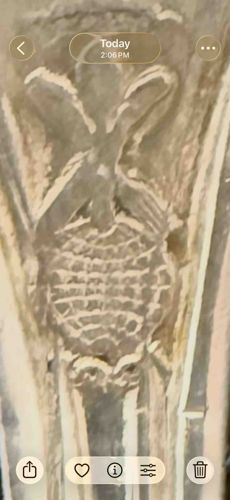
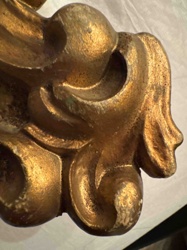
This item is a decorative bas-relief carving integrated into an architectural feature, likely a furniture leg, column, or pilaster. The central motif is a stylized floral or foliate design, possibly a pinecone or acorn-like form with scales, topped by a prominent 'X' shaped scroll or acanthus leaf arrangement. The object appears to be constructed from wood or a plaster-based composition material, consistent with traditional building embellishments. The color palette is muted, featuring earthy tan and grey tones that suggest a weathered or antiqued finish. The carving technique shows moderate depth, with the recessed areas darker due to accumulated dust or intentional patination. Notable features include the symmetrical vertical composition and the rhythmic texture of the scaling on the central bulbous element. Condition issues are visible in the form of surface abrasion, blurring of finer details due to age or layered paint, and a general dusty patina that obscures the original material's grain. No specific maker's marks or signatures are discernible in this photograph. The style is reminiscent of neoclassical or transitional period revivals from the late 19th to early 20th century, displaying solid craftsmanship typical of decorative millwork.
Estimated Value

$150 - $250

Basic Information

Category

Architectural Elements & Salvage

Appraised On

February 1, 2026

Estimated Value

$150 - $250

Item Description

This item is a decorative bas-relief carving integrated into an architectural feature, likely a furniture leg, column, or pilaster. The central motif is a stylized floral or foliate design, possibly a pinecone or acorn-like form with scales, topped by a prominent 'X' shaped scroll or acanthus leaf arrangement. The object appears to be constructed from wood or a plaster-based composition material, consistent with traditional building embellishments. The color palette is muted, featuring earthy tan and grey tones that suggest a weathered or antiqued finish. The carving technique shows moderate depth, with the recessed areas darker due to accumulated dust or intentional patination. Notable features include the symmetrical vertical composition and the rhythmic texture of the scaling on the central bulbous element. Condition issues are visible in the form of surface abrasion, blurring of finer details due to age or layered paint, and a general dusty patina that obscures the original material's grain. No specific maker's marks or signatures are discernible in this photograph. The style is reminiscent of neoclassical or transitional period revivals from the late 19th to early 20th century, displaying solid craftsmanship typical of decorative millwork.
Get Your Items Appraised

Instant estimates of your treasures with AI-powered instant appraisals

Browse More Appraisals