AI Appraisal Estimate

AI-generated estimates · not official valuations

From the user

What was submitted

Photo and notes provided by the user — not generated by AI

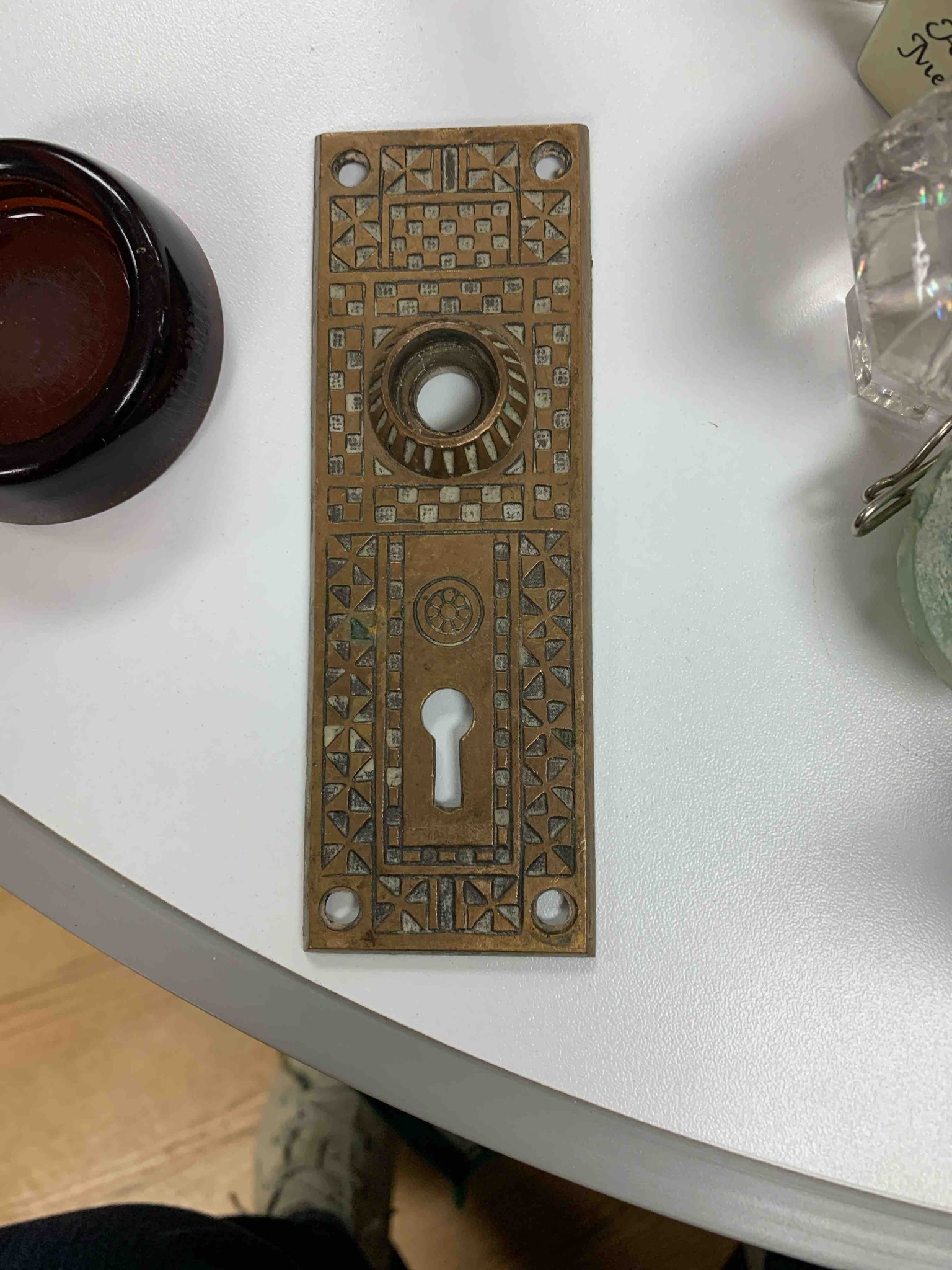
Submitted item photo
Submitted photo · May 25, 2026

User's notes

No additional notes provided.

AI analysis below

AI appraisal

AI analysis & estimate

AI-Generated · Verify before acting

Everything below is generated by AI for informational purposes only. AI can make mistakes — the AI may misidentify items or misattribute them (artist, maker, brand, designer, origin, era). This is not an official valuation and should not be used for insurance, sale, tax, estate, legal, or lending purposes — or any decision requiring a certified appraisal. It is not an authoritative claim about any person, brand, or rights holder — do not share or rely on it as a factual statement about a third party. Always consult qualified professionals before making financial decisions.

Read the full disclaimer

AI Identification

·Not independently authenticated·Verify before acting

Victorian Eastlake Style Cast Bronze Door Backplate

Antique Architectural Hardware

AI Estimated Value

·Not an official valuation·Verify before acting

$125.00 - $175.00

As of May 25, 2026

AI Item Analysis

·AI can make mistakes·Verify before acting
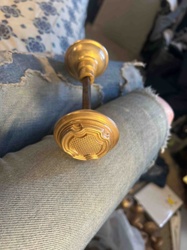
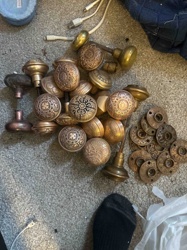
This is a rectangular antique architectural door escutcheon, or backplate, crafted in the Eastlake movement style typical of the late 19th century (circa 1880-1895). The piece is made of heavy cast bronze or brass, featuring a complex geometric design characteristic of the aesthetic movement. The surface is deeply recessed with a repeating pattern of stylized floral rosettes, checkered grids, and triangular cross-hatching. It includes a raised circular doorknob collar with a radial 'sunburst' motif and a classic skeleton keyhole at the bottom. The finish shows a genuine aged patina with dark oxidation in the recessed areas (niels) which highlights the intricate relief work. Most notably, some of the recessed squares appear to contain remnants of white or light grey residue, likely old paint or silvering that has worn away over time. There are four circular mounting holes, one in each corner, for attachment to a wooden door. The condition is consistent with its age, showing minor surface scratches, verdigris spotting on the left edge, and rounded edges from decades of handling, but it lacks structural cracks or warping. The high level of detail suggests it was manufactured by a prominent hardware firm of the era, such as Yale & Towne or Sargent & Co.
AI Appraisal Report

·AI can make mistakes·Verify before acting
Upon examination of the Eastlake backplate, I find it to be an authentic example of late 19th-century American architectural hardware. The casting exhibits the high-relief fidelity associated with firms like Yale & Towne. The 'niels' oxidation and verdigris spotting are consistent with a naturally aged bronze alloy rather than modern chemical distressing. The presence of paint residue in the recessed grids, while common, slightly impacts the value by obscuring the original 'broken-gold' or silvered highlights popular during the Aesthetic Movement. Market demand for original Eastlake hardware remains steady among historic preservationists. While common pressed-steel versions fetch significantly less, this cast-bronze specimen holds higher value due to its material weight and intricate geometric rosettes. Similar single plates currently trade in the $100–$200 range; a matched pair would significantly increase the per-unit value. The primary detractor is the single-item status and the minor surface wear on the collar. Limitations of Assessment: This appraisal is based on visual data only. While the casting quality suggests authenticity, I cannot definitively verify the alloy composition without an XRF (X-ray fluorescence) test to rule out modern brass reproductions. A physical inspection is required to check for manufacturer stamps on the reverse side, which would confirm the foundry and potentially increase the valuation. Full authentication would also require checking for structural fatigue or hairline fractures not visible under current lighting. Provenance documentation regarding the original building of installation would further bolster the historical significance and market appeal.

Get your items appraised

Instant estimates of your treasures with AI-powered appraisals

Browse More Appraisals