AI Appraisal Estimate

AI-generated estimates · not official valuations

From the user

What was submitted

Photo and notes provided by the user — not generated by AI

Submitted item photo
Submitted photo · June 6, 2026

User's notes

No additional notes provided.

AI analysis below

AI appraisal

AI analysis & estimate

AI-Generated · Verify before acting

Everything below is generated by AI for informational purposes only. AI can make mistakes — the AI may misidentify items or misattribute them (artist, maker, brand, designer, origin, era). This is not an official valuation and should not be used for insurance, sale, tax, estate, legal, or lending purposes — or any decision requiring a certified appraisal. It is not an authoritative claim about any person, brand, or rights holder — do not share or rely on it as a factual statement about a third party. Always consult qualified professionals before making financial decisions.

Read the full disclaimer

AI Identification

·Not independently authenticated·Verify before acting

Antique Wrought Iron and Cast Iron Headboard

Antique Furniture / Architectural Elements

AI Estimated Value

·Not an official valuation·Verify before acting

$100 - $250

As of June 6, 2026

AI Item Analysis

·AI can make mistakes·Verify before acting
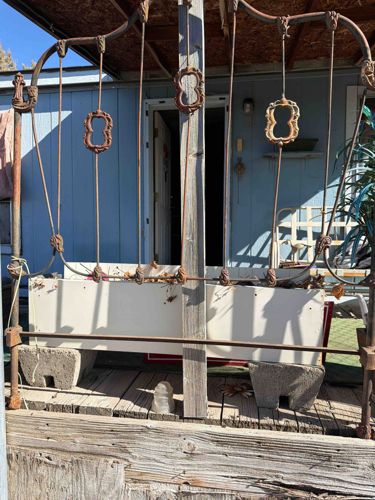
An antique wrought and cast iron bed headboard, likely dating from the late 19th to early 20th century (Victorian or Edwardian era). The piece features a stylized arched silhouette with slender vertical rods secured by decorative cast iron ornaments. Notable features include three central open-work scrolls or cartouches with a scalloped figure-eight design, which are characteristic of period-correct aesthetics. The construction involves a combination of hammered iron bars and molded cast elements at the joints and terminals, showing high-quality hand-assembly despite its current state. The condition is poor with significant surface corrosion and rust throughout, suggesting long-term exposure to the elements. The original finish, which would have likely been black japanning or white enamel, is entirely absent, replaced by a deep orange-brown patina of oxidation. There is a visible structural repair on the left side where white rope or wire is being used to stabilize a joint. The piece is currently detached and resting on concrete blocks, lacking its original side rails and footboard. Such pieces were mass-produced but showcased varied artistic metalwork representative of the turn-of-the-century transition from ornate Victorian styles to more simplified lines.
AI Appraisal Report

·AI can make mistakes·Verify before acting
Based on my examination of the image provided, the item is an antique wrought and cast iron headboard from the late 19th or early 20th century. The stylized arched silhouette and symmetrical scrollwork (figure-eight cartouches) are characteristic of the Late Victorian era. Upon inspection, the craftsmanship is evident in the blend of hand-hammered iron bars and molded cast-iron union joints. However, the condition is poor. Significant oxidation and surface corrosion are present, indicating the protective japanned or enameled finish is entirely lost. A makeshift repair on the left vertical post suggests structural instability. The market for salvage-grade architectural iron remains steady for 'shabby chic' decor or restoration projects, but the current state—lacking a footboard, side rails, and requiring total sandblasting—limits its value primarily to decorative use rather than functional furniture. Comparable pieces in unrestored condition typically sell at rural auctions or architectural salvage yards for low three-figure amounts. A fully restored, complete bed set of this pattern could command $800–$1,200. Authentic Victorian iron beds are common, so rarity is low; value is driven by decorative appeal. Limitations: This evaluation is based on visual evidence alone. A physical inspection is required to confirm whether the joints are lead-poured (period accurate) or modern substitutions. I would also need to check for metal fatigue or 'rust jacking' within the cast joints, which could make the piece structurally unsalvageable. Provenance documentation or a manufacturer's mark on the interior casting would further solidify the date of origin.

Get your items appraised

Instant estimates of your treasures with AI-powered appraisals

Browse More Appraisals