AI Appraisal Estimate

AI-generated estimates · not official valuations

From the user

What was submitted

Photo and notes provided by the user — not generated by AI

Submitted item photo
Submitted photo · June 18, 2026

User's notes

No additional notes provided.

AI analysis below

AI appraisal

AI analysis & estimate

AI-Generated · Verify before acting

Everything below is generated by AI for informational purposes only. AI can make mistakes — the AI may misidentify items or misattribute them (artist, maker, brand, designer, origin, era). This is not an official valuation and should not be used for insurance, sale, tax, estate, legal, or lending purposes — or any decision requiring a certified appraisal. It is not an authoritative claim about any person, brand, or rights holder — do not share or rely on it as a factual statement about a third party. Always consult qualified professionals before making financial decisions.

Read the full disclaimer

AI Identification

·Not independently authenticated·Verify before acting

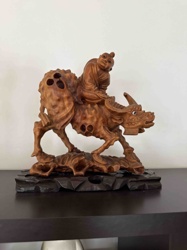
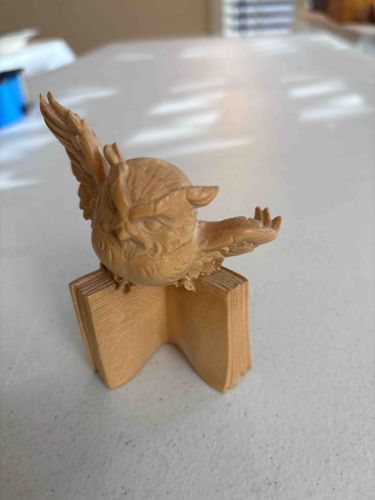
Boxwood Japanese Owl Netsuke on Open Book

Asian Art & Antiques

AI Estimated Value

·Not an official valuation·Verify before acting

$150 - $400

As of June 18, 2026

AI Item Analysis

·AI can make mistakes·Verify before acting
This is a meticulously carved boxwood (Tsuge) netsuke or small okimono depicting a great horned owl perched atop an open book. The piece is rendered in a naturalistic light brown finish, highlighting the fine grain characteristic of high-quality boxwood. The owl features expressive, large eyes, prominent ear tufts, and outstretched wings displaying individual feather detail and textural depth. Its talons are delicately carved as they grip the top edges of the book's pages. The book base is expertly rendered with fine, parallel lines along the top edges to simulate paper leaves, and smooth covers that provide structural stability. This item is likely a mid-to-late 20th-century artisanal creation inspired by traditional Japanese Meiji-style carvings. The craftsmanship displays high technical skill, evident in the dynamic pose and the lifelike texture of the plumage. No significant damage such as cracks or chips is visible, though a gentle natural patina is developing on the smoother surfaces of the book. Typically, such pieces may contain a hidden signature (mei) on the bottom or under the owl's wing, common for contemporary Japanese woodworking. The subject matter—an owl on a book—suggests a symbolic representation of wisdom and scholarly pursuit.
AI Appraisal Report

·AI can make mistakes·Verify before acting
Based on my visual examination of this boxwood (Tsuge) carving, I identify this as a contemporary or mid-to-late 20th-century artisanal netsuke or small okimono. The craftsmanship is commendable, demonstrating the high technical skill often associated with traditional Japanese woodworking schools. The detailing in the plumage, specifically the overlapping feather work and the undercut of the wings, showcases a steady hand and quality tools. The subject matter—the owl (fukurou) symbolizing luck and protection from hardship, combined with the book representing wisdom—is a popular and marketable motif. Condition appears excellent, with no visible hairline cracks or checking in the wood, a common issue with boxwood as humidity changes. The patina is light and uniform, suggesting it has not seen heavy handling or significant age, reinforcing the attribution to the latter half of the 20th century rather than the Meiji period. While the carving mimics the high style of Edo or Meiji masters, the 'crispness' of the lines on the book pages and the lack of deep, rubbed wear usually indicates a more modern creation, possibly export-ware for collectors. Market demand for well-executed contemporary netsuke remains steady among entry-to-mid-level collectors. Comparables for unsigned or modern signed pieces of this intricacy typically hammer between $150 and $250, while retail prices in specialty Asian art galleries may reach $450. Limitations: Without physical inspection, I cannot verify the presence of a signature (mei) or check the himotoshi (cord holes) for wear patterns that would confirm use as a functional toggle. I am also unable to weigh the piece to confirm heavy density typical of premium Tsuge wood versus lighter substitutes.

Get your items appraised

Instant estimates of your treasures with AI-powered appraisals

Browse More Appraisals