AI Appraisal Estimate

AI-generated estimates · not official valuations

From the user

What was submitted

Photo and notes provided by the user — not generated by AI

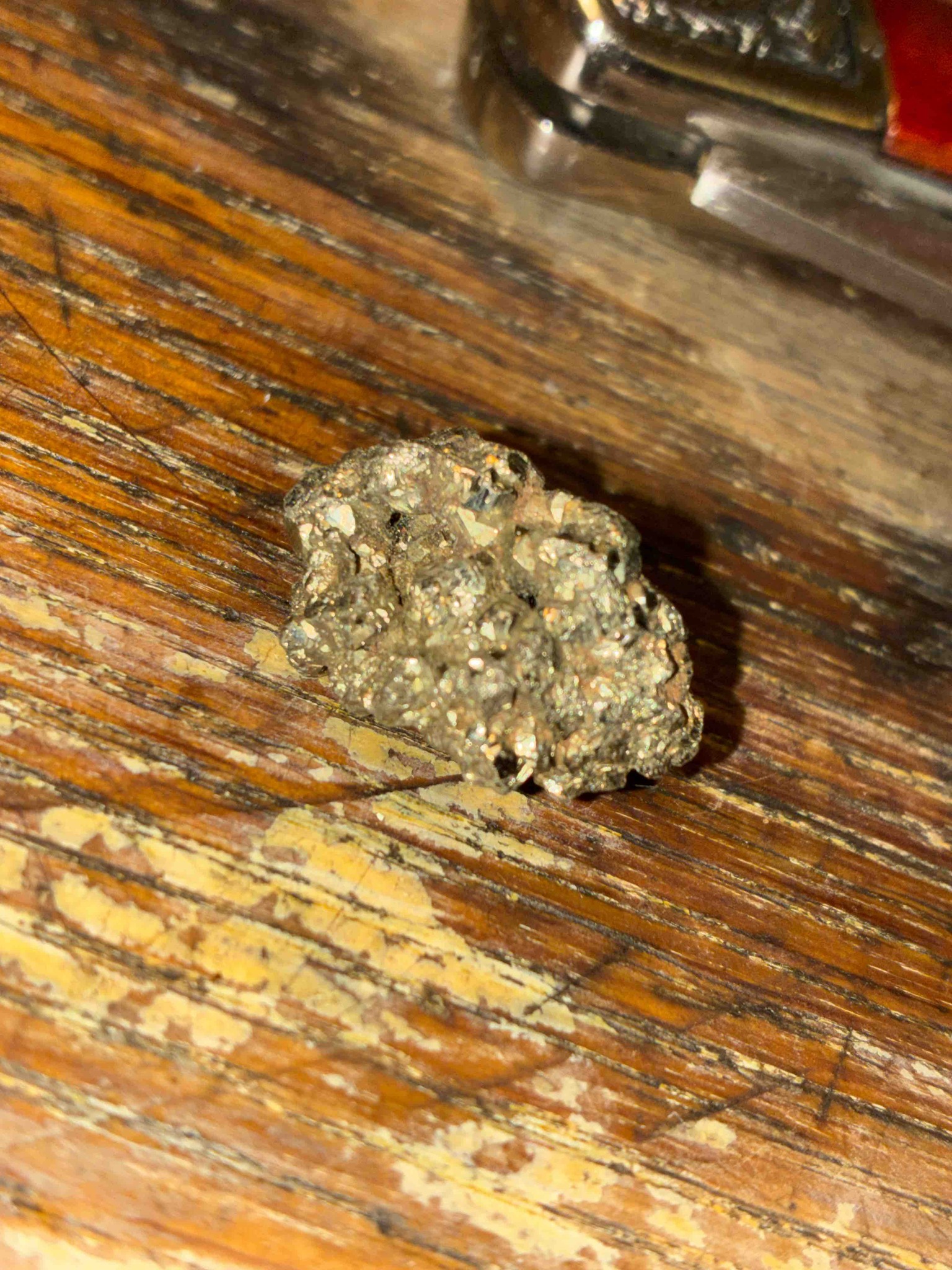
Submitted item photo
Submitted photo · May 27, 2026

User's notes

No additional notes provided.

AI analysis below

AI appraisal

AI analysis & estimate

AI-Generated · Verify before acting

Everything below is generated by AI for informational purposes only. AI can make mistakes — the AI may misidentify items or misattribute them (artist, maker, brand, designer, origin, era). This is not an official valuation and should not be used for insurance, sale, tax, estate, legal, or lending purposes — or any decision requiring a certified appraisal. It is not an authoritative claim about any person, brand, or rights holder — do not share or rely on it as a factual statement about a third party. Always consult qualified professionals before making financial decisions.

Read the full disclaimer

AI Identification

·Not independently authenticated·Verify before acting

Raw Pyrite Specimen (Fool's Gold)

Minerals and Geological Specimens

AI Estimated Value

·Not an official valuation·Verify before acting

$5.00 - $12.00

As of May 27, 2026

AI Item Analysis

·AI can make mistakes·Verify before acting
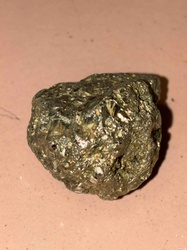
This item is a small, raw mineral specimen of Pyrite, commonly known as 'Fool's Gold'. Physically, the specimen measures approximately 1.5 to 2 centimeters in length and exhibits a brassy-yellow, metallic luster with an irregular, crystalline habit. The structure is composed of intergrown micro-crystals, likely cubic or pyritohedral in nature, which result in a rough, textured surface that reflects light across many facets. The color is a consistent pale brass-yellow, though some areas show slight darkening or dullness indicative of minor oxidation or environmental surface dirt. There are no artificial markings, signatures, or stamps, as this is a natural geological sample. The condition appears stable, though small fragments or dust-sized pieces may shed from the crystalline edges due to physical handling. The specimen is displayed on a weathered wooden surface, which provides a scale and emphasizes the mineral's metallic sheen against organic material. Its quality is typical for decorative or educational mineral hobbyists, lacking the large, perfectly formed cubic structures found in museum-grade collector pieces, but presenting a classic representational example of the mineral's natural cluster form.
AI Appraisal Report

·AI can make mistakes·Verify before acting
I have virtually examined this raw mineral specimen identified as Pyrite, commonly termed 'Fool's Gold.' The sample, measuring approximately 1.5 to 2 cm, exhibits a classic micro-crystalline cluster habit with a characteristic brassy-yellow metallic luster. My visual inspection confirms a stable condition typical of natural geological samples, though minor oxidation is present on several facets, which slightly dulls the secondary reflections. The authenticity appears consistent with natural iron disulfide based on crystal habit and light refraction, though photo analysis cannot confirm density or chemical composition. Market-wise, Pyrite is exceptionally common and widely available globally. Small specimens of this grade—lacking the distinct, large-scale cubic formations found in luxury collector pieces from regions like Logroño, Spain—are categorized as 'utility' or 'gift-shop' grade minerals. Comparables for such samples typically retail for under $15.00 in hobbyist markets and educational kits. The primary value drivers for Pyrite are crystal size, symmetry, and surface cleanliness; this specimen's small scale and irregular habit limit its rarity and financial upside. Significant limitations exist in this remote appraisal. A conclusive authentication would require physical testing, such as a streak test (yielding a greenish-black powder) or a specific gravity test to distinguish it from similar metallic minerals like Marcasite or Chalcopyrite. While the visual evidence strongly supports the Pyrite identification, internal fractures or the presence of trace inclusions that might influence long-term stability (such as susceptibility to pyrite decay) cannot be determined without a high-magnification loupe or environmental stress testing. No provenance documentation was provided, which is standard for mass-market minerals of this type.

Get your items appraised

Instant estimates of your treasures with AI-powered appraisals

Browse More Appraisals