AI Appraisal Estimate

AI-generated estimates · not official valuations

From the user

What was submitted

Photo and notes provided by the user — not generated by AI

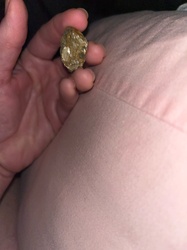
Submitted item photo
Submitted photo · June 21, 2026

User's notes

Maybe real gold

AI analysis below

AI appraisal

AI analysis & estimate

AI-Generated · Verify before acting

Everything below is generated by AI for informational purposes only. AI can make mistakes — the AI may misidentify items or misattribute them (artist, maker, brand, designer, origin, era). This is not an official valuation and should not be used for insurance, sale, tax, estate, legal, or lending purposes — or any decision requiring a certified appraisal. It is not an authoritative claim about any person, brand, or rights holder — do not share or rely on it as a factual statement about a third party. Always consult qualified professionals before making financial decisions.

Note

This analysis also relies on unverified notes provided by the user, which may be incomplete or inaccurate and could affect the result.

Read the full disclaimer

AI Identification

·Not independently authenticated·Verify before acting

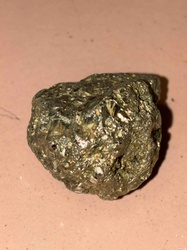
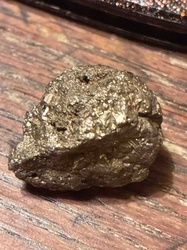
Pyrite Specimens in Quartz Matrix

Minerals and Geological Specimens

AI Estimated Value

·Not an official valuation·Verify before acting

$45.00 - $65.00

As of June 21, 2026

AI Item Analysis

·AI can make mistakes·Verify before acting
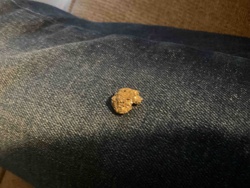
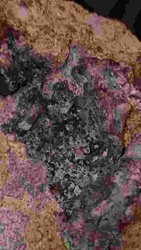
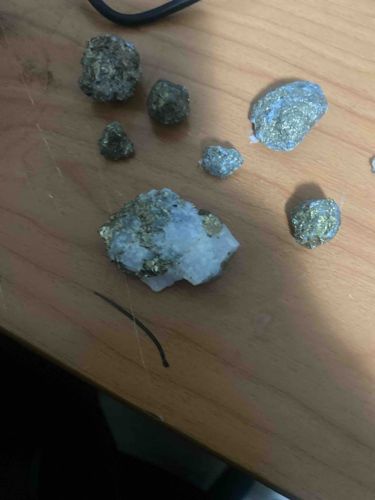
This collection consists of approximately six mineral specimens of varying sizes, featuring prominent brassy-yellow metallic inclusions set within a stony matrix. The largest specimen displays a translucent, milky-white crystalline structure consistent with quartz, which serves as a host rock for the metallic clusters. The metallic portions exhibit a distinct isometric or cubic crystal habit, characterized by sharp edges and flat faces that provide a shimmering, reflective luster. This specific combination of a pale host rock and brassy metallic crystals is highly indicative of iron pyrite, commonly known as 'Fool's Gold,' rather than native gold. Native gold is typically softer, more malleable, and possesses a richer, more buttery yellow hue without the geometric sharpness seen here. The specimens range from small gravel-sized nuggets to a larger central piece approximately two inches in length. The condition appears natural and raw, with some visible crumbling and dusty residue on the wooden surface, suggesting a brittle composition. There are no maker's marks, as these are natural geological formations, likely originating from hydrothermal vein deposits. The overall quality is representative of geological educational samples or decorative mineral collectibles found in various mountainous regions globally.
AI Appraisal Report

·AI can make mistakes·Verify before acting
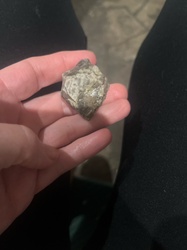
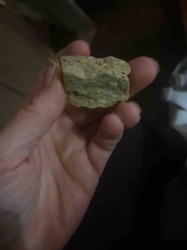
I have carefully examined the provided images and descriptions of these mineral specimens. The primary sample features a milky quartz matrix hosting brassy-yellow metallic crystals. Based on the cubic crystal habit, sharp geometric edges, and brittle nature described, I confirm these are specimens of iron pyrite (FeS2), colloquially known as 'Fool’s Gold.' While the user suggested the possibility of gold, the isometric crystal structure and brassy luster are characteristic of pyrite; native gold lacks these distinct sharp-angled faces and is malleable rather than brittle. The specimens are in a raw, 'as-collected' state. The largest piece is approximately two inches, making these representative geologic samples rather than high-end 'museum-grade' mineral specimens. Market demand for common pyrite in quartz is steady but accessible, primarily catering to educational collectors, metaphysical enthusiasts, and interior decorators. Comparable sets of raw pyrite clusters in matrix typically retail at rock shops and mineral shows for under $75, depending on the vibrancy of the luster. Value is limited by the commonality of the mineral and the lack of a specific, rare locality (e.g., Navajún, Spain). A significant limitation of this remote appraisal is the inability to perform a streak test or specific gravity measurement to 100% rule out other sulfides or rare inclusions, though visual indicators for pyrite are strong. For a definitive authentication that would satisfy a high-end collector, an in-person examination to check for trace elements or associated minerals like arsenopyrite would be required. However, for the current decorative or educational market, the value is based on the aesthetic appeal of the metallic contrast against the white quartz.

Get your items appraised

Instant estimates of your treasures with AI-powered appraisals

Browse More Appraisals