AI Appraisal Estimate

AI-generated estimates · not official valuations

From the user

What was submitted

Photo and notes provided by the user — not generated by AI

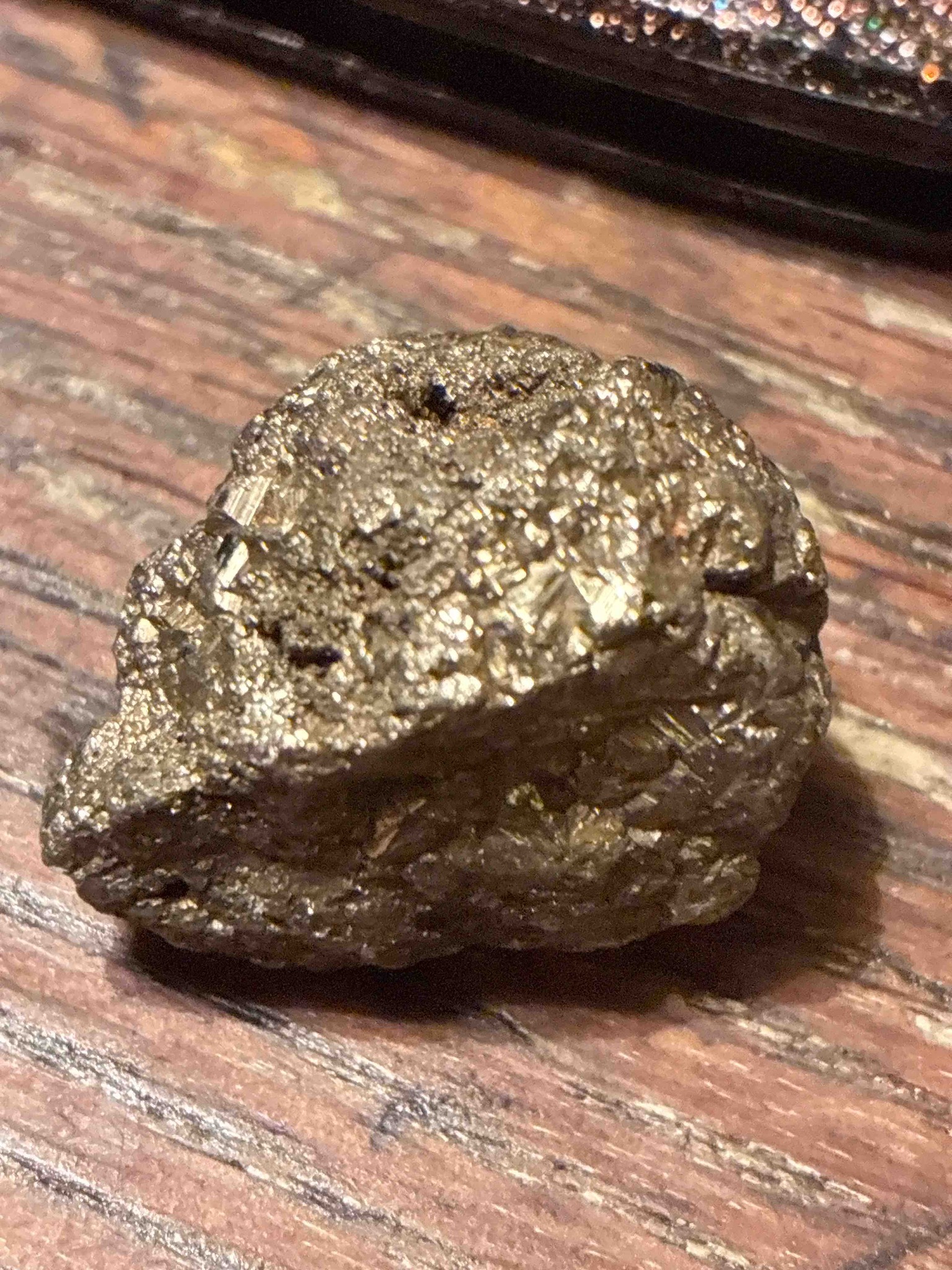
Submitted item photo
Submitted photo · May 27, 2026

User's notes

No additional notes provided.

AI analysis below

AI appraisal

AI analysis & estimate

AI-Generated · Verify before acting

Everything below is generated by AI for informational purposes only. AI can make mistakes — the AI may misidentify items or misattribute them (artist, maker, brand, designer, origin, era). This is not an official valuation and should not be used for insurance, sale, tax, estate, legal, or lending purposes — or any decision requiring a certified appraisal. It is not an authoritative claim about any person, brand, or rights holder — do not share or rely on it as a factual statement about a third party. Always consult qualified professionals before making financial decisions.

Read the full disclaimer

AI Identification

·Not independently authenticated·Verify before acting

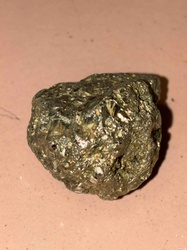
Natural Pyrite Crystal (Fool's Gold)

Minerals and Geological Specimens

AI Estimated Value

·Not an official valuation·Verify before acting

$45–$70

As of May 27, 2026

AI Item Analysis

·AI can make mistakes·Verify before acting
This specimen is a natural mineral sample of pyrite, commonly known as 'Fool's Gold' due to its metallic luster and brass-yellow hue. The item exhibits a dense, crystalline structure with a characteristically rough, granular surface composed of numerous interlocking cubic and pyritohedron crystal faces. At approximately 2-3 inches in size, it possesses a heavy, metallic feel. The color is a consistent pale brass-yellow with a bright metallic luster that catches the light across its faceted surfaces. Notable features include small, well-defined geometric striations and cubic cleavage patterns visible on the larger crystal faces. The specimen appears largely intact with minor surface abrasion and tiny chips consistent with natural handling or extraction. Some recessed areas show a darker, oxidized patina or possible host rock inclusions (black matte spots), which are typical for geological finds. As a raw mineral specimen, there are no maker's marks or signatures, but the quality of the crystal formation suggests a solid, well-formed cluster. Its age is geological, spanning millions of years, and it shows no signs of artificial treatment or chemical enhancement, maintaining its rugged, authentic state.
AI Appraisal Report

·AI can make mistakes·Verify before acting
Based on my visual examination of this pyrite specimen, I have identified it as a high-quality, naturally occurring cluster exhibiting classic cubic and pyritohedron formations. The brass-yellow metallic luster is consistent with untreated 'Fool’s Gold,' and the weight—implied by its density and 2-3 inch size—aligns with the expected specific gravity of iron disulfide. The condition is excellent for a raw mineral, with the geometric striations on the crystal faces remaining well-defined despite minor surface abrasions and natural oxidation in recessed areas. These inclusions of dark host rock are typical for specimens from notable localities such as Peru or Spain, though the exact origin remains unverified. The market for pyrite is currently robust due to its popularity among both serious mineral collectors and the 'metaphysical' decor market. This specimen's value is driven by its structural integrity and the absence of 'pyrite disease' (decomposition). However, pyrite is an abundant mineral globally, which limits its rarity and ceiling price compared to trace-element minerals. It is important to note that while the luster and cubic cleavage visible in the image are characteristic of genuine pyrite, a definitive authentication cannot be completed via photography alone. To fully certify this specimen, an in-person examination would be required to verify weight-to-volume ratios and conduct a streak test (pyrite should leave a greenish-black streak). Provenance documentation identifying the specific mine would significantly enhance its historical and market value. Without such documentation or physical testing, the possibility of high-quality synthetic lab-grown clusters, though unlikely in this form, cannot be 100% excluded.

Get your items appraised

Instant estimates of your treasures with AI-powered appraisals

Browse More Appraisals