AI Appraisal Estimate

AI-generated estimates · not official valuations

From the user

What was submitted

Photo and notes provided by the user — not generated by AI

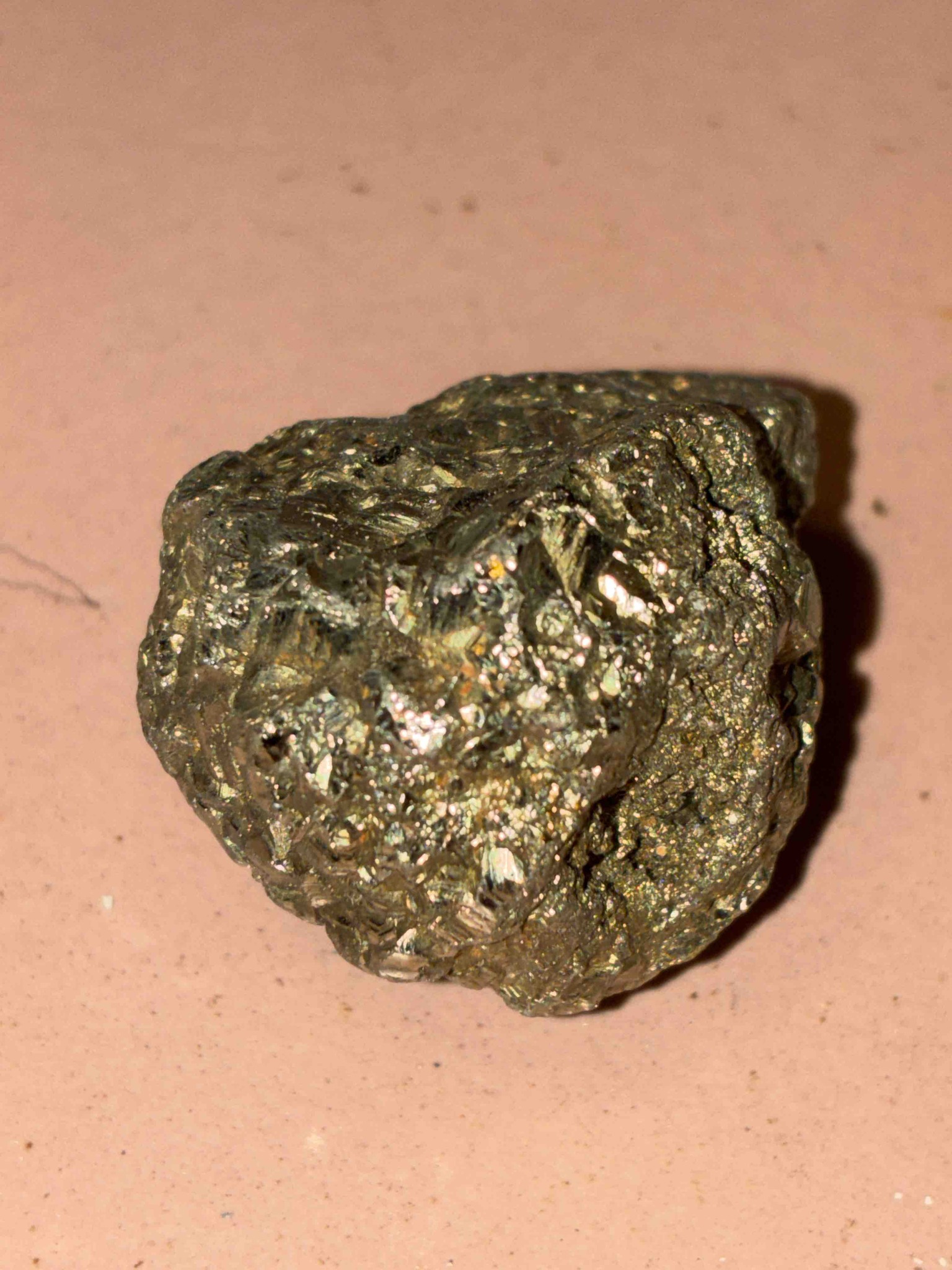
Submitted item photo
Submitted photo · May 27, 2026

User's notes

No additional notes provided.

AI analysis below

AI appraisal

AI analysis & estimate

AI-Generated · Verify before acting

Everything below is generated by AI for informational purposes only. AI can make mistakes — the AI may misidentify items or misattribute them (artist, maker, brand, designer, origin, era). This is not an official valuation and should not be used for insurance, sale, tax, estate, legal, or lending purposes — or any decision requiring a certified appraisal. It is not an authoritative claim about any person, brand, or rights holder — do not share or rely on it as a factual statement about a third party. Always consult qualified professionals before making financial decisions.

Read the full disclaimer

AI Identification

·Not independently authenticated·Verify before acting

Natural Iron Pyrite Specimen

Minerals and Geological Specimens

AI Estimated Value

·Not an official valuation·Verify before acting

$25.00 - $45.00

As of May 27, 2026

AI Item Analysis

·AI can make mistakes·Verify before acting
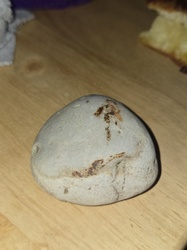
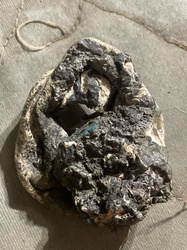
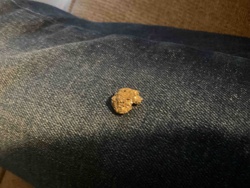
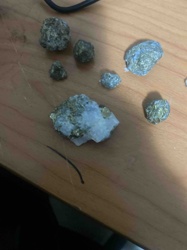
This is a raw, unpolished specimen of iron pyrite, commonly known as 'Fool's Gold' due to its metallic luster and brassy-yellow hue. The specimen appears to be approximately 3-5 centimeters in diameter with a dense, heavy composition characteristic of iron disulfide. The physical structure is a crystalline cluster displaying the mineral's classic isometric crystal system, with visible cubic facets and irregular, jagged edges. Its color is a rich, pale brass-yellow with occasional darker tarnish and metallic sheen that reflects light across various angled faces. Notable features include the distinct striations on some of the crystal faces and the presence of smaller, micro-crystalline formations nestled within larger pits. The condition is consistent with a natural geological find, showing minor weathering, some crumbling or 'flaking' of smaller crystals, and a slight natural patina. There are no maker's marks or signatures as this is a natural mineral sample. The lack of quartz matrix suggests a high-quality, nearly pure cluster of pyrite. It is an enduring mineral that belongs to a geologic period millions of years old, though as a collected item, its age is indeterminate. The specimen serves as an excellent example of natural geometric crystallization without human intervention.
AI Appraisal Report

·AI can make mistakes·Verify before acting
I have virtually examined this natural iron pyrite specimen. The cluster displays a high-quality isometric crystal system with strong cubic facets and characteristic striations, indicating a nearly pure composition without an obstructing host matrix. The pale brassy-yellow luster and metallic sheen are indicative of authentic pyrite (FeS2). Condition-wise, the specimen shows minor flaking and weathering typical of sulfur-bearing minerals, but the well-defined crystal edges remain visually attractive for a sample of its size (approx. 3-5 cm). Market conditions for pyrite remain stable as it is a common yet popular mineral for educational and decorative collections. Comparables for standalone clusters of this size and quality typically retail between $20 and $50. Its value is driven primarily by the aesthetic arrangement of its cubic formations rather than rarity, as pyrite is globally abundant. The absence of a quartz or calcite matrix slightly increases its mass and 'pure' aesthetic, though it lacks the premium value associated with ‘Sun’ formations from Illinois or large museum-grade Peruvian cubes. Limitations: This appraisal is based strictly on visual inspection of the provided description and image. A definitive identification of trace elements or a guarantee against 'pyrite disease' (decomposition due to humidity) requires physical inspection. To finalize authentication, I would recommend testing the specimen’s streak (which should be greenish-black) and measuring its specific gravity (approx. 4.8–5.0). Documentation of provenance—specifically the mine of origin—would be required to reach the upper end of the valuation range.

Get your items appraised

Instant estimates of your treasures with AI-powered appraisals

Browse More Appraisals