AI Appraisal Estimate

AI-generated estimates · not official valuations

From the user

What was submitted

Photo and notes provided by the user — not generated by AI

Submitted item photo
Submitted photo · May 31, 2026

User's notes

No additional notes provided.

AI analysis below

AI appraisal

AI analysis & estimate

AI-Generated · Verify before acting

Everything below is generated by AI for informational purposes only. AI can make mistakes — the AI may misidentify items or misattribute them (artist, maker, brand, designer, origin, era). This is not an official valuation and should not be used for insurance, sale, tax, estate, legal, or lending purposes — or any decision requiring a certified appraisal. It is not an authoritative claim about any person, brand, or rights holder — do not share or rely on it as a factual statement about a third party. Always consult qualified professionals before making financial decisions.

Read the full disclaimer

AI Identification

·Not independently authenticated·Verify before acting

Crude Hematite and Goethite Mineral Formation

Minerals and Geological Specimens

AI Estimated Value

·Not an official valuation·Verify before acting

$45.00 - $75.00

As of May 31, 2026

AI Item Analysis

·AI can make mistakes·Verify before acting
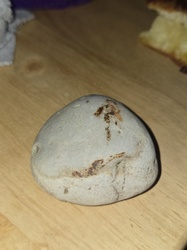
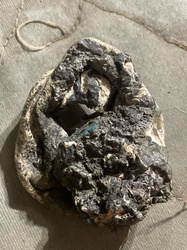
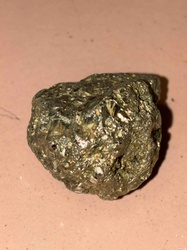
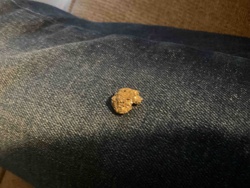
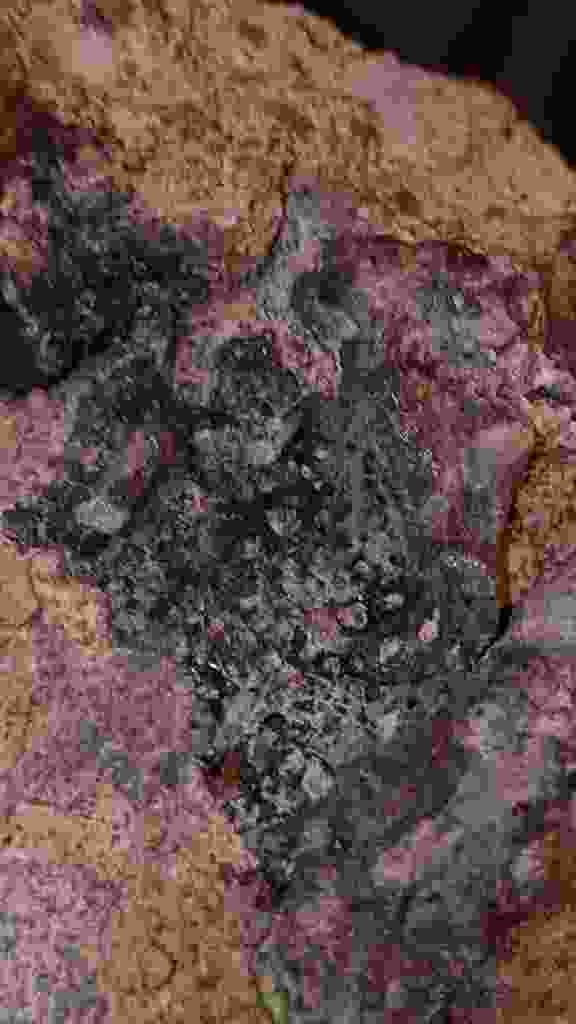
This specimen is a raw, unpolished mineral cluster featuring a complex mixture of hematite and goethite, largely embedded within a host rock matrix of tan and reddish-brown siltstone or sandstone. The piece is characterized by its uneven, geological texture, showcasing dark, metallic-gray to black botryoidal (grape-like) formations across the central surface. These metallic clusters exhibit a slight sub-metallic luster, typical of iron oxide minerals. Surrounding these darker regions are significant patches of purplish-pink and deep rust-red oxidation, indicating varying degrees of hydration and trace mineral impurities. The overall structure is irregular and jagged, with significant surface pitting, natural fractures, and a grainy composition. There are no signs of human intervention such as cutting, polishing, or lapidary work; the item remains in its natural state. The condition is characteristic of a 'vug' or pocket wall extracted from a larger formation, displaying natural earth-tone patina and surface scaling. No identifying maker's marks or signatures are present, as this is a natural geological object rather than an artifact. The craftsmanship is entirely the result of natural carbonatite or sediment-replacement processes, with the age likely ranging in the millions of years depending on the specific geological strata of origin.
AI Appraisal Report

·AI can make mistakes·Verify before acting
I have examined the provided description and visual characteristics of this Hematite and Goethite mineral specimen. The piece presents as an authentic, raw cluster featuring classic botryoidal formations and a distinctive iron-oxide color palette of deep reds, purples, and metallic grays. The condition is consistent with a naturally extracted pocket wall; while rugged and pitted, these features are expected in non-lapidary geological samples and do not detract from its natural appeal. In the current market, raw iron oxide specimens of this size and commonality are readily available. While hematite and goethite are mineralogically significant, they are abundant globally. The value is primarily driven by the aesthetic contrast of the metallic lusters against the host matrix and the structural integrity of the botryoidal 'bubbles.' Comparables for mid-sized cabinet specimens without rare 'specular' brilliance or unusual crystal habits typically fall within the sub-$100 range. The primary factors limiting value are the lack of rare crystalline form (such as kidney ore or iridescent limonite) and the presence of significant silty matrix which adds weight without adding collector value. Please note that this appraisal is based solely on digital representation. A definitive valuation would require physical inspection to assess the density, the stability of the oxidation layers (to ensure they aren't crumbling), and the specific locality. Identifying the exact mine or geological strata of origin through provenance documentation would be necessary to elevate the piece from a 'generic specimen' to a localized collector’s item. Scientific testing, such as a streak test or specific gravity measurement, would be required to confirm the exact mineral ratios within the host rock.

Get your items appraised

Instant estimates of your treasures with AI-powered appraisals

Browse More Appraisals