AI Appraisal Estimate

AI-generated estimates · not official valuations

From the user

What was submitted

Photo and notes provided by the user — not generated by AI

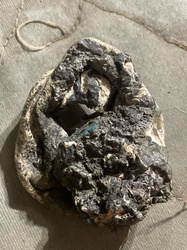
Submitted item photo
Submitted photo · May 19, 2026

User's notes

No additional notes provided.

AI analysis below

AI appraisal

AI analysis & estimate

AI-Generated · Verify before acting

Everything below is generated by AI for informational purposes only. AI can make mistakes — the AI may misidentify items or misattribute them (artist, maker, brand, designer, origin, era). This is not an official valuation and should not be used for insurance, sale, tax, estate, legal, or lending purposes — or any decision requiring a certified appraisal. It is not an authoritative claim about any person, brand, or rights holder — do not share or rely on it as a factual statement about a third party. Always consult qualified professionals before making financial decisions.

Read the full disclaimer

AI Identification

·Not independently authenticated·Verify before acting

Epidote-bearing Mineral Specimen

Minerals and Geological Specimens

AI Estimated Value

·Not an official valuation·Verify before acting

$45.00 - $85.00

As of May 19, 2026

AI Item Analysis

·AI can make mistakes·Verify before acting
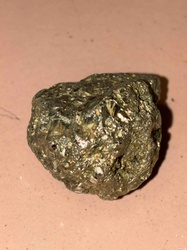
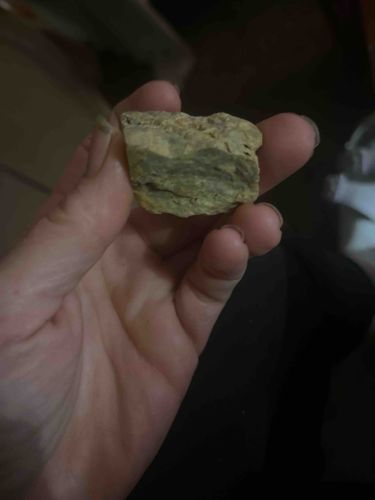
This is a hand-sized mineral specimen characterized by a distinct yellowish-green to olive-green coloration, suggesting the presence of Epidote or a similar silicate mineral. The sample exhibits a massive, blocky habit with a rough, earthy texture indicative of a natural, unpolished state. Its construction is dense and crystalline with a non-homogenous surface showing varying shades of sage, pistachio, and tan. Several fine, dark linear inclusions or fractures are visible across the center face, creating a layered or foliated appearance typical of metamorphic rock origins. Historically, such specimens may originate from contact metamorphic zones. The condition is raw and unrefined; there are no signs of artificial polishing or carving, allowing the natural luster—which appears vitreous to pearly in certain spots—to be the primary feature. The edges are jagged and irregular, reflecting natural cleavage or fracture patterns from when it was separated from a larger ore body. No maker's marks or stamps are present as this is a geological sample. The overall quality is consistent with a cabinet-grade mineral specimen or a sample intended for geological study, showing no significant human-made damage beyond the expected weathering found in field-collected minerals.
AI Appraisal Report

·AI can make mistakes·Verify before acting
I have conducted a visual examination of this mineral specimen, which displays diagnostic characteristics of the epidote group. The pistachio-green to olive hue is classic for epidote, and the massive, blocky habit suggests a metamorphic origin, likely from a contact metamorphic zone or skarn deposit. The condition is consistent with a raw, field-collected sample; while it lacks the aesthetic appeal of individual crystal sprays (which command higher prices), it serves as a robust representative of its species. The natural vitreous luster in specific areas indicates a high degree of crystalline integrity. Technically, the specimen is 'cabinet-grade,' suitable for educational purposes or specialized geological collections. Market demand for massive (non-crystalline) epidote is steady but modest, as collectors typically favor prismatic crystals or gem-quality material. Comparable specimens of this size and rough texture generally retail in the sub-$100 range. The value is primarily influenced by the purity of the color and the absence of significant bruising or modern mechanical damage. Restrictions: This appraisal is based solely on visual analysis of the provided surface details. To definitively verify the mineral's identity and confirm it is not a look-alike such as clinozoisite or specific green quartzites, I would require a Mohs hardness test (epidote ranks 6-7), a specific gravity test, or X-ray diffraction (XRD). Full authentication also requires provenance records—specifically the original mining locality—which can significantly inflate value if the site is a closed or notable mine. Without physical inspection, the presence of internal structural flaws or stabilization treatments cannot be fully discounted.

Get your items appraised

Instant estimates of your treasures with AI-powered appraisals

Browse More Appraisals