AI Appraisal Estimate

AI-generated estimates · not official valuations

From the user

What was submitted

Photo and notes provided by the user — not generated by AI

Submitted item photo
Submitted photo · May 26, 2026

User's notes

No additional notes provided.

AI analysis below

AI appraisal

AI analysis & estimate

AI-Generated · Verify before acting

Everything below is generated by AI for informational purposes only. AI can make mistakes — the AI may misidentify items or misattribute them (artist, maker, brand, designer, origin, era). This is not an official valuation and should not be used for insurance, sale, tax, estate, legal, or lending purposes — or any decision requiring a certified appraisal. It is not an authoritative claim about any person, brand, or rights holder — do not share or rely on it as a factual statement about a third party. Always consult qualified professionals before making financial decisions.

Read the full disclaimer

AI Identification

·Not independently authenticated·Verify before acting

Edwardian Inlaid Mahogany Napoleon Hat Mantel Clock

Antiques / Horology

AI Estimated Value

·Not an official valuation·Verify before acting

$250 - $450

As of May 26, 2026

AI Item Analysis

·AI can make mistakes·Verify before acting
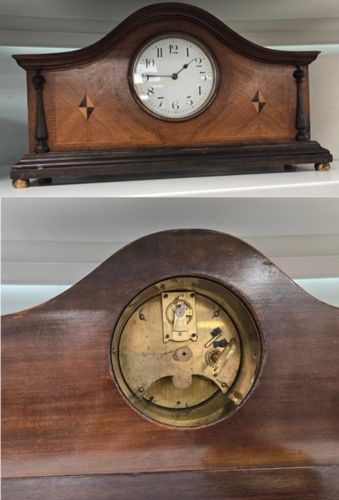
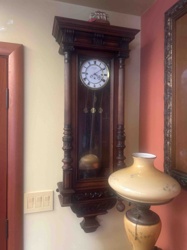
This is a classic 'Napoleon Hat' style mantel clock, likely dating from the early 20th century (Edwardian period, circa 1910-1920). The case is constructed of mahogany with elaborate decorative veneers. The front facade features book-matched light-colored wood veneers, possibly satinwood or light oak, accented by two diamond-shaped 'patera' marquetry inlays and fine stringing. The clock has a rounded arch top, flanked by small turned pilasters or columns on each side. It rests on a multi-tiered mahogany base supported by four small brass bun feet. The clock face is white with black Arabic numerals and elegant spade-style hands behind a glass bezel. The reverse view reveals a solid brass mechanical movement typical of European horology (likely German or English). The movement is visible through an open circular aperture, showing the winding mechanism and regulation components. Condition-wise, the wood shows a natural aged patina with some minor scuffing and wear along the top arch and base edges. The metalwork on the movement shows some surface tarnishing and oxidation consistent with its age. There is no visible maker's mark in the provided images, though such marks are often stamped directly onto the back plate of the brass movement.
AI Appraisal Report

·AI can make mistakes·Verify before acting
I have conducted a visual inspection of this Edwardian-era 'Napoleon Hat' mahogany mantel clock. Based on the book-matched veneers, patera marquetry, and spade-style hands, this piece is typical of English domestic production from approximately 1910–1920. The mahogany case exhibits a pleasing aged patina, though scuffing on the top arch and wear at the base edges suggests moderate use. The movement appears to be a standard 8-day mechanical brass strike, likely by a reputable period manufacturer such as Enfield or Perivale. The current market for Edwardian mantel clocks remains stable but soft, as supply for this specific silhouette is plentiful. Rarity is low; however, the decorative quality of the diamond-shaped inlays elevates this example above plain-faced versions. Comparables for similar Napoleon-style clocks in working condition typically fall within the $200 to $500 range at auction, with premium prices reserved for signed movements by makers like Elliott of London. Factors impacting value include the integrity of the veneer and the functionality of the movement, which currently shows oxidation suggesting it may require a professional cleaning or overhaul. This appraisal is limited by the lack of physical access to the movement’s backplate. To fully authenticate the maker and date, an in-person examination is required to identify hallmarks or stamps on the brass plate. Furthermore, verifying the chime sequence (Westminster vs. Ting-Tang) and evaluating the escapement's health would be necessary to reach the upper end of the valuation range. Verification of provenance or original purchase receipts would further bolster market confidence.

Get your items appraised

Instant estimates of your treasures with AI-powered appraisals

Browse More Appraisals