Antique Walnut Gingerbread Mantel Clock
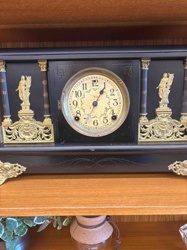
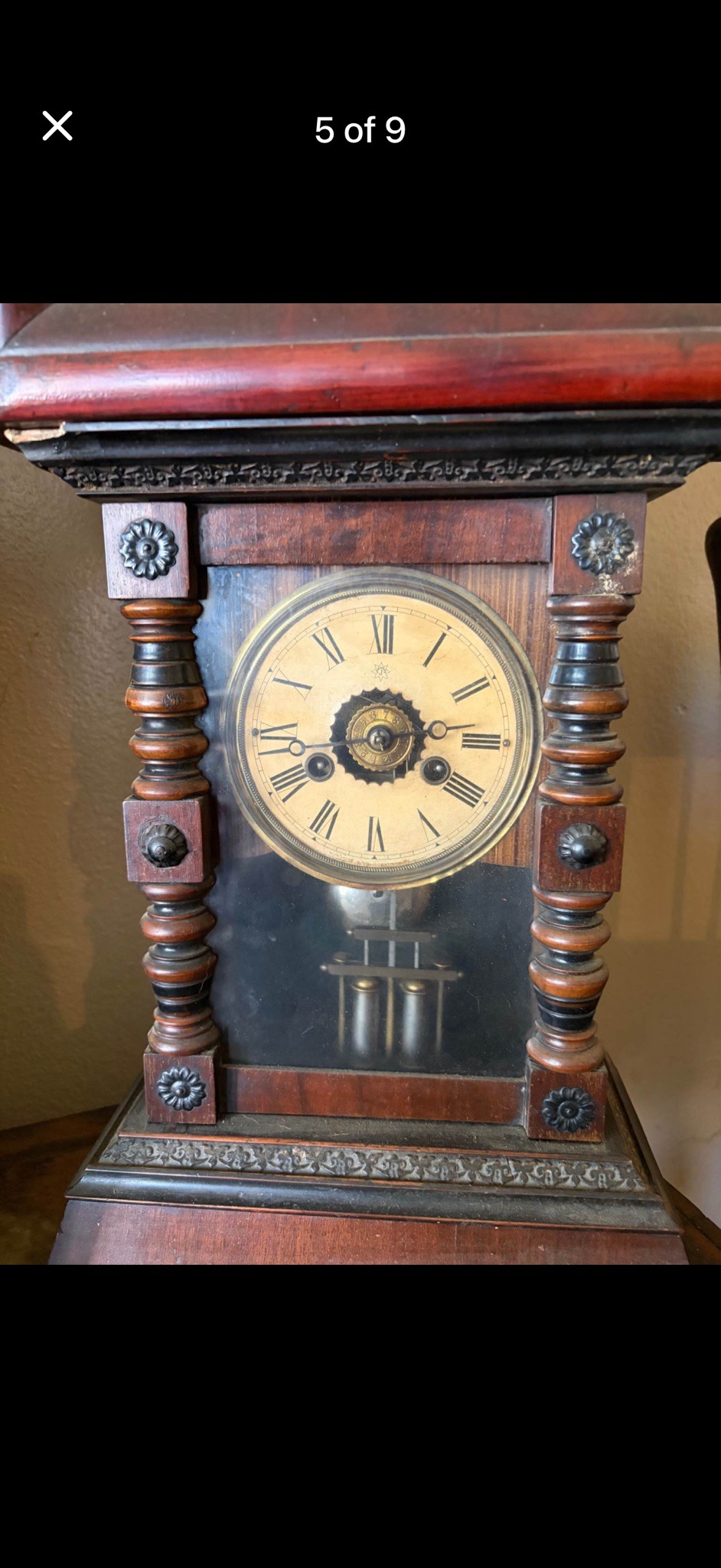
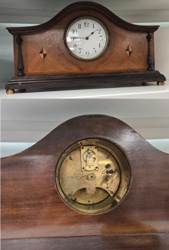
This is a late 19th-century American mantel clock, commonly referred to as a 'gingerbread' or kitchen clock, featuring a rich walnut case with intricate Victorian architectural details. The case is flanked by two distinctively turned spindle columns with ebonized accents and is adorned with various decorative applied rosettes and a carved molding strip at the base. The dial is a circular, cream-colored face with Roman numerals, displaying a prominent star logo at the twelve o'clock position and an alarm setting disk at the center. Two winding holes are visible, indicating a time-and-strike movement. Below the dial, a glass panel reveals a brass pendulum and a multi-rod chime assembly. The wood shows a deep, aged patina with visible wear, including a small chip or loss of material on the upper left cornice and some minor surface abrasions consistent with age. The dial exhibits yellowing and light foxing, while the glass panel appears dusty. The overall craftsmanship reflects the mass-produced yet highly decorative aesthetic popular in the 1880s-1890s.
AI-Generated Appraisal Disclaimer
Estimated Value
$150 - $250
Basic Information
Category
Antiques / Horology
Appraised On
April 28, 2026
Estimated Value
$150 - $250
Item Description
This is a late 19th-century American mantel clock, commonly referred to as a 'gingerbread' or kitchen clock, featuring a rich walnut case with intricate Victorian architectural details. The case is flanked by two distinctively turned spindle columns with ebonized accents and is adorned with various decorative applied rosettes and a carved molding strip at the base. The dial is a circular, cream-colored face with Roman numerals, displaying a prominent star logo at the twelve o'clock position and an alarm setting disk at the center. Two winding holes are visible, indicating a time-and-strike movement. Below the dial, a glass panel reveals a brass pendulum and a multi-rod chime assembly. The wood shows a deep, aged patina with visible wear, including a small chip or loss of material on the upper left cornice and some minor surface abrasions consistent with age. The dial exhibits yellowing and light foxing, while the glass panel appears dusty. The overall craftsmanship reflects the mass-produced yet highly decorative aesthetic popular in the 1880s-1890s.
Get Your Items Appraised
Instant estimates of your treasures with AI-powered instant appraisals