Lenzkirch Style Vienna Regulator Wall Clock
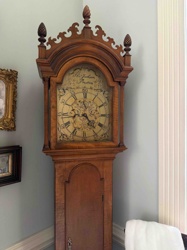
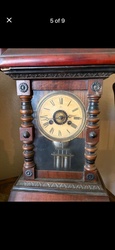
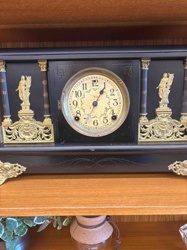
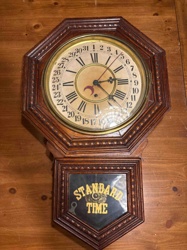
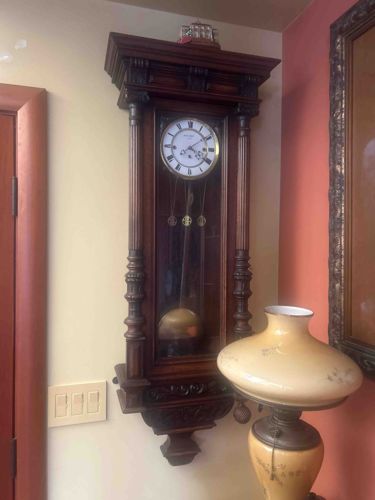
This is a meticulously crafted antique weight-driven wall clock, exhibiting the classic Vienna Regulator style likely dating from the late 19th century (circa 1880-1890). The case is constructed from high-quality dark hardwood, such as walnut or mahogany, and features significant architectural detail. It boasts an overhanging cornice with a dentil-style frieze, supported by two full-length fluted columns with turned capitals and bases. The white enamel dial displays black Roman numerals and delicate spade-style hands. Below the dial, three brass weights are visible through the glass door, alongside a large polished brass pendulum bob at the bottom. The apron or bottom bracket is heavily carved with foliate and scroll motifs, terminating in a decorative finial. The overall condition appears excellent for its age; the wood shows a rich, age-appropriate patina with only minor surface wear, and the brass components retain a bright luster throughout, suggesting regular maintenance. The complexity of the case carvings and the presence of three weights indicate a high-grade movement, potentially incorporating quarter-hour striking mechanisms. The craftsmanship reflects the peak of Central European horological artistry, prioritizing both temporal precision and decorative grandeur for a wealthy domestic interior.
AI-Generated Appraisal Disclaimer
Estimated Value
$4,500 - $6,500
Basic Information
Category
Antiques & Horology
Appraised On
January 30, 2026
Estimated Value
$4,500 - $6,500
Additional Details Provided By Owner
User Provided Information
Frans seif antique wall clock
Item Description
This is a meticulously crafted antique weight-driven wall clock, exhibiting the classic Vienna Regulator style likely dating from the late 19th century (circa 1880-1890). The case is constructed from high-quality dark hardwood, such as walnut or mahogany, and features significant architectural detail. It boasts an overhanging cornice with a dentil-style frieze, supported by two full-length fluted columns with turned capitals and bases. The white enamel dial displays black Roman numerals and delicate spade-style hands. Below the dial, three brass weights are visible through the glass door, alongside a large polished brass pendulum bob at the bottom. The apron or bottom bracket is heavily carved with foliate and scroll motifs, terminating in a decorative finial. The overall condition appears excellent for its age; the wood shows a rich, age-appropriate patina with only minor surface wear, and the brass components retain a bright luster throughout, suggesting regular maintenance. The complexity of the case carvings and the presence of three weights indicate a high-grade movement, potentially incorporating quarter-hour striking mechanisms. The craftsmanship reflects the peak of Central European horological artistry, prioritizing both temporal precision and decorative grandeur for a wealthy domestic interior.
Get Your Items Appraised
Instant estimates of your treasures with AI-powered instant appraisals