Victorian Era Walnut Gingerbread Mantle Clock
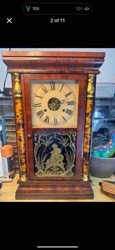
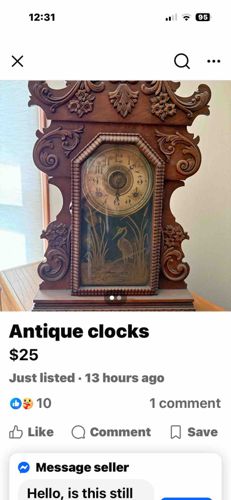
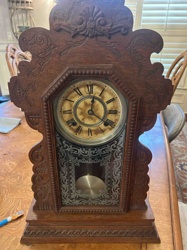
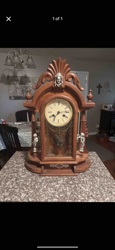
This is a classic 'gingerbread' style mantle clock, a popular Victorian-era timepiece typically manufactured by American companies such as Ingraham, E.N. Welch, or Seth Thomas during the late 19th and early 20th centuries (c. 1880-1910). The case is constructed from solid walnut with intricate steam-pressed designs, featuring scrolling acanthus motifs, floral carvings, and a prominent shell-like central crest on the pediment. The rectangular base features a carved molding consistent with the ornate decorative style of the period. The clock's most distinguishing aesthetic feature is the glass tablet door, which is decorated with a gilt or transfer-applied pastoral scene featuring a crane or heron amongst marsh reeds, a motif common in the Aesthetic Movement. The dial is printed on paper over a metal plate, showing significant yellowing and foxing due to age. It utilizes Arabic numerals and contains two winding arbors for an 8-day time and strike movement. Regarding condition, the wood shows a dry, matte patina with accumulated dust in the crevices of the carvings, and there appears to be some minor wear to the edges of the base and side scrolls. The hinge on the left side of the glass door shows slight oxidation. While the case remains structurally sound, the integrity of the mechanical movement would require internal inspection to determine functionality.
AI-Generated Appraisal Disclaimer
Estimated Value
$150 - $250
Basic Information
Category
Antique Horology / Clocks
Appraised On
March 14, 2026
Estimated Value
$150 - $250
Item Description
This is a classic 'gingerbread' style mantle clock, a popular Victorian-era timepiece typically manufactured by American companies such as Ingraham, E.N. Welch, or Seth Thomas during the late 19th and early 20th centuries (c. 1880-1910). The case is constructed from solid walnut with intricate steam-pressed designs, featuring scrolling acanthus motifs, floral carvings, and a prominent shell-like central crest on the pediment. The rectangular base features a carved molding consistent with the ornate decorative style of the period. The clock's most distinguishing aesthetic feature is the glass tablet door, which is decorated with a gilt or transfer-applied pastoral scene featuring a crane or heron amongst marsh reeds, a motif common in the Aesthetic Movement. The dial is printed on paper over a metal plate, showing significant yellowing and foxing due to age. It utilizes Arabic numerals and contains two winding arbors for an 8-day time and strike movement. Regarding condition, the wood shows a dry, matte patina with accumulated dust in the crevices of the carvings, and there appears to be some minor wear to the edges of the base and side scrolls. The hinge on the left side of the glass door shows slight oxidation. While the case remains structurally sound, the integrity of the mechanical movement would require internal inspection to determine functionality.
Get Your Items Appraised
Instant estimates of your treasures with AI-powered instant appraisals