Chinese Lobed Cloisonné Enamel Trinket Box
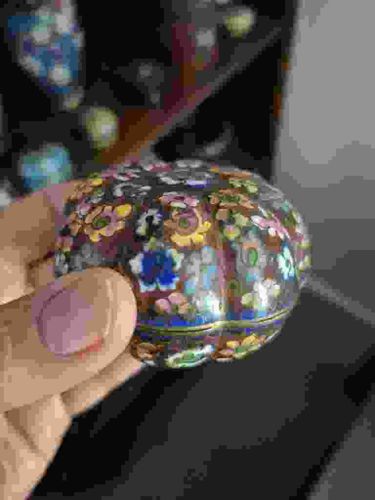
This item is a decorative trinket box or incense container crafted in the traditional Chinese cloisonné technique. Physically, the box features a pumpkin-like or melon-form lobed shape, constructed from a copper or brass alloy base. The exterior is densely decorated with multi-colored floral motifs, including peonies and smaller cherry blossoms, utilizing a rich palette of cobalt blue, turquoise, yellow, pink, and white enamels. The background enamel is a dark, possibly black or deep navy, which provides high contrast for the floral pattern. Fine brass wires (cloisons) define the intricate outlines of the petals and leaves, demonstrating skilled craftsmanship. In terms of condition, there appears to be minor surface wear consistent with age, though the enamel looks largely intact without visible pitting or large chips. The metal rims show a soft golden patina. Based on the style and density of the floral decoration, this piece likely dates to the late 19th century (Late Qing Dynasty) or the early 20th century (Republic Period). The artisanal quality is evident in the precision of the wire-work and the vibrant, well-separated enamel colors.

AI-Generated Appraisal Disclaimer
Estimated Value
$450 - $650
Basic Information
Category
Asian Antiques & Collectibles
Appraised On
March 2, 2026
Estimated Value
$450 - $650
Item Description
This item is a decorative trinket box or incense container crafted in the traditional Chinese cloisonné technique. Physically, the box features a pumpkin-like or melon-form lobed shape, constructed from a copper or brass alloy base. The exterior is densely decorated with multi-colored floral motifs, including peonies and smaller cherry blossoms, utilizing a rich palette of cobalt blue, turquoise, yellow, pink, and white enamels. The background enamel is a dark, possibly black or deep navy, which provides high contrast for the floral pattern. Fine brass wires (cloisons) define the intricate outlines of the petals and leaves, demonstrating skilled craftsmanship. In terms of condition, there appears to be minor surface wear consistent with age, though the enamel looks largely intact without visible pitting or large chips. The metal rims show a soft golden patina. Based on the style and density of the floral decoration, this piece likely dates to the late 19th century (Late Qing Dynasty) or the early 20th century (Republic Period). The artisanal quality is evident in the precision of the wire-work and the vibrant, well-separated enamel colors.

Get Your Items Appraised
Instant estimates of your treasures with AI-powered instant appraisals