Chinese Mudman Figural Sculpture of Lu Dongbin
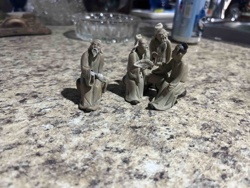
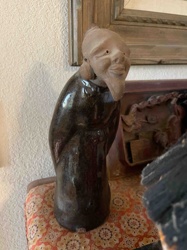
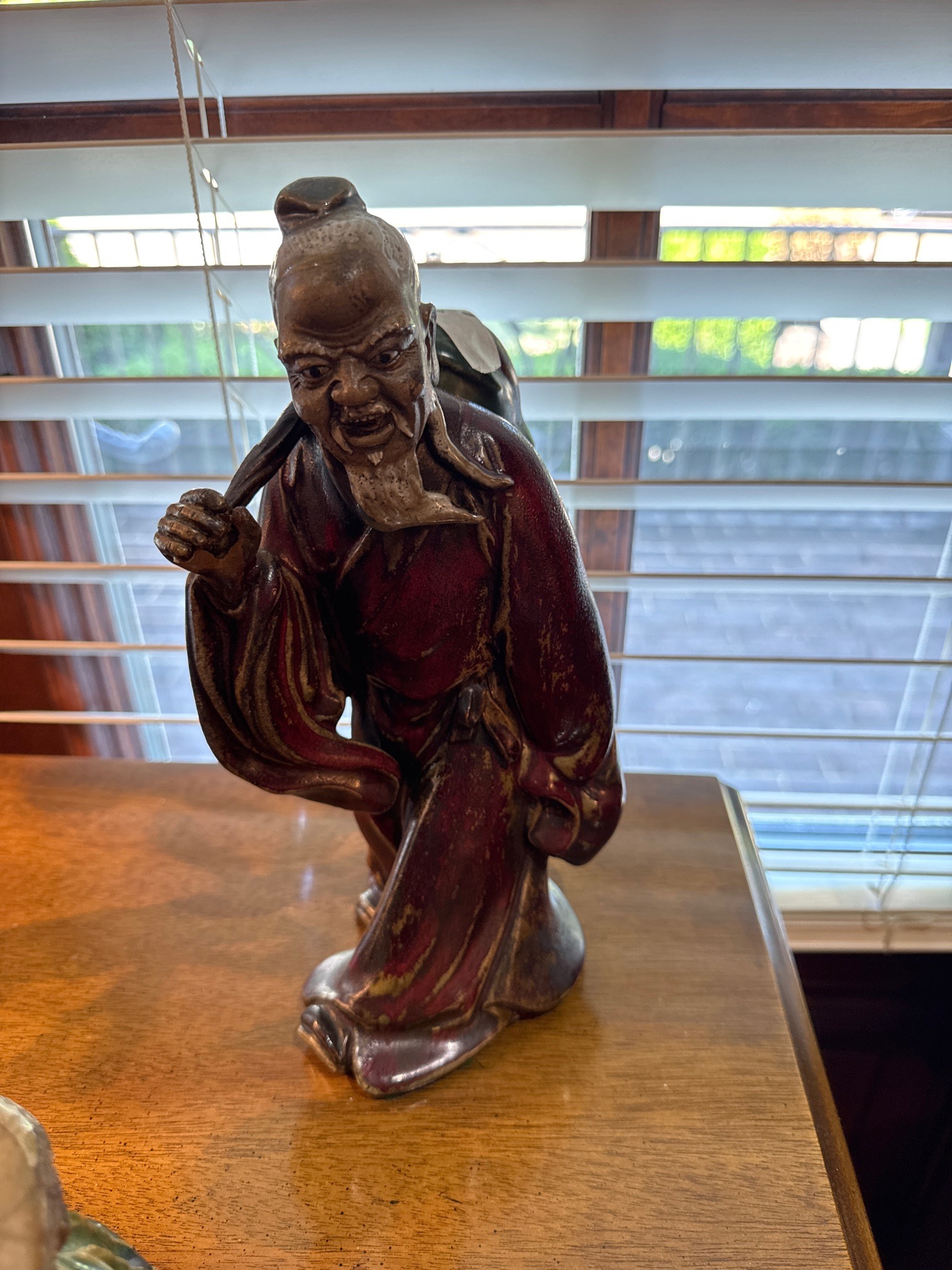
This is a vintage Chinese 'mudman' ceramic figurine, likely depicting Lu Dongbin, one of the Eight Immortals, identified by his scholarly robes and the fly whisk held in his right hand. The sculpture is crafted from a heavy, coarse clay typical of Shiwan stoneware. It features a high-relief polychrome glaze with a deep oxblood or cinnabar-colored robe, contrasted by unglazed, buff-colored clay for the face and hands to accentuate expressive detailing. The figure stands in a dynamic, leaning pose on a self-base. The facial expression is remarkably detailed, showing deep character lines, a long beard, and wide eyes, characteristic of the mid-20th-century export style. Notable craftsmanship is seen in the flowing drapery of the sleeves. Regarding condition, there is visible 'crazing' in the glaze and some minor paint loss or 'flea bites' along the edges of the base and sleeve folds, which is common for these fragile earthenware pieces. No major structural cracks are visible from this angle. The piece likely dates from the 1920s to the 1960s, a period when these were popular exports from the Canton region. The hollow construction and the presence of a possible maker's stamp on the bottom (not visible but typical) are quality indicators for authentic Shiwan pottery.

AI-Generated Appraisal Disclaimer
Estimated Value
$150-$250
Basic Information
Category
Asian Antiques & Collectibles
Appraised On
May 3, 2026
Estimated Value
$150-$250
Item Description
This is a vintage Chinese 'mudman' ceramic figurine, likely depicting Lu Dongbin, one of the Eight Immortals, identified by his scholarly robes and the fly whisk held in his right hand. The sculpture is crafted from a heavy, coarse clay typical of Shiwan stoneware. It features a high-relief polychrome glaze with a deep oxblood or cinnabar-colored robe, contrasted by unglazed, buff-colored clay for the face and hands to accentuate expressive detailing. The figure stands in a dynamic, leaning pose on a self-base. The facial expression is remarkably detailed, showing deep character lines, a long beard, and wide eyes, characteristic of the mid-20th-century export style. Notable craftsmanship is seen in the flowing drapery of the sleeves. Regarding condition, there is visible 'crazing' in the glaze and some minor paint loss or 'flea bites' along the edges of the base and sleeve folds, which is common for these fragile earthenware pieces. No major structural cracks are visible from this angle. The piece likely dates from the 1920s to the 1960s, a period when these were popular exports from the Canton region. The hollow construction and the presence of a possible maker's stamp on the bottom (not visible but typical) are quality indicators for authentic Shiwan pottery.

Get Your Items Appraised
Instant estimates of your treasures with AI-powered instant appraisals