AI Appraisal Estimate

AI-generated estimates · not official valuations

From the user

What was submitted

Photo and notes provided by the user — not generated by AI

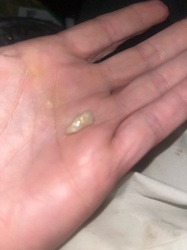
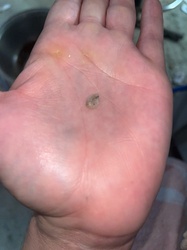
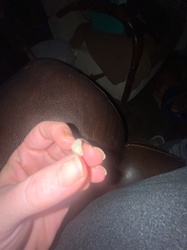
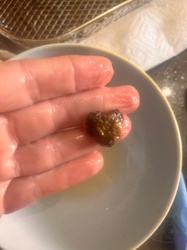
Submitted item photo
Submitted photo · June 6, 2026

User's notes

No additional notes provided.

AI analysis below

AI appraisal

AI analysis & estimate

AI-Generated · Verify before acting

Everything below is generated by AI for informational purposes only. AI can make mistakes — the AI may misidentify items or misattribute them (artist, maker, brand, designer, origin, era). This is not an official valuation and should not be used for insurance, sale, tax, estate, legal, or lending purposes — or any decision requiring a certified appraisal. It is not an authoritative claim about any person, brand, or rights holder — do not share or rely on it as a factual statement about a third party. Always consult qualified professionals before making financial decisions.

Read the full disclaimer

AI Identification

·Not independently authenticated·Verify before acting

Small Brown Spider (Arachnid)

Biological Specimen

AI Estimated Value

·Not an official valuation·Verify before acting

$0.00 - $5.00

As of June 6, 2026

AI Item Analysis

·AI can make mistakes·Verify before acting
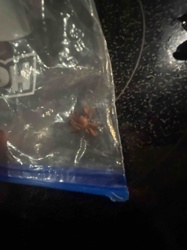
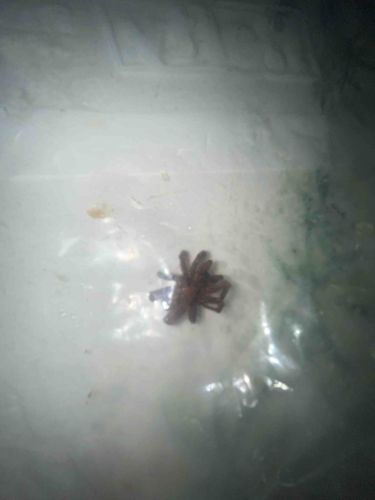
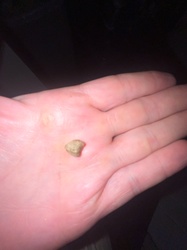
The item featured in the image is a small, brown arachnid, likely a common house spider or similar species. Physically, it exhibits a reddish-brown to dark tan coloration across its cephalothorax and abdomen. The spider's legs are medium in length relative to its body size and appear to have a slightly translucent or glossy finish under the direct lighting. It is positioned on a white, textured, and slightly reflective surface, which may be a piece of plastic packaging or a synthetic liner. The specimen appears to be intact with all eight legs visible, though it is in a curled or partially retracted posture. No specific markings like a violin shape or colored hourglass are immediately discernible from this angle and light level. Its construction is biological, with typical jointed appendages and a bulbous posterior. The image quality is somewhat hazy, but the spider is the central focal point. There are small bits of debris or staining on the surrounding surface, and the lighting creates a glare that obscures finer anatomical details like hair or eye patterns. As a biological specimen, it is not a manufactured product and therefore lacks maker's marks or craftsmanship details. Its state of health or preservation is difficult to determine without further physical examination.
AI Appraisal Report

·AI can make mistakes·Verify before acting
I have conducted a visual examination of the small brown arachnid specimen via the provided imagery. The specimen exhibits the physiological characteristics of a common domestic spider (Araneae), likely of the family Theridiidae or similar. Based on the curled posture and lack of movement, the specimen appears to be deceased or in a state of extreme stress. The physical condition is fair, though the lack of a professional preservation medium (such as 70% ethanol) or a formal mounting suggests this is an incidental finding rather than a curated biological specimen. From a market perspective, common house spiders hold negligible financial value. Unlike rare tropical tarantulas or specific medically significant specimens sought by research institutions, this specimen lacks the rarity, size, or aesthetic appeal required for the collectors' market. There is no documented provenance identifying it as a rare subspecies or a specimen from a historically significant locality. Limitations of this appraisal include the inability to perform microscopic analysis of the pedipalps or epigyne, which are necessary for definitive species identification. To provide a scientific authentication, I would require an in-person examination to observe ocular arrangements and fine setal patterns. Furthermore, for any biological specimen to command value, it must be accompanied by precise capture data (GPS coordinates, date, and ecological context). Without a professional entomological pin-mount or chemical preservation, the specimen will continue to dehydrate and lose structural integrity. Currently, it is valued primarily as an educational or curiosity piece with zero to nominal market demand.

Get your items appraised

Instant estimates of your treasures with AI-powered appraisals

Browse More Appraisals