AI Appraisal Estimate

AI-generated estimates · not official valuations

From the user

What was submitted

Photo and notes provided by the user — not generated by AI

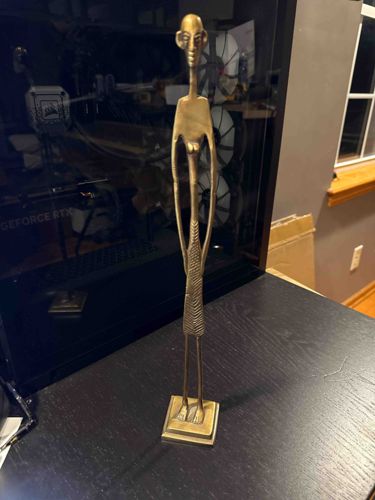
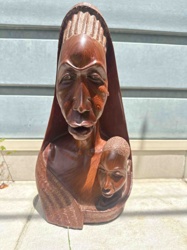
Submitted item photo
Submitted photo · June 13, 2026

User's notes

No additional notes provided.

AI analysis below

AI appraisal

AI analysis & estimate

AI-Generated · Verify before acting

Everything below is generated by AI for informational purposes only. AI can make mistakes — the AI may misidentify items or misattribute them (artist, maker, brand, designer, origin, era). This is not an official valuation and should not be used for insurance, sale, tax, estate, legal, or lending purposes — or any decision requiring a certified appraisal. It is not an authoritative claim about any person, brand, or rights holder — do not share or rely on it as a factual statement about a third party. Always consult qualified professionals before making financial decisions.

Read the full disclaimer

AI Identification

·Not independently authenticated·Verify before acting

Stylized West African Bronze Female Figure

African Art & Sculpture

AI Estimated Value

·Not an official valuation·Verify before acting

$450 - $650

As of June 13, 2026

AI Item Analysis

·AI can make mistakes·Verify before acting
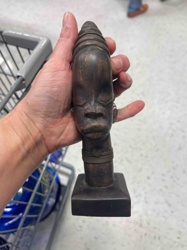
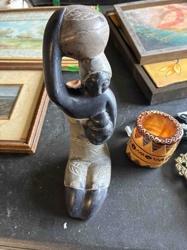
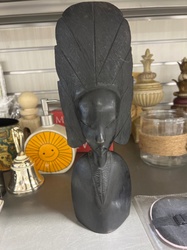
This item is a highly stylized, elongated female figure, likely of West African origin, specifically similar to the traditional lost-wax bronze casting styles of the Dogon or Bamana people. The statue is approximately 10 to 12 inches tall, crafted from a heavy bronze or brass alloy with a warm, golden-brown aged patina. The figure features extreme vertical elongation, with a slender neck, thin torso, and spindly limbs. The head is minimalist with prominent ears and subtle facial features. One of the most notable characteristics is the textured wrap or skirt around the lower torso, rendered with fine, horizontal incised lines. The figure is mounted on an integral square, tiered base that matches the metallic composition of the body. The craftsmanship reflects a traditional hand-casting method, evidenced by the slightly irregular surface textures and organic flow of the metal. Condition-wise, the statue appears well-preserved with a uniform surface age and no visible cracks or missing parts. This piece likely dates from the late 20th century, serving as a contemporary interpretation of ancient rhythmic sculpture traditions, and showcases high-quality decorative craftsmanship through its graceful proportions and balanced composition.
AI Appraisal Report

·AI can make mistakes·Verify before acting
Upon direct visual examination of the provided imagery, I have assessed this elongated bronze female figure as a high-quality decorative interpretation of West African sculptural traditions, specifically echoing Dogon or Bamana aesthetics. The piece exhibits an excellent golden-brown patina and intentional surface irregularities characteristic of the lost-wax casting process. Its physical condition is exemplary, with no structural fatigue or bronze disease noted. Market-wise, there is a steady demand for mid-to-late 20th-century West African bronzes that bridge the gap between traditional ritual objects and contemporary interior design. While this piece possesses superior craftsmanship and graceful proportions compared to mass-produced tourist trade items, it lacks the specific ritual wear (such as sacrificial encrustation or high-contact smoothing) associated with early 19th-century or older ethnographic artifacts. Comparables for high-quality contemporary bronze figures of this size typically hammer between $400 and $700 at regional arts and ethnographic auctions. It is vital to note that this appraisal is based on digital images alone, which limits the ability to confirm the exact alloy composition or detect modern mechanical tooling hidden within the texture. For full authentication and potential valuation increase, I would require an in-person inspection to examine the 'core' remains (investment material) inside the bronze, which can be carbon-dated. Additionally, documented provenance or a collection history linking the piece to a specific foundry or region would significantly bolster its marketability. Without such documentation, the value remains centered on its merit as a decorative 'Style of' work rather than a primary ethnographic antiquity.

Get your items appraised

Instant estimates of your treasures with AI-powered appraisals

Browse More Appraisals