AI Appraisal Estimate

AI-generated estimates · not official valuations

From the user

What was submitted

Photo and notes provided by the user — not generated by AI

Submitted item photo
Submitted photo · June 15, 2026

User's notes

No additional notes provided.

AI analysis below

AI appraisal

AI analysis & estimate

AI-Generated · Verify before acting

Everything below is generated by AI for informational purposes only. AI can make mistakes — the AI may misidentify items or misattribute them (artist, maker, brand, designer, origin, era). This is not an official valuation and should not be used for insurance, sale, tax, estate, legal, or lending purposes — or any decision requiring a certified appraisal. It is not an authoritative claim about any person, brand, or rights holder — do not share or rely on it as a factual statement about a third party. Always consult qualified professionals before making financial decisions.

Read the full disclaimer

AI Identification

·Not independently authenticated·Verify before acting

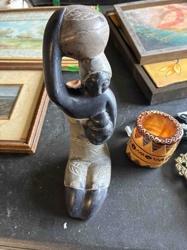
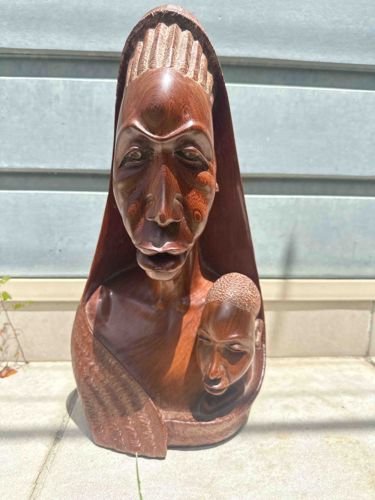
East African Makonde Hand-Carved Wood Sculpture of Mother and Child

African Art & Sculpture

AI Estimated Value

·Not an official valuation·Verify before acting

$150 - $300

As of June 15, 2026

AI Item Analysis

·AI can make mistakes·Verify before acting
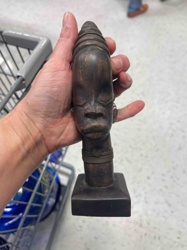
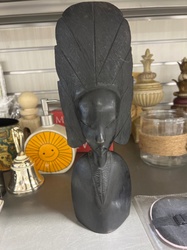
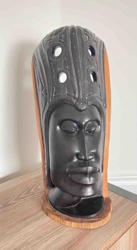
This is a hand-carved hardwood sculpture, likely Ujamaa or Shetani-influenced but focusing on a maternal theme, originating from the Makonde people (traditionally from Tanzania or Mozambique). The piece is carved from a single block of dense, reddish-brown wood, possibly Mninga (Pterocarpus angolensis) or a similar African mahogany, and features a polished, lustrous finish that highlights the natural grain. The composition depicts a stylized woman's head with a smaller head, presumably a child, nestled near her shoulder. The primary figure features a tall, ribbed headdress or hair treatment, heavy lidded eyes, and a prominent open mouth. Notably, the carving includes intricate circular stippling or scarification marks on the cheeks of the mother and textural stippling on the child's cranium. The overall form is organic and elongated, showing the characteristic fluidity of mid-to-late 20th-century African woodcarving. The condition appears sound with a healthy surface patina, though there are minor abrasions along the base edge and some light dusting within the deeper recesses of the textures. There are no visible maker's marks or signatures, which is common for these artisanal works. The craftsmanship is of high quality, demonstrating skilled chisel work and a deep understanding of the wood’s structural integrity.
AI Appraisal Report

·AI can make mistakes·Verify before acting
Upon visual inspection of this Makonde sculpture, I find the craftsmanship to be consistent with the mid-twentieth-century Ujamaa tradition. The use of dense Mpingo or Mninga heartwood is evidenced by the deep coloration and high-polish finish. The carving displays significant technical skill, particularly in the stippled facial scarification and the fluid, organic transition between the maternal figure and the child. The condition is generally excellent; the minor abrasions at the base are consistent with age and do not detract from the aesthetic integrity. The Makonde market is currently saturated with contemporary 'airport art' produced for tourists, which typically lacks the weight and detail seen here. This piece exhibits superior proportions and textural depth, elevating it above mass-produced souvenirs. Similar hardwood carvings of this size and stylistic complexity typically realize prices in the $150 to $300 range at regional auctions specializing in ethnographic art. While the lack of a signature is standard for these communal workshops, it does limit the potential for 'master carver' premiums. Limitations: This appraisal is based solely on digital imagery. A definitive valuation would require an in-person examination to verify wood density, check for hidden repairs (such as color-matched wood filler), and confirm the presence of natural oxidation in the recesses. Authenticity of age can only be fully confirmed through provenanced documentation or specialized analysis of the patina to ensure it is not a modern chemical application. Scientific testing for wood species could also further refine the local origin between Tanzanian and Mozambican styles.

Get your items appraised

Instant estimates of your treasures with AI-powered appraisals

Browse More Appraisals