AI Appraisal Estimate

AI-generated estimates · not official valuations

From the user

What was submitted

Photo and notes provided by the user — not generated by AI

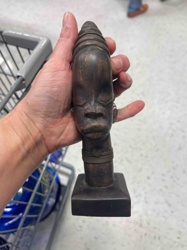
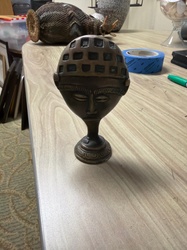
Submitted item photo
Submitted photo · June 10, 2026

User's notes

No additional notes provided.

AI analysis below

AI appraisal

AI analysis & estimate

AI-Generated · Verify before acting

Everything below is generated by AI for informational purposes only. AI can make mistakes — the AI may misidentify items or misattribute them (artist, maker, brand, designer, origin, era). This is not an official valuation and should not be used for insurance, sale, tax, estate, legal, or lending purposes — or any decision requiring a certified appraisal. It is not an authoritative claim about any person, brand, or rights holder — do not share or rely on it as a factual statement about a third party. Always consult qualified professionals before making financial decisions.

Read the full disclaimer

AI Identification

·Not independently authenticated·Verify before acting

Hand-Carved African Stylized Figural Sculpture

African Art & Collectibles

AI Estimated Value

·Not an official valuation·Verify before acting

$40 - $75

As of June 10, 2026

AI Item Analysis

·AI can make mistakes·Verify before acting
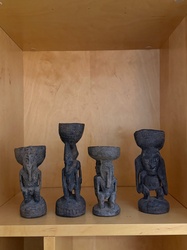
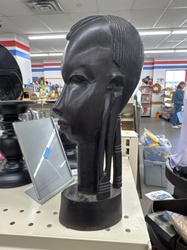
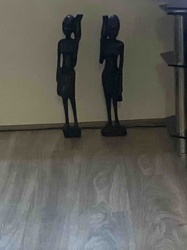
This item is a hand-carved wooden sculpture depicting a stylized human figure, likely of East African origin, specifically in the Makonde or Maasai carving traditions frequently produced for the export and tourist market. The sculpture is rendered in a warm, medium-toned hardwood with a visible natural grain and a polished, semi-gloss finish. It features an elongated, abstract human form in a dynamic, expressive pose with one arm raised high and the other reaching toward a vessel or drum near its feet. The anatomical proportions are purposefully exaggerated, showcasing the artisan's skill in figurative abstraction. The piece is mounted on an integral rectangular wooden base, carved from the same single block of timber. Its height appears to be approximately 10 to 12 inches based on the surrounding desktop objects. The craftsmanship indicates a mid-to-late 20th-century production, characterized by smooth, flowing lines and rhythmic contours. There are no visible maker's marks or signatures in the provided view, which is common for such artisanal folk art. The condition appears good with a healthy patina and minor surface wear consistent with age, though no major cracks, chips, or scientific repairs are immediately evident. The wood displays a rich variation in color, likely enhanced by a light wax or oil treatment.
AI Appraisal Report

·AI can make mistakes·Verify before acting
I have carefully examined the provided images of this hand-carved stylized figural sculpture. The piece exhibits the fluid, elongated aesthetic typical of mid-to-late 20th-century 'Shetani' or 'Ujamaa' influenced Makonde carvings, often produced in Tanzania or Kenya for the tourist and export markets. The wood appears to be a medium-density indigenous hardwood, possibly Mpingo (African Blackwood) or a similar dense mahogany-type wood, finished with a dark stain and a light wax polish to enhance its rhythmic contours. From a visual standpoint, the condition is good; the patina is consistent with a decorative object from the 1970s or 80s. I observe no major structural stresses or deep checking, which can often plague tropical wood moved to temperate climates. However, as an 'Airport Art' or 'Curio' category item, it lacks a signature or specific regional marks that would elevate it to high-fine-art status. The market for mid-century African export carvings is currently saturated, with significant supply and moderate demand, primarily from decorative collectors rather than ethnographic institutions. Limitations: My assessment is based solely on digital images. Without a physical inspection, I cannot verify the exact wood species, the weight (which determines density and age), or the presence of hidden repairs blended with wax. A full authentication would require examining the base for tool marks—specifically checking for hand-carved vs. power-tool refinement—and seeing provenance documentation, such as original purchase receipts from East African cooperatives. For a definitive valuation, I would need to rule out modern mass-produced resin imitations, although the grain pattern here suggests genuine timber.

Get your items appraised

Instant estimates of your treasures with AI-powered appraisals

Browse More Appraisals