AI estimate as of October 27, 2025 · verify with a professional before acting
AI-Generated · Verify before acting
Everything on this page is generated by AI for informational purposes only. AI can make mistakes — the AI may misidentify items or misattribute them (artist, maker, brand, designer, origin, era). This is not an official valuation and should not be used for insurance, sale, tax, estate, legal, or lending purposes — or any decision requiring a certified appraisal. It is not an authoritative claim about any person, brand, or rights holder — do not share or rely on it as a factual statement about a third party. Always consult qualified professionals before making financial decisions.
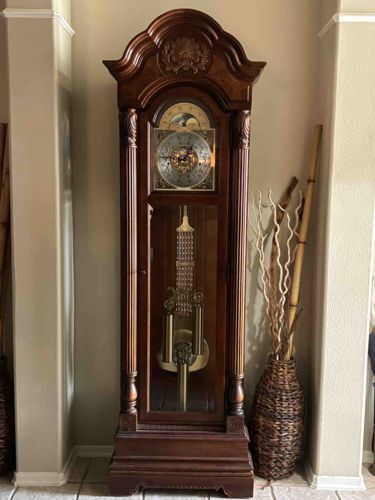
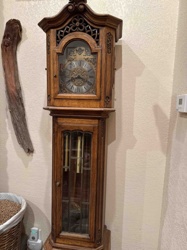
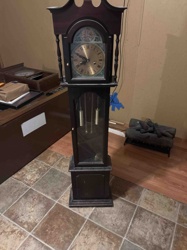
This is a freestanding grandfather clock, crafted from wood with a rich, dark brown finish, likely cherry or mahogany, exhibiting a warm luster. The clock stands tall, featuring a distinctive arching or 'hooded' pediment top adorned with intricate carved detailing, possibly a shell or floral motif, flanked by decorative scrolls. Below the pediment, the dial is visible through a glazed door, showcasing an ornate metal face with Roman numerals, possibly brass or pewter, and a visible moon phase complication in the arched section above the main dial. The main body of the clock is delineated by fluted columns or pilasters on either side of the central glazed door. Through this glass panel, the pendulum and weights are visible. The pendulum appears to be made of polished brass, featuring a decorative lyre or harp-shaped suspension and a large bob. The weights, suspended by chains or cables, are cylindrical and also appear to be brass. The base of the clock is substantial, with a multi-layered plinth design and carved elements, providing a stable foundation. The overall style suggests a traditional, possibly Queen Anne or Chippendale influence, indicating it could be a reproduction or a piece from the mid-20th century onwards. The wood grain on the pediment and door panels shows a burl or veneer pattern, adding to its visual appeal. The clock appears to be in good condition with no obvious signs of significant damage, heavy wear, or repairs visible in the provided image. The glass panels are clear, and the metal components are shiny, suggesting it has been well-maintained. The craftsmanship is evident in the detailed carvings, turning, and joinery, typical of quality furniture-grade clock casings.
AI Appraisal Report
Upon visual examination of the provided image, I find this freestanding grandfather clock to be in good overall condition. The rich, dark brown finish, likely cherry or mahogany, exhibits a warm luster, and there are no obvious signs of significant damage, heavy wear, or past repairs. The clear glass panels and shiny metal components for the dial, moon phase, pendulum, and weights suggest it has been well-maintained. The craftsmanship is evident in the intricate carved pediment, fluted columns, and multi-layered base, pointing to quality furniture-grade construction. The style, with its Queen Anne or Chippendale influences and visible burl or veneer, strongly suggests it is a reproduction or a piece from the mid-20th century onwards, rather than an antique. Without physical inspection of the movement, brand markings, or internal construction, authenticating its age precisely is impossible. I would need to examine the movement architecture, check for maker's marks, and possibly conduct wood analysis for a definitive age and authenticity assessment. Current market conditions for traditional grandfather clocks are steady but not experiencing rapid appreciation. This clock's attractive aesthetic and apparent good condition contribute positively. Comparables for well-maintained, mid-to-late 20th-century reproductions in a traditional style typically fall within the $800 to $1,500 range, depending on movement quality and brand. Demand is stable, but these are not rare items. The primary factors impacting its value would be the quality and origin of the internal clockwork and whether it is a named manufacturer, which cannot be determined from imagery alone.