AI Appraisal Estimate

AI-generated estimates · not official valuations

From the user

What was submitted

Photo and notes provided by the user — not generated by AI

Submitted item photo
Submitted photo · June 17, 2026

User's notes

No additional notes provided.

AI analysis below

AI appraisal

AI analysis & estimate

AI-Generated · Verify before acting

Everything below is generated by AI for informational purposes only. AI can make mistakes — the AI may misidentify items or misattribute them (artist, maker, brand, designer, origin, era). This is not an official valuation and should not be used for insurance, sale, tax, estate, legal, or lending purposes — or any decision requiring a certified appraisal. It is not an authoritative claim about any person, brand, or rights holder — do not share or rely on it as a factual statement about a third party. Always consult qualified professionals before making financial decisions.

Read the full disclaimer

AI Identification

·Not independently authenticated·Verify before acting

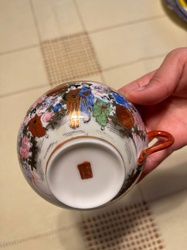
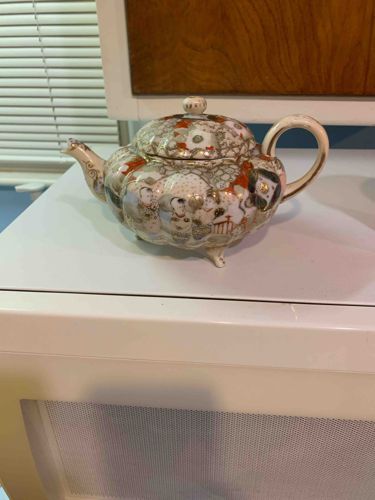
Japanese Satsuma Moriage Immortals Teapot

Asian Antiques / Ceramics

AI Estimated Value

·Not an official valuation·Verify before acting

$450 - $650

As of June 17, 2026

AI Item Analysis

·AI can make mistakes·Verify before acting
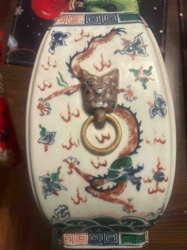
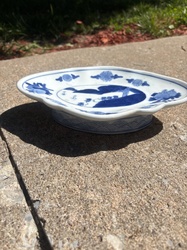
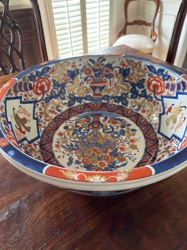
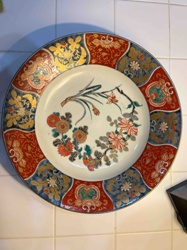
This is a vintage or antique Japanese Satsuma ware teapot, likely dating from the late Meiji era (late 19th century) to the mid-20th century. The teapot features a squat, globular body with deep vertical lobing, supported by three small tripod feet. The exterior is extensively decorated with hand-painted 'moriage' (raised enamel) depicting various figures, likely the Thousand Immortals or Arhats. The color palette is rich with iron red, forest green, Cream, and significant heavy gold gilding throughout. The lid is domed with a matching design and a simple rounded finial. The handle is a curved C-shape, while the spout is short and upturned, both accented with gold flourishes. High-quality craftsmanship is evident in the detailed facial expressions of the figures and the complex diaper patterns filling the background spaces. Regarding condition, there is visible wear to the gold gilding on the handle and spout, consistent with age and use. Small chips appear to be present on the feet, and there is a fine network of age-related crazing in the cream glaze, which is characteristic of earthenware produced in the Satsuma style. No maker's mark is visible on the exterior, though one may be present on the underside.
AI Appraisal Report

·AI can make mistakes·Verify before acting
I have carefully examined the provided images of this Satsuma-style teapot. The piece exhibits the classic hallmarks of late Meiji to Taisho period export ware (1890–1920s), specifically the 'Thousand Immortals' motif. The application of moriage (raised enamel) is of good quality, and the heavy use of gilding suggests it was intended for the Western market. The vertical lobing adds a level of complexity to the form that is desirable among collectors of earthenware. Condition-wise, I note significant wear to the gilding on the handle and spout, which is common for utilitarian pieces of this age. The fine crazing across the cream-colored glaze is expected and consistent with authentic Satsuma-style earthenware. However, the visible chips on the tripod feet and potential loss of enamel on the Arhats' faces do detract from the overall market value. Comparable pieces in pristine condition occasionally reach $800, but given the observed wear, a more conservative estimate is appropriate. Market demand for later-period Satsuma is stable but currently lacks the fervor seen for 19th-century masterworks by recognized names like Kinkozan or Yabu Meizan. The lack of a visible maker's mark further categorizes this as a high-quality workshop piece rather than a signature masterpiece. Disclaimer: This appraisal is based on photographic evidence only. Authenticity cannot be definitively verified without a physical inspection to confirm the clay body's density and weight. To provide a final authentication, I would need to examine the base for any hidden markings, check for professional restorations under UV light, and review any available provenance documentation. Scientific testing, such as thermoluminescence, is generally not warranted for items in this price range but remains the only way to scientifically confirm age.

Get your items appraised

Instant estimates of your treasures with AI-powered appraisals

Browse More Appraisals