AI Appraisal Estimate

AI-generated estimates · not official valuations

From the user

What was submitted

Photo and notes provided by the user — not generated by AI

Submitted item photo
Submitted photo · June 30, 2026

User's notes

No additional notes provided.

AI analysis below

AI appraisal

AI analysis & estimate

AI-Generated · Verify before acting

Everything below is generated by AI for informational purposes only. AI can make mistakes — the AI may misidentify items or misattribute them (artist, maker, brand, designer, origin, era). This is not an official valuation and should not be used for insurance, sale, tax, estate, legal, or lending purposes — or any decision requiring a certified appraisal. It is not an authoritative claim about any person, brand, or rights holder — do not share or rely on it as a factual statement about a third party. Always consult qualified professionals before making financial decisions.

Read the full disclaimer

AI Identification

·Not independently authenticated·Verify before acting

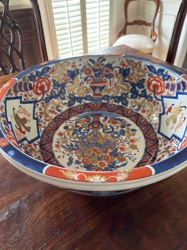
Japanese Imari Porcelain Punch Bowl

Asian Antique Ceramics

AI Estimated Value

·Not an official valuation·Verify before acting

$400 - $600 USD

As of June 30, 2026

AI Item Analysis

·AI can make mistakes·Verify before acting
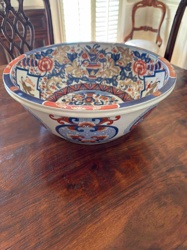
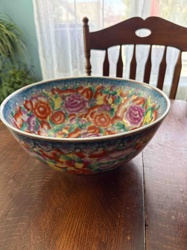
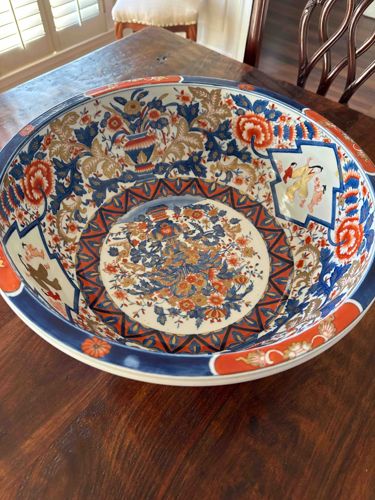
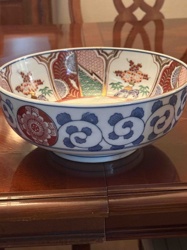
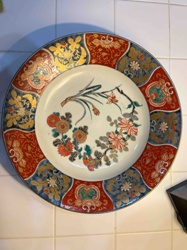
This is a large, circular porcelain punch bowl executed in the traditional Japanese Imari palette, often associated with Arita ware. The color scheme is dominated by underglaze cobalt blue, overglaze iron red, and highlights of gold gilding on a white ground. The interior is extensively decorated with ornate floral motifs, featuring large chrysanthemums (kiku), stylized peonies, and dense floral sprays arranged around a central medallion. The interior walls include cartouches or 'window' panels depicting traditional figures in kimonos, likely representing everyday life or mythological scenes. The broad rim is finished with a blue border punctuated by alternating red floral swags. Physically, the piece displays high-quality hand-painted details with varying line weights, indicating skilled craftsmanship. Based on the style and saturation of colors, this likely dates to the late 19th-century Meiji period or early 20th century. Visible condition indicators include slight rubbing to the gold gilding on the inner raised patterns and rim, characteristic of age and light use. No significant cracks or chips are immediately visible from this perspective, though there is a natural aged patina to the porcelain surface and some minor firing imperfections such as small pinholes in the glaze. The bowl possesses a substantial weight and deep profile, common for functional punch bowls intended for celebratory display.
AI Appraisal Report

·AI can make mistakes·Verify before acting
Based on the visual evidence provided, this is a large Japanese Imari porcelain punch bowl, likely dating to the late Meiji period (circa 1880–1910). The piece exhibits the classic Arita palette of underglaze cobalt blue, overglaze iron red, and gilt highlights. The decorative scheme is robust, featuring chrysanthemum motifs and cartouches of figures, which are highly characteristic of export ware from this era. The painting quality appears competent, with good saturation in the iron reds, though the line work suggests production for the export market rather than the highest domestic grade. Condition is a primary value driver here. I note visible rubbing to the gilt rim and interior high points, which is consistent with age and typical usage. While no hairline cracks or chips are immediately visible in the images, the presence of minor glaze pinholes points to standard firing conditions of the late 19th century. The market for general Meiji export Imari has softened slightly from its peak but remains stable for large, decorative showpieces like punch bowls. Comparable examples of this size (typically 10–12 inches in diameter) and quality commonly auction in the $400–$600 range, occasionally reaching $800 if the provenance is distinguished. It is important to note that this appraisal is based solely on digital images. To provide a definitive authentication and valuation, I would need to physically handle the bowl to check for professional restoration (often hidden under UV light), assess ring resonance to rule out internal hairline cracks, and examine the foot rim for specific kiln marks. Without these physical checks, this valuation assumes the piece is free of invisible repairs or structural flaws.

Get your items appraised

Instant estimates of your treasures with AI-powered appraisals

Browse More Appraisals