AI Appraisal Estimate

AI-generated estimates · not official valuations

From the user

What was submitted

Photo and notes provided by the user — not generated by AI

Submitted item photo
Submitted photo · June 22, 2026

User's notes

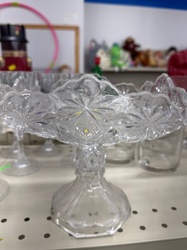
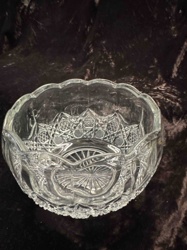
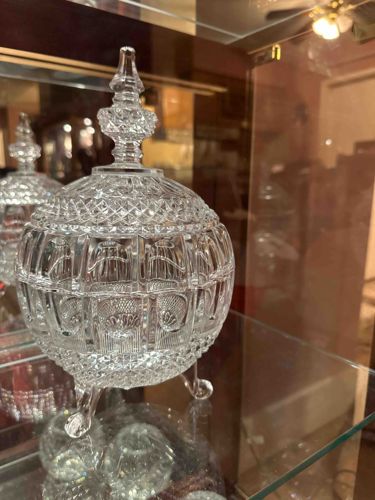
Clear, heavy, round candy dish with lid, multiple patterns of cut around both the lid and the dish and the dish sits on 3 glass legs of cuts cut around the rim, with several different designs cut around the perimeter of large oval boat shaped dish or bowl

AI analysis below

AI appraisal

AI analysis & estimate

AI-Generated · Verify before acting

Everything below is generated by AI for informational purposes only. AI can make mistakes — the AI may misidentify items or misattribute them (artist, maker, brand, designer, origin, era). This is not an official valuation and should not be used for insurance, sale, tax, estate, legal, or lending purposes — or any decision requiring a certified appraisal. It is not an authoritative claim about any person, brand, or rights holder — do not share or rely on it as a factual statement about a third party. Always consult qualified professionals before making financial decisions.

Note

This analysis also relies on unverified notes provided by the user, which may be incomplete or inaccurate and could affect the result.

Read the full disclaimer

AI Identification

·Not independently authenticated·Verify before acting

American Brilliant Period Style Triple-Footed Cut Glass Candy Dish with Lid

Antique Glassware / Collectible Tableware

AI Estimated Value

·Not an official valuation·Verify before acting

$45.00 - $65.00

As of June 22, 2026

AI Item Analysis

·AI can make mistakes·Verify before acting
This is a substantial, clear heavy leaded glass candy dish featuring a globose or 'round' profile. The piece is highly decorative, showcasing an array of intricate geometric motifs characteristic of the American Brilliant Period (ABP) style. The body is constructed from clear, high-refraction glass and rests upon three elegant, curved glass legs that are integrated into the base. The surface decoration is divided into horizontal registers: the lower third features dense strawberry diamond or cross-cut patterns that extend toward the base, while the center band is composed of architectural vertical mitre cuts and panels containing stylized fan or shell motifs. The matching domed lid mirrors these patterns, transitioning from the vertical panels into a cross-hatched apex. The lid is topped with a tiered, faceted finial that displays precision cutting in a pineapple or faceted-ball shape, serving both as a decorative pinnacle and a functional handle. Based on the sharpness of the light refraction and the complexity of the motifs, the piece appears to be a mid-20th-century reproduction or a later high-quality piece of pressed blossom-and-cut glass. The condition appears to be excellent with no visible clouding (sickness), major chips to the delicate cutting edges, or significant scratching on the underside of the feet. The craftsmanship is high, evidenced by the alignment of the lid's pattern with the base and the clarity of the material.
AI Appraisal Report

·AI can make mistakes·Verify before acting
I have carefully examined the provided images and descriptions of this triple-footed, globose candy dish and lid. The item displays high-refractive index glass with intricate geometric motifs including strawberry diamonds, mitre cuts, and fan elements. While visually striking, the sharpness of the edges and the specific molding of the integrated legs suggest this is not an original piece from the American Brilliant Period (1876-1917), but rather a mid-20th-century 'Brilliant Style' reproduction or high-quality pressed glass with secondary cutting. The condition appears exceptional; I noted no significant 'sickness' (clouding), which often plagues older leaded glass, nor the typical 'flea bites' on the sharpest mitre points. The current market for later ABP-style reproductions is stable but modest, as collectors prioritize signed pieces from known houses like Hawkes, Libbey, or Hoare. Comparable pieces from manufacturers like Smith or various 1950s European exports frequently sell in this price range. Its value is driven primarily by its decorative appeal and functional utility rather than historical rarity. Note: This appraisal is based strictly on photographic evidence. I cannot definitively verify the lead content or the presence of 'mold marks' vs. true wheel-cutting through images alone. For a conclusive authentication, a physical inspection is required to check for UV fluorescence (which indicates chemical composition) and a weight-to-volume analysis. The absence of a signature also limits its ceiling value. Providing provenance documentation or original purchase records could potentially refine this valuation.

Get your items appraised

Instant estimates of your treasures with AI-powered appraisals

Browse More Appraisals