AI Appraisal Estimate

AI-generated estimates · not official valuations

From the user

What was submitted

Photo and notes provided by the user — not generated by AI

Submitted item photo
Submitted photo · June 26, 2026

User's notes

No additional notes provided.

AI analysis below

AI appraisal

AI analysis & estimate

AI-Generated · Verify before acting

Everything below is generated by AI for informational purposes only. AI can make mistakes — the AI may misidentify items or misattribute them (artist, maker, brand, designer, origin, era). This is not an official valuation and should not be used for insurance, sale, tax, estate, legal, or lending purposes — or any decision requiring a certified appraisal. It is not an authoritative claim about any person, brand, or rights holder — do not share or rely on it as a factual statement about a third party. Always consult qualified professionals before making financial decisions.

Read the full disclaimer

AI Identification

·Not independently authenticated·Verify before acting

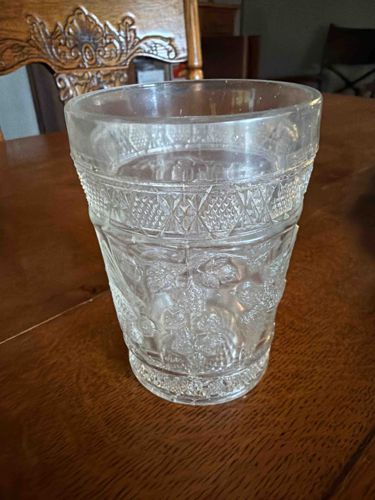
Early American Pattern Glass (EAPG) Water Tumbler

Antique Glassware / Collectible Tableware

AI Estimated Value

·Not an official valuation·Verify before acting

$25.00 - $45.00

As of June 26, 2026

AI Item Analysis

·AI can make mistakes·Verify before acting
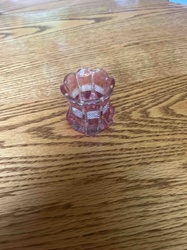
This item is a clear pressed glass water tumbler, characteristic of Early American Pattern Glass (EAPG) from the late 19th to early 20th century. The glass exhibits a multi-banded decorative scheme. The upper portion features a wide, smooth rim that transitions into a horizontal band containing a 'Diamond and Fan' or similar geometric motif. Below this, the body is adorned with an intricate, raised floral and fruit pattern, likely depicting grapes or small berries with foliage in a stippled or textured relief. The base is finished with a smaller repeating geometric band matching the aesthetic of the upper section. The glass appears to have a slight grayish or straw tint common in soda-lime glass of the era. Physically, the tumbler shows a slight taper from the rim to the foot. The condition suggests a well-preserved piece with expected light surface scratches and minor flea bites on the decorative ridges due to age and handling. There are no obvious large cracks or significant chips visible. The molding is relatively crisp, indicating a mid-to-high quality production run. While no specific maker's mark is visible in the photograph, the style is reminiscent of patterns produced by companies like Indiana Glass or United States Glass Company during the Victorian era. The craftsmanship is typical of high-volume industrial glass production where mold lines may be present but integrated into the design.
AI Appraisal Report

·AI can make mistakes·Verify before acting
I have virtually examined this Early American Pattern Glass (EAPG) tumbler. The piece displays the characteristic 'Diamond and Fan' banding and stippled fruit relief motifs consistent with late 19th-century soda-lime glass production. The slight straw tint and visible mold integration suggest an authentic piece from the 1890-1910 period, likely produced by the United States Glass Company or a contemporary competitor. The condition appears 'Good to Very Good' for its age; while the molding remains relatively crisp, the presence of 'flea bites' and surface micro-scratching is consistent with utilitarian use in a Victorian household. The market for EAPG has stabilized significantly over the last decade. While historically highly collectible, high-volume production tumblers currently face a saturated market with moderate demand. Recent auction and antique mall comparables for non-flint, colorless pressed tumblers of similar motifs consistently fall within the $20 to $50 range. Rarity is low, as these were mass-produced tableware sets. Key value drivers for this specific piece include the clarity of the stippling and the absence of 'sick glass' (cloudiness from chemical decomposition). Limitation Note: This appraisal is based strictly on visual digital evidence. A physical inspection is required to check for 'black light' fluorescence (manganese vs. selenium), to feel for ground-down chips on the rim, and to verify the weight/resonance associated with period glass. Provenance documentation regarding the specific set or original purchase would be necessary for a definitive attribution to a specific glass works factory.

Get your items appraised

Instant estimates of your treasures with AI-powered appraisals

Browse More Appraisals