Early American Pattern Glass (EAPG) Footed Compote or Candy Dish
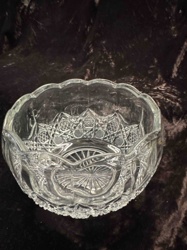
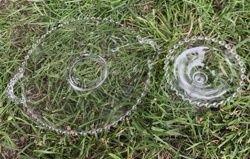
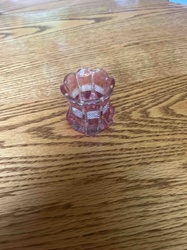
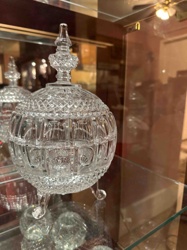
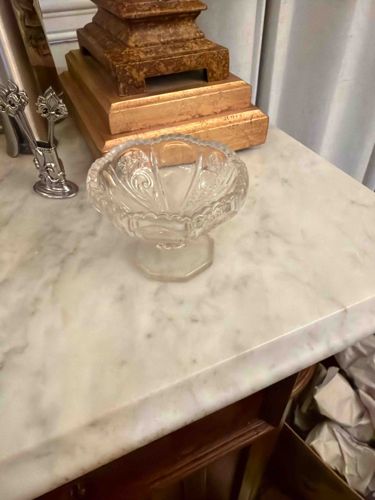
This item is a clear, pressed glass footed compote, often referred to as a candy dish or jelly bowl. It features a scalloped rim with a decorative 'zippered' or beaded edge. The bowl body is divided into multiple panels featuring intricate relief patterns including scrolls, floral motifs, and geometric ribbing, characteristic of the Early American Pattern Glass (EAPG) style. The piece is constructed with a circular, flaring bowl that transitions into a short, molded pedestal stem resting on an octagonal or hexagonal base. Based on the design, it likely dates from the late 19th century to the early 20th century (c. 1880-1920). The glass appears to have good clarity with significant light refraction in the faceted areas. Regarding condition, there is no visible major chipping or cracking from this angle; however, pieces of this age typically exhibit 'shelf wear' on the bottom of the base and small 'flea bites' on the sharp edges of the pattern or rim. The craftsmanship is indicative of mass-produced Victorian-era glassware intended for middle-class households, achieving a luxury cut-glass look through more affordable pressing techniques.
AI-Generated Appraisal Disclaimer
Estimated Value
$45.00 - $65.00
Basic Information
Category
Antique Glassware / Collectible Tableware
Appraised On
March 26, 2026
Estimated Value
$45.00 - $65.00
Item Description
This item is a clear, pressed glass footed compote, often referred to as a candy dish or jelly bowl. It features a scalloped rim with a decorative 'zippered' or beaded edge. The bowl body is divided into multiple panels featuring intricate relief patterns including scrolls, floral motifs, and geometric ribbing, characteristic of the Early American Pattern Glass (EAPG) style. The piece is constructed with a circular, flaring bowl that transitions into a short, molded pedestal stem resting on an octagonal or hexagonal base. Based on the design, it likely dates from the late 19th century to the early 20th century (c. 1880-1920). The glass appears to have good clarity with significant light refraction in the faceted areas. Regarding condition, there is no visible major chipping or cracking from this angle; however, pieces of this age typically exhibit 'shelf wear' on the bottom of the base and small 'flea bites' on the sharp edges of the pattern or rim. The craftsmanship is indicative of mass-produced Victorian-era glassware intended for middle-class households, achieving a luxury cut-glass look through more affordable pressing techniques.
Related Tags
Get Your Items Appraised
Instant estimates of your treasures with AI-powered instant appraisals