EAPG Cranberry Stain Toothpick Holder
Antique Glassware / Collectible Tableware

EAPG Cranberry Stain Toothpick Holder

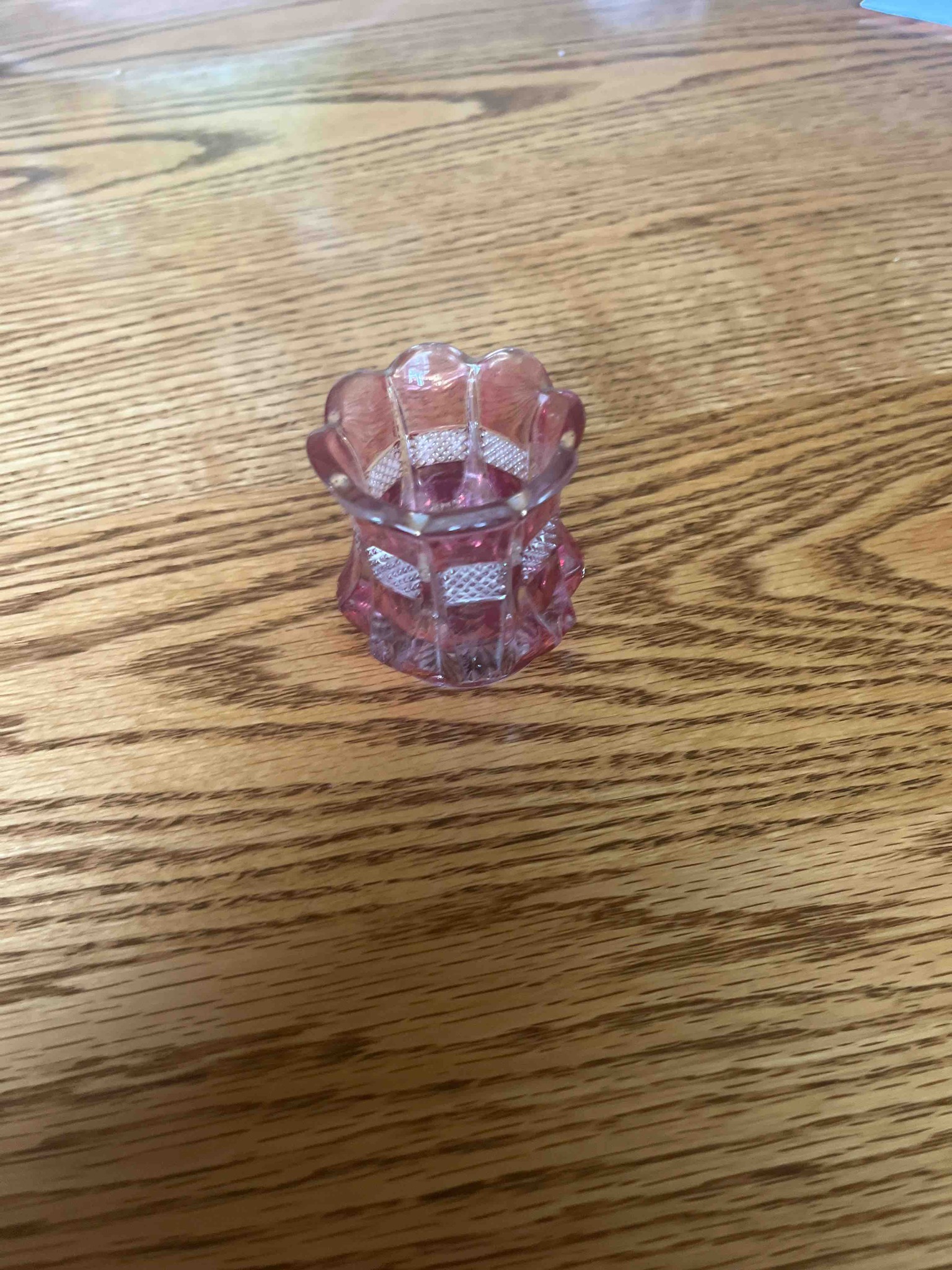
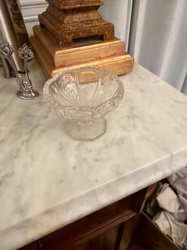
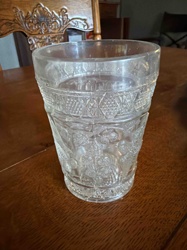
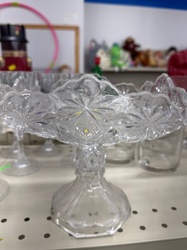
This item is an Early American Pressed Glass (EAPG) toothpick holder, characterized by a scalloped, petal-like rim and a weighted base. It features a transparent glass body adorned with a vibrant cranberry-colored stain applied to select panels. The vessel is intricately decorated with a recurring 'hobstar' or geometric diamond pattern arranged in bands around the mid-section, creating a textured, cross-hatched aesthetic that catches the light. Structurally, it has a waisted or flared shape with vertical fluting. The piece shows signs of age-appropriate wear, including minor surface scratches and possible light fading to the cranberry stain at the edges. Such pieces typically date from the late 19th century to early 20th century (Victorian era). The craftsmanship suggests a molded production process typical of high-quality glass manufacturers such as Westmoreland or Fenton, though no specific maker's mark is visible. The glass appears clear and free of major chips or cloudiness, indicating good preservation of the material quality and decorative flash staining.
Estimated Value

$45–$75

Basic Information

Category

Antique Glassware / Collectible Tableware

Appraised On

April 10, 2026

Estimated Value

$45–$75

Item Description

This item is an Early American Pressed Glass (EAPG) toothpick holder, characterized by a scalloped, petal-like rim and a weighted base. It features a transparent glass body adorned with a vibrant cranberry-colored stain applied to select panels. The vessel is intricately decorated with a recurring 'hobstar' or geometric diamond pattern arranged in bands around the mid-section, creating a textured, cross-hatched aesthetic that catches the light. Structurally, it has a waisted or flared shape with vertical fluting. The piece shows signs of age-appropriate wear, including minor surface scratches and possible light fading to the cranberry stain at the edges. Such pieces typically date from the late 19th century to early 20th century (Victorian era). The craftsmanship suggests a molded production process typical of high-quality glass manufacturers such as Westmoreland or Fenton, though no specific maker's mark is visible. The glass appears clear and free of major chips or cloudiness, indicating good preservation of the material quality and decorative flash staining.
Get Your Items Appraised

Instant estimates of your treasures with AI-powered instant appraisals

Browse More Appraisals