AI Appraisal Estimate

AI-generated estimates · not official valuations

From the user

What was submitted

Photo and notes provided by the user — not generated by AI

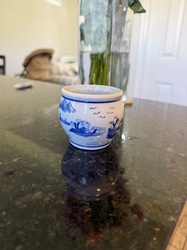
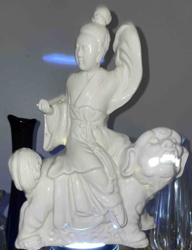
Submitted item photo
Submitted photo · June 20, 2026

User's notes

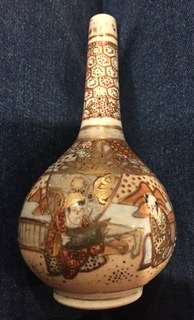
Early Satsuma? No mark on base. May have been signed. 5.5 cm x 2.5 cm.

AI analysis below

AI appraisal

AI analysis & estimate

AI-Generated · Verify before acting

Everything below is generated by AI for informational purposes only. AI can make mistakes — the AI may misidentify items or misattribute them (artist, maker, brand, designer, origin, era). This is not an official valuation and should not be used for insurance, sale, tax, estate, legal, or lending purposes — or any decision requiring a certified appraisal. It is not an authoritative claim about any person, brand, or rights holder — do not share or rely on it as a factual statement about a third party. Always consult qualified professionals before making financial decisions.

Note

This analysis also relies on unverified notes provided by the user, which may be incomplete or inaccurate and could affect the result.

Read the full disclaimer

AI Identification

·Not independently authenticated·Verify before acting

Satsuma-style miniature earthenware vase

Asian Art and Ceramics

AI Estimated Value

·Not an official valuation·Verify before acting

$150-$300

As of June 20, 2026

AI Item Analysis

·AI can make mistakes·Verify before acting
This miniature earthenware vase, measuring approximately 5.5 cm by 2.5 cm as noted by the owner, is stylistically consistent with late 19th or early 20th century Japanese Satsuma ware, likely from the Meiji or Taisho periods. The vessel features a bulbous body and a long, narrow neck, finished with a cream-colored crackle glaze. The decoration consists of hand-painted polychrome enamels and extensive gilt accents. The central frieze depicts figures in traditional Japanese attire, possibly scholars or immortals, though the detail is soft due to the miniature scale. The neck is adorned with a repetitive orange and gold hexagonal honeycomb pattern (kikkō mon). Note that while the owner suggests this may be an 'early Satsuma' piece and mentions no mark on the base, these claims remain unverified as the bottom is not visible in the image. The absence of a mark is common for smaller pieces but does not confirm age. Condition appears fair; there is visible wear to the gilding on the neck and rim, and some surface grime or potential rubbing to the enamel figures on the lower portion. This identification is hedged as a 'Satsuma-style' work because conclusive attribution to a specific workshop or province requires physical examination of the clay body and any potential hidden signatures.
AI Appraisal Report

·AI can make mistakes·Verify before acting
Based on my visual analysis of the provided image, this miniature earthenware vase appears to be in the Satsuma style, likely dating to the late 19th or early 20th century. I can observe a cream-colored crackle glaze and hand-painted enamels with kikkō mon patterns on the neck, which are stylistically consistent with the Meiji or Taisho periods. However, I cannot verify the owner's suggestion of it being 'Early Satsuma' or the presence of a signature, as the base is not visible and a photo cannot confirm the age or the chemical composition of the clay body. The value is largely driven by the fine miniature scale and the quality of the gilding, though I note visible wear and surface rubbing which typically lowers the price point for collectors. In the current market, small-scale Japanese export ceramics of this type remain popular, but the estimate of $150-$300 assumes that a physical examination would find the piece to be a period-appropriate work rather than a later 20th-century decorative copy. If the item were discovered to be a modern reproduction or lacked the refined hand-painting associated with established workshops, the value would likely fall below $50. To achieve a higher degree of confidence in this valuation, a physical inspection by a specialist is necessary to evaluate the texture of the glaze, the weight of the earthenware, and to search for any faint or hidden character marks that might link it to a specific decorator. Documentation regarding provenance or a family history of ownership would also be required to support the owner's claims regarding its early origin.

Get your items appraised

Instant estimates of your treasures with AI-powered appraisals

Browse More Appraisals