AI Appraisal Estimate

AI-generated estimates · not official valuations

From the user

What was submitted

Photo and notes provided by the user — not generated by AI

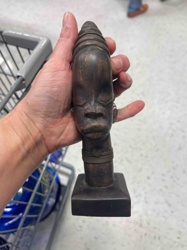
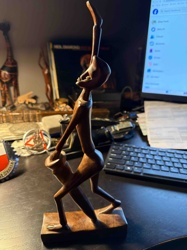
Submitted item photo
Submitted photo · June 15, 2026

User's notes

No additional notes provided.

AI analysis below

AI appraisal

AI analysis & estimate

AI-Generated · Verify before acting

Everything below is generated by AI for informational purposes only. AI can make mistakes — the AI may misidentify items or misattribute them (artist, maker, brand, designer, origin, era). This is not an official valuation and should not be used for insurance, sale, tax, estate, legal, or lending purposes — or any decision requiring a certified appraisal. It is not an authoritative claim about any person, brand, or rights holder — do not share or rely on it as a factual statement about a third party. Always consult qualified professionals before making financial decisions.

Read the full disclaimer

AI Identification

·Not independently authenticated·Verify before acting

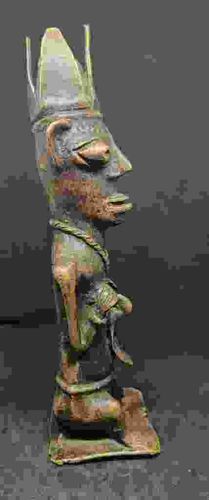
African Bronze Female Fertility Figure (Benin/Lower Niger Style)

African Art and Collectibles

AI Estimated Value

·Not an official valuation·Verify before acting

$400 - $650

As of June 15, 2026

AI Item Analysis

·AI can make mistakes·Verify before acting
This item is a cast metal alloy statue, likely bronze or brass, depicting a kneeling female figure in a style reminiscent of West African artistic traditions, specifically those found in the Lower Niger or Benin regions. The figure is characterized by an elongated torso and stylized facial features, including large, coffee-bean shaped eyes, a prominent nose, and thickened lips. She wears a tall, conical, three-pointed headdress or crown, which may signify royal or spiritual status. The figure is depicted with a child clutched to her chest, a common motif representing fertility and motherhood. Decorative elements include textured rope-like bands around the neck and waist. The surface displays a deep, dark brown patina with significant areas of localized green oxidation (verdigris), suggesting age and exposure to moisture. The casting shows a rustic, hand-crafted quality with visible pits and surface irregularities inherent to the lost-wax casting process. There are visible signs of wear consistent with age, including minor abrasions and a heavy buildup of surface oxidation across the base and lower extremities. This piece appears to be a 20th-century interpretation of traditional tribal motifs, intended for ceremonial use or as a decorative cultural object.
AI Appraisal Report

·AI can make mistakes·Verify before acting
I have carefully examined the provided images of this cast metal alloy figure. The piece exhibits characteristic traits of 20th-century 'tourist trade' or 'prestige' art from the Lower Niger region, likely inspired by Bini or Urhobo traditions. The iconography—a kneeling mother with a child and a tripartite crown—firmly identifies this as a fertility-themed object. While the lost-wax casting technique is traditional, the surface pitting and the high-contrast green verdigris appear slightly forced, a common technique used to simulate antiquity in decor-market pieces. The dark patina shows some surface wear consistent with mid-to-late 20th-century production rather than pre-colonial antiquity. Market demand for mid-range African bronzes remains stable, though it lacks the premium pricing of 'high' tribal art with documented provenance or ritual use. Comparables for similar-sized 20th-century Benin-style bronzes typically realize between $300 and $800 at auction. The value is limited by the lack of historical 'field use' and the decorative nature of the casting. Final authentication is limited by the digital format. From images alone, I cannot confirm the specific alloy composition or the internal core residues, which are vital for dating. A definitive valuation would require an in-person physical examination to assess the authenticity of the 'crust' on the patina and to look for modern tool marks. Ideally, provenance documentation or thermoluminescence (TL) testing on any remaining clay core material would be necessary to establish a pre-20th-century date, which would significantly increase value.

Get your items appraised

Instant estimates of your treasures with AI-powered appraisals

Browse More Appraisals