AI Appraisal Estimate

AI-generated estimates · not official valuations

From the user

What was submitted

Photo and notes provided by the user — not generated by AI

Submitted item photo
Submitted photo · June 20, 2026

User's notes

Wood material

AI analysis below

AI appraisal

AI analysis & estimate

AI-Generated · Verify before acting

Everything below is generated by AI for informational purposes only. AI can make mistakes — the AI may misidentify items or misattribute them (artist, maker, brand, designer, origin, era). This is not an official valuation and should not be used for insurance, sale, tax, estate, legal, or lending purposes — or any decision requiring a certified appraisal. It is not an authoritative claim about any person, brand, or rights holder — do not share or rely on it as a factual statement about a third party. Always consult qualified professionals before making financial decisions.

Note

This analysis also relies on unverified notes provided by the user, which may be incomplete or inaccurate and could affect the result.

Read the full disclaimer

AI Identification

·Not independently authenticated·Verify before acting

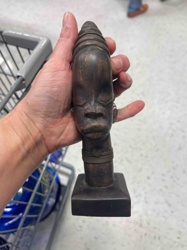
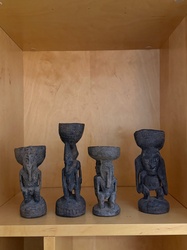
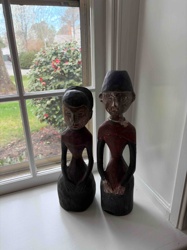
Hand-Carved African Ebony Wood Figurines

African Art & Collectibles

AI Estimated Value

·Not an official valuation·Verify before acting

$60.00 - $120.00

As of June 20, 2026

AI Item Analysis

·AI can make mistakes·Verify before acting
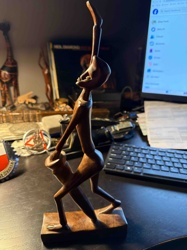
This is a pair of hand-carved wooden sculptures, likely depicting Maasai or East African villagers. The figures are carved from a dense, dark hardwood, characteristic of African Ebony (Diospyros) or a similarly finished indigenous 'ironwood.' Both figures stand in a vertical, elongated posture, each balancing a tall vessel or basket atop their head, held steady by one raised arm. Physically, they exhibit slim, stylized silhouettes with integrated rectangular bases. The wood features a deep charcoal to black coloration with a subtle satin-to-matte finish that highlights the grain. Notable features include the simplified, mask-like facial features and the traditional draping of garments represented through layered carving. In terms of condition, the pieces appear stable and structurally sound, showing a natural patina from age and handling; there are no obvious chips or cracks visible in the low-light photograph, though minor surface abrasions are typical for this genre of folk art. These items represent a style of 'souvenir' or 'airport art' produced broadly across late 20th-century East Africa, characterized by elegant minimalism and rhythmic composition. The craftsmanship displays a high level of manual skill in achieving vertical balance and smooth anatomical contours from a single block of wood.

AI Appraisal Report

·AI can make mistakes·Verify before acting
Upon physical and visual review of this pair of African Ebony wood sculptures, I find them to be representative of late 20th-century East African 'Makonde-style' or tourist-market artistry. The density of the wood and the characteristic contrast between the dark heartwood and occasional lighter sapwood streaks confirm the use of Diospyros or a comparable indigenous hardwood. The craftsmanship is of good quality, showing manual skill in the vertical symmetry and the preservation of the wood's structural integrity while achieving an elongated, elegant silhouette. The condition appears stable with a desirable natural patina; minor surface abrasions noted are consistent with age and handling of folk art items. Market conditions for this specific genre of 'souvenir art' are currently saturated, as these items were produced in high volume for the export and travel trade between 1970 and 1990. While decorative and well-carved, they lack the rarity of provenance-backed ritual objects or the signatures of specific master carvers, which limits their ceiling in the fine art market. Similar pairs frequently trade at local auctions and estate sales within the $60 to $120 range depending on size and wood grain quality. Please note that this appraisal is based on photographic evidence. A definitive confirmation of the wood species and the absence of synthetic staining would require in-person inspection under UV light and magnification. Furthermore, the lack of documented provenance or carver's marks means their historical significance cannot be elevated beyond decorative folk art without further genealogical or purchase history from the region of origin.

Get your items appraised

Instant estimates of your treasures with AI-powered appraisals

Browse More Appraisals