AI Appraisal Estimate

AI-generated estimates · not official valuations

From the user

What was submitted

Photo and notes provided by the user — not generated by AI

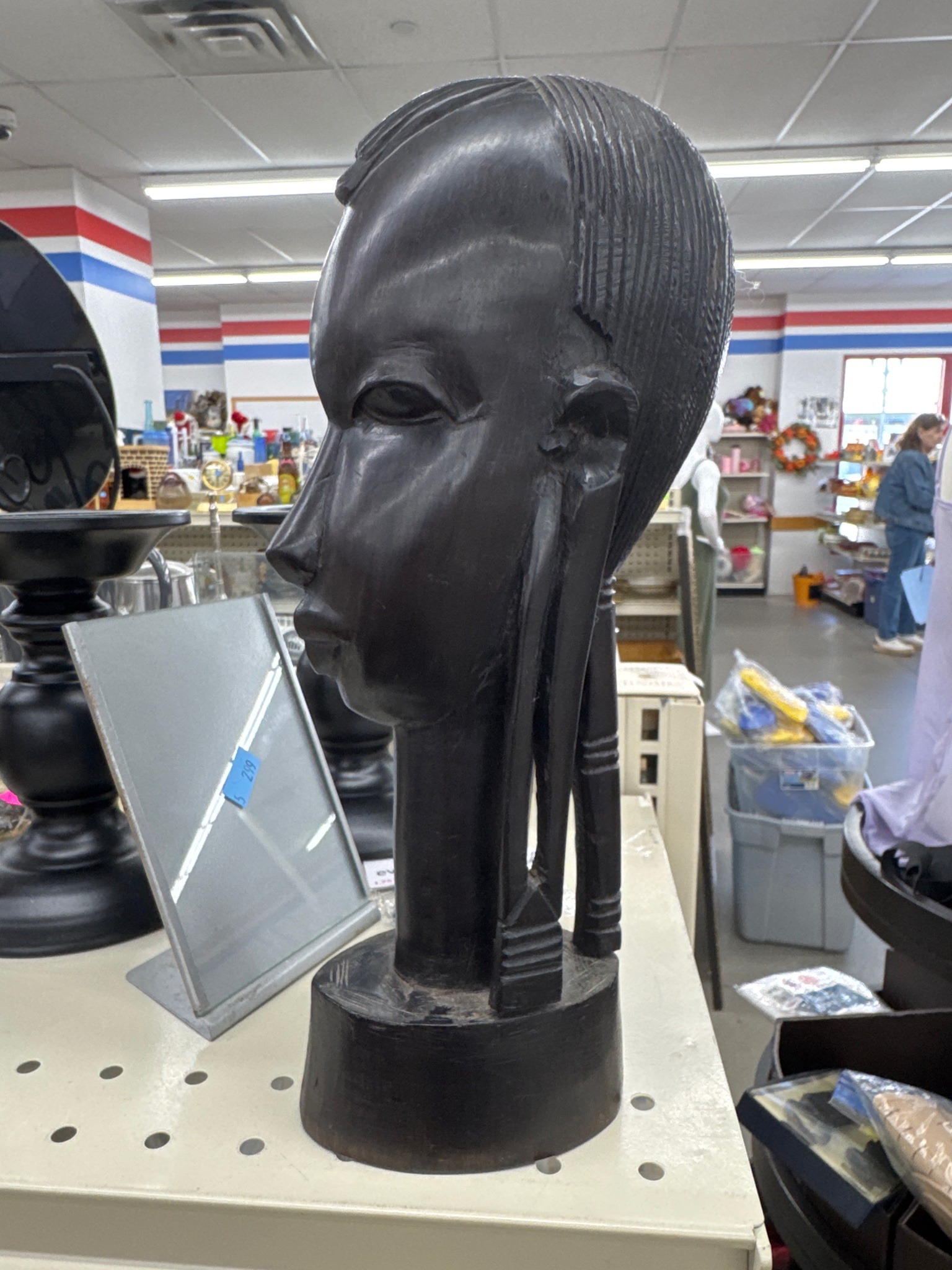
Submitted item photo
Submitted photo · June 19, 2026

User's notes

No additional notes provided.

AI analysis below

AI appraisal

AI analysis & estimate

AI-Generated · Verify before acting

Everything below is generated by AI for informational purposes only. AI can make mistakes — the AI may misidentify items or misattribute them (artist, maker, brand, designer, origin, era). This is not an official valuation and should not be used for insurance, sale, tax, estate, legal, or lending purposes — or any decision requiring a certified appraisal. It is not an authoritative claim about any person, brand, or rights holder — do not share or rely on it as a factual statement about a third party. Always consult qualified professionals before making financial decisions.

Read the full disclaimer

AI Identification

·Not independently authenticated·Verify before acting

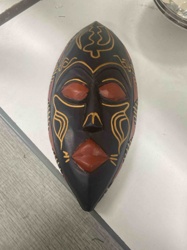
Hand-Carved African Ebony Wood Head Bust

Collectibles / Ethnographic Art

AI Estimated Value

·Not an official valuation·Verify before acting

$150 - $250

As of June 19, 2026

AI Item Analysis

·AI can make mistakes·Verify before acting
This is a significant hand-carved sculpture depicting a human head in a stylized African aesthetic, likely originating from East Africa (Makonde style) or West Africa. The piece is crafted from a dense, dark hardwood, which appears to be genuine ebony or a similarly heavy wood treated with a dark stain or polish. The bust stands approximately 12 to 15 inches tall on a self-integrated circular base. The facial features are elongated with heavy-lidded eyes, a prominent bridge on the nose, and full lips, reflecting 20th-century artisan craftsmanship often produced for the export or tourist market. Notable features include intricate, linear incised carvings representing hair or a headpiece, and decorative elongated elements extending from the ears down to the neck, possibly signifying jewelry or cultural ornaments. The surface has a smooth, semi-glossy patina from polishing. Condition-wise, there are visible surface abrasions, minor scuffs on the forehead and base, and some dust accumulation in the deeper carved grooves. There are no obvious maker's marks visible in the image, which is common for such ethnographic art pieces. The craftsmanship shows skillful use of subtractive carving techniques, particularly in the hollowed-out ear and neck regions.
AI Appraisal Report

·AI can make mistakes·Verify before acting
I have examined the digital images of this hand-carved ebony bust. The piece exhibits the characteristic dense grain and bi-color heartwood/sapwood interplay typical of Diospyros species, likely originating from the Makonde tradition of East Africa mid-to-late 20th century. My visual assessment confirms skillful subtractive carving, particularly in the stylized elongated earlobe ornaments and the rhythmic incised hair patterns. The condition is fair to good, noting visible scuffs on the forehead and base that indicate a lack of specialized conservation, though the wood remains structurally sound without significant radial cracking. The market for mid-century African 'airport art' or export ethnographic pieces is currently stable but saturated. Comparables at auction for unsigned ebony busts of this scale (12-15 inches) frequently realize prices in the $100 to $300 range. Its value is driven primarily by its decorative appeal and the inherent quality of the ebony wood rather than a specific artist's provenance or rarity. Significant limitations exist in this remote appraisal; I cannot verify the wood's density or smell, which distinguishes genuine ebony from stained 'ebonized' hardwoods. A physical inspection is required to check for 'African Ebony' markers versus 'Mpingo' wood and to search for microscopic maker marks. To elevate this valuation, documentation tracing the piece to a specific mid-century collection or a known artisan colony would be necessary. Without such provenance, it remains a high-quality decorative ethnographic object.

Get your items appraised

Instant estimates of your treasures with AI-powered appraisals

Browse More Appraisals