Trio of West African Dogon-Style Bronze Figurines
Ethnographic Art & Sculpture

Trio of West African Dogon-Style Bronze Figurines

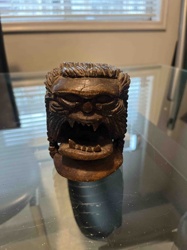
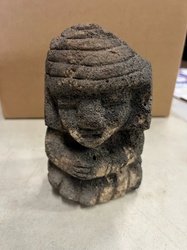
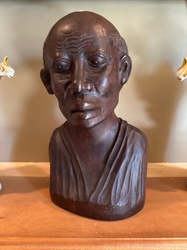
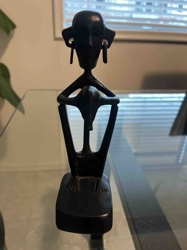
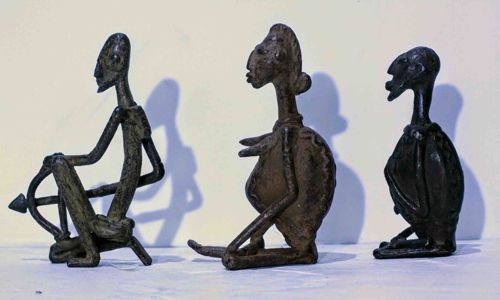
This set consists of three small-scale bronze or copper-alloy sculptures featuring stylized human figures, characteristic of the sculptural traditions of the Dogon or Bamana people of Mali. The figures are executed with a minimalist, elongated aesthetic typical of West African lost-wax casting. The first figure on the left depicts a hunter or warrior in a seated or crouching posture, gripping a curved bow; the central figure is female, characterized by a protruding belly and pointed breasts suggesting fertility; and the third figure on the right is a seated male with a prominent beard and a rounded torso. Each piece displays a dark, encrusted brown patina with hints of green oxidation (verdigris) in recessed areas, indicating age or exposure to the elements. The surfaces are tactile and irregular, showing the remains of the hand-modeled wax originals used in the casting process. There are no visible maker's marks, which is standard for traditional ritual or decorative tribal art. The condition appears stable with expected surface wear, small pits from the casting process, and a deep patina. Their style suggests they are late 20th-century creations made for the ethnographic art market, drawing on ancient Saharan and Sahelian stylistic tropes.
Estimated Value

$100 - $250

Basic Information

Category

Ethnographic Art & Sculpture

Appraised On

March 22, 2026

Estimated Value

$100 - $250

Additional Details Provided By Owner

User Provided Information

Unknown artist, untitled sculpture

Item Description

This set consists of three small-scale bronze or copper-alloy sculptures featuring stylized human figures, characteristic of the sculptural traditions of the Dogon or Bamana people of Mali. The figures are executed with a minimalist, elongated aesthetic typical of West African lost-wax casting. The first figure on the left depicts a hunter or warrior in a seated or crouching posture, gripping a curved bow; the central figure is female, characterized by a protruding belly and pointed breasts suggesting fertility; and the third figure on the right is a seated male with a prominent beard and a rounded torso. Each piece displays a dark, encrusted brown patina with hints of green oxidation (verdigris) in recessed areas, indicating age or exposure to the elements. The surfaces are tactile and irregular, showing the remains of the hand-modeled wax originals used in the casting process. There are no visible maker's marks, which is standard for traditional ritual or decorative tribal art. The condition appears stable with expected surface wear, small pits from the casting process, and a deep patina. Their style suggests they are late 20th-century creations made for the ethnographic art market, drawing on ancient Saharan and Sahelian stylistic tropes.
Get Your Items Appraised

Instant estimates of your treasures with AI-powered instant appraisals

Browse More Appraisals