AI Appraisal Estimate

AI-generated estimates · not official valuations

From the user

What was submitted

Photo and notes provided by the user — not generated by AI

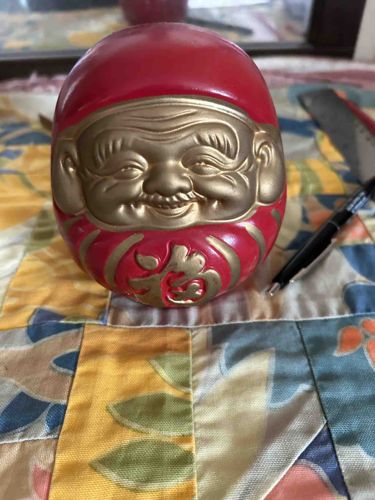
Submitted item photo
Submitted photo · June 17, 2026

User's notes

No additional notes provided.

AI analysis below

AI appraisal

AI analysis & estimate

AI-Generated · Verify before acting

Everything below is generated by AI for informational purposes only. AI can make mistakes — the AI may misidentify items or misattribute them (artist, maker, brand, designer, origin, era). This is not an official valuation and should not be used for insurance, sale, tax, estate, legal, or lending purposes — or any decision requiring a certified appraisal. It is not an authoritative claim about any person, brand, or rights holder — do not share or rely on it as a factual statement about a third party. Always consult qualified professionals before making financial decisions.

Read the full disclaimer

AI Identification

·Not independently authenticated·Verify before acting

Japanese Red and Gold Daruma Doll Figurine

Collectibles - Asian Cultural Art & Talismans

AI Estimated Value

·Not an official valuation·Verify before acting

$25 - $40

As of June 17, 2026

AI Item Analysis

·AI can make mistakes·Verify before acting
This item is a Japanese Daruma doll, specifically a 'Daikoku' or smiling variant, characterized by its ovoid, weighted shape designed to return to an upright position if tilted. The object is primarily a vibrant crimson red with high-relief molded details finished in a matte metallic gold paint. The central face features a jovial, aged expression with heavy eyelids, prominent cheekbones, and a wide, smiling mouth displaying teeth. Below the face, a stylized Japanese kanji character for 'Fuku' (meaning good fortune or luck) is embossed in gold. The piece appears to be made from a molded polymer or heavy resin rather than traditional papier-mâché, indicated by the crispness of the facial details and the uniform surface texture. It stands approximately 4 to 5 inches tall, based on the scale of the adjacent pen. Condition is generally good with some light surface scuffing visible on the top of the red dome and minor wear to the gold finish on the protruding ridges of the face. This item likely dates from the late 20th century, representing a modern decorative take on the traditional Japanese Zen Buddhist talisman. The craftsmanship shows mass-produced industrial molding techniques rather than hand-carved or hand-painted artisanal assembly, though the color application remains well-defined within the embossed borders.
AI Appraisal Report

·AI can make mistakes·Verify before acting
Based on my visual examination of this Japanese 'Daikoku' variant Daruma doll, I have assessed it as a contemporary mass-produced decorative talisman rather than a historical artifact. The physical characteristics—specifically the high-relief molding and the uniform texture of the gold paint—suggest a resin or polymer composite body typical of late 20th-century giftware (circa 1980–2000). The condition is fair to good; while the 'Okiagari-koboshi' (self-righting) function appears intact, there is visible surface scuffing on the cranium and minor localized pigment loss on the facial ridges, which slightly detracts from its display value. The market for such items is currently saturated with modern reproductions. Collectors generally prioritize traditional wood-carved (Takasaki-style) or handmade papier-mâché pieces over molded resin. Recent auction data for similar industrial-molded fortune dolls indicates a modest trade, primarily within the souvenir and 'zakka' houseware markets. Its value is limited by its lack of artisanal uniqueness and its status as a mass-produced item. Limitations of this appraisal include the inability to verify the exact material density or inspect for maker's marks on the underside not visible in the provided image. A physical inspection would be required to confirm if the weight is balanced by lead or sand and to rule out potential cold-cast bronze materials, though the surface wear suggests painted resin. For full authentication, provenance regarding the specific regional kiln or factory of origin would be necessary. This valuation reflects the item's appeal as a decorative cultural object rather than an investment-grade antique.

Get your items appraised

Instant estimates of your treasures with AI-powered appraisals

Browse More Appraisals