AI estimate as of July 17, 2025 · verify with a professional before acting
AI-Generated · Verify before acting
Everything on this page is generated by AI for informational purposes only. AI can make mistakes — the AI may misidentify items or misattribute them (artist, maker, brand, designer, origin, era). This is not an official valuation and should not be used for insurance, sale, tax, estate, legal, or lending purposes — or any decision requiring a certified appraisal. It is not an authoritative claim about any person, brand, or rights holder — do not share or rely on it as a factual statement about a third party. Always consult qualified professionals before making financial decisions.
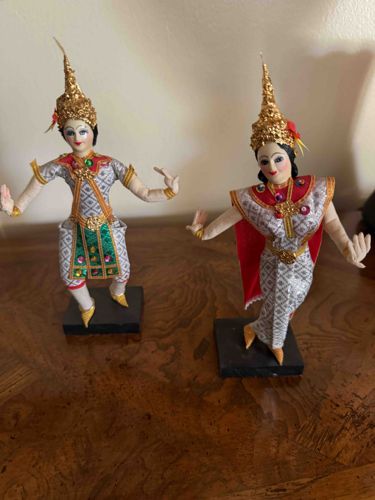
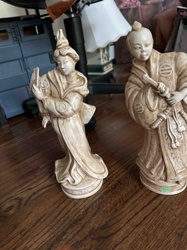
This pair of figurines depicts traditional Thai dancers, likely representing characters or poses from classical Thai dance (e.g., Khon or Lakhon). Each figurine stands on a square, black-painted wooden base, suggesting they are designed as decorative display pieces. The physical characteristics indicate a construction primarily from fabric and composite materials for the body and head, possibly a molded material like resin or papier-mâché for the faces, and intricately crafted metallic or gold-painted components for the headdresses and jewelry. The faces are finely painted with delicate features, including prominent eyebrows, defined eyes with dark pupils, and red lips, giving them a serene or focused expression. The skin tone appears light.
Each dancer is adorned in elaborate costumes that mimic traditional Thai ceremonial attire. The fabrics are patterned, possibly a brocade or embroidered silk, with motifs typical of Southeast Asian textiles. The male-presenting figure (left) wears an elaborate green and gold lower garment with jewel-like embellishments and a gold sash, while the female-presenting figure (right) features a predominant red and gold color scheme with similar intricate patterns and a draped red cape-like element. Both figures wear pointed, towering golden headdresses, highly detailed with embossed or textured patterns, and matching golden jewelry around their necks and chests. The hands are posed in classic Thai dance gestures, with bent wrists and splayed fingers, indicative of the 'Rama' or 'Kinnara' mudras. The overall condition appears good with no obvious signs of significant damage like breaks or large chips. There might be minor dust accumulation or slight wear consistent with age and display, but no major patina or repairs are visible. The craftsmanship suggests they are commercially produced souvenirs, likely from the mid to late 20th century, rather than antique, custom-made pieces. The attention to detail in the costumes and headdresses points to a respectable level of quality for mass-produced cultural art.
AI Appraisal Report
Upon visual examination of the provided image, I assess this pair of Thai Dancer Figurines. The overall condition appears good, with no obvious signs of significant damage such as breaks or large chips, only minor dust accumulation consistent with display. Based on the craftsmanship and materials, these appear to be commercially produced decorative items, likely dating from the mid-to-late 20th century. The elaborate costumes, intricate headdresses, and classic hand gestures suggest a respectable level of quality for mass-produced cultural art, rather than antique or custom-made pieces. Authenticity, in this context, refers to their origin as authentic Thai-style souvenirs, which seems highly probable given the details. The market for cultural figurines of this type is generally steady, driven by collectors of world art, individuals seeking decorative pieces, or former tourists. Comparable items, often found in online marketplaces or antique specialty shops, typically fall within a modest price range depending on size, condition, and detail. While not rare, the detailed craftsmanship elevates them above generic souvenirs. The key value drivers are their good condition, the pair being complete, and the aesthetic appeal of the traditional Thai dance representation. Limitations in authenticity verification from an image alone are significant; I cannot definitively confirm the precise materials (e.g., whether metallic components are actual metal or painted composite) or verify provenance. An in-person examination would allow for tactile inspection of materials, assessment of weight and construction, and a more thorough check for subtle repairs or condition issues not visible in photographs. Provenance documentation, such as original purchase receipts or artist/manufacturer information, would be crucial for establishing a higher value if these were attributed to a specific artisan or limited production.