AI Appraisal Estimate

AI-generated estimates · not official valuations

From the user

What was submitted

Photo and notes provided by the user — not generated by AI

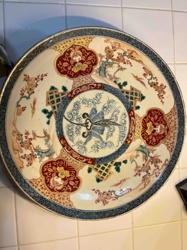
Submitted item photo
Submitted photo · June 15, 2026

User's notes

Copper-lined antique humidors

AI analysis below

AI appraisal

AI analysis & estimate

AI-Generated · Verify before acting

Everything below is generated by AI for informational purposes only. AI can make mistakes — the AI may misidentify items or misattribute them (artist, maker, brand, designer, origin, era). This is not an official valuation and should not be used for insurance, sale, tax, estate, legal, or lending purposes — or any decision requiring a certified appraisal. It is not an authoritative claim about any person, brand, or rights holder — do not share or rely on it as a factual statement about a third party. Always consult qualified professionals before making financial decisions.

Note

This analysis also relies on unverified notes provided by the user, which may be incomplete or inaccurate and could affect the result.

Read the full disclaimer

AI Identification

·Not independently authenticated·Verify before acting

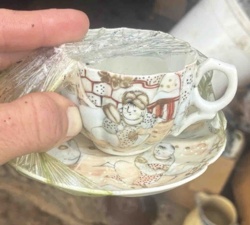
Japanese Moriage Porcelain Vase

Antique Japanese Ceramics / Porcelain

AI Estimated Value

·Not an official valuation·Verify before acting

$450.00 - $650.00

As of June 15, 2026

AI Item Analysis

·AI can make mistakes·Verify before acting
This is a large, ceramic vase featuring a matte-finished background in ombre shades of forest green, sage, and pale tan. The piece is heavily decorated in the Moriage style, characterized by raised, slip-trailed detailing that provides a three-dimensional texture to the floral composition. The central motif consists of large, multi-petaled peonies or roses in shades of burnished gold and yellow, outlined with thick black piping. The stems are rendered in a periwinkle blue with thorny accents, accompanied by green serrated leaves. Distinctive granulated gold-tone beading is used as an infill decoration throughout the background, adding further tactile quality and a sense of luxury typical of Early 20th-century 'Nippon' era export wares (roughly 1891-1921). The vase features two stylized, Art Nouveau-influenced scroll handles at the shoulder, finished in a matte tan or gold tone. The construction indicates a slip-cast body with hand-applied relief decoration. Condition-wise, the vase shows some minor scuffing and paint loss along the foot rim and shoulder handles, which is consistent with age. There are no immediate signs of major structural cracks or repairs visible in the image, though the matte finish shows slight variations in patina and surface wear. The craftsmanship reflects the high-export quality of Japanese potteries from the early Meiji to Taisho periods.
AI Appraisal Report

·AI can make mistakes·Verify before acting
I have examined the digital representations of this Japanese Moriage Porcelain vase. The piece is a classic example of 'Nippon' era export ware, typical of the 1891–1921 period. The application of Moriage (slip-trailing) is intricate, featuring the 'beaded' or 'coralene' style texture that was highly sought after in Western markets during the early 20th century. The Art Nouveau influence in the handle geometry suggests a production date likely between 1905 and 1915. Visually, the piece appears authentic; the matte 'tapestry' finish and the specific palette of forest green and periwinkle blue are consistent with known workshops from the Nagoya region. The condition is noted as fair to good; while the core structure remains intact, the visible scuffing on the handles and minor loss to the delicate Moriage piping are common but do affect the top-market value. The current market for Nippon porcelain has stabilized after a historic peak, with collectors now favoring large, ornate floor vases or pieces with rare 'swan' or 'portrait' motifs. Purely floral pieces like this one maintain steady demand but are more common. Verification of the 'Hand Painted Nippon' backstamp (maple leaf, rising sun, or 'M' in wreath) is required for a definitive valuation, as the presence of a specific maker's mark can increase value by 20%. Final authentication would require an in-person tactile inspection to ensure the beading is original and not a modern resin restoration, as well as a UV light examination to detect hidden hairline fractures or professional overpainting. The mention of copper-lined humidors in the provenance suggests this belonged to a coordinated collection of high-end gentleman's decorative arts, which adds favorable context to its history.

Get your items appraised

Instant estimates of your treasures with AI-powered appraisals

Browse More Appraisals