AI Appraisal Estimate

AI-generated estimates · not official valuations

From the user

What was submitted

Photo and notes provided by the user — not generated by AI

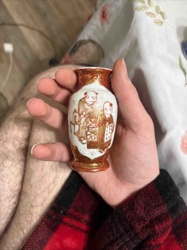
Submitted item photo
Submitted photo · June 1, 2026

User's notes

No additional notes provided.

AI analysis below

AI appraisal

AI analysis & estimate

AI-Generated · Verify before acting

Everything below is generated by AI for informational purposes only. AI can make mistakes — the AI may misidentify items or misattribute them (artist, maker, brand, designer, origin, era). This is not an official valuation and should not be used for insurance, sale, tax, estate, legal, or lending purposes — or any decision requiring a certified appraisal. It is not an authoritative claim about any person, brand, or rights holder — do not share or rely on it as a factual statement about a third party. Always consult qualified professionals before making financial decisions.

Read the full disclaimer

AI Identification

·Not independently authenticated·Verify before acting

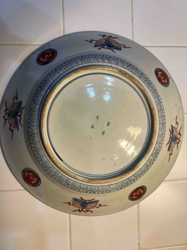
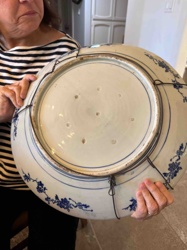
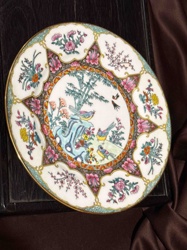
Large Japanese Imari Porcleain Charger

Antique Asian Ceramics

AI Estimated Value

·Not an official valuation·Verify before acting

$450 - $650

As of June 1, 2026

AI Item Analysis

·AI can make mistakes·Verify before acting
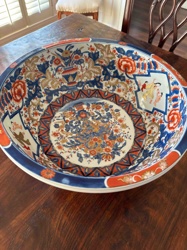
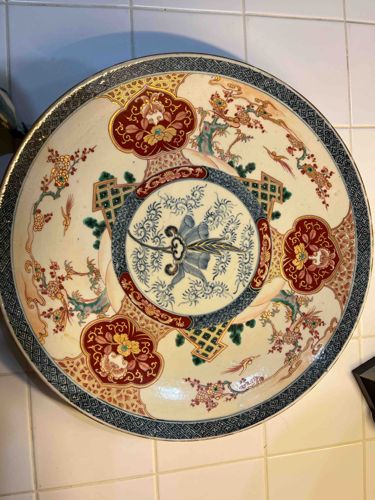
This is a large, circular decorative charger made of fine Japanese porcelain, featuring a classic Imari palette of underglaze cobalt blue, overglaze iron red, and highlighting in gold enamel. The central medallion depicts a stylized floral arrangement of blue lotuses and scrolling vines. Surrounding this center are alternating lobed panels featuring traditional motifs including cherry blossoms, pines, and mythical ho-ho (phoenix) birds amidst clouds. The design incorporates distinct geometric latticework and floral scroll borders. The outer rim is finished with a dense blue geometric pattern. The craftsmanship exhibits high-quality hand-painted details with varied brushwork and rich texture from the raised enamel. Based on the style and pigment application, it likely dates to the late Meiji (1868-1912) or early Taisho period (1912-1926). The condition appears good from the top-down view, with some minor gilt wear consistent with age primarily along the rim and central motifs. No immediate cracks or large chips are visible, though minor firing pits in the glaze are characteristic of this manufacturing era. The overall diameter appears to be in the 12 to 16-inch range. The intricate layering of patterns and the depth of the indigo blue indicate a high level of traditional ceramic skill.
AI Appraisal Report

·AI can make mistakes·Verify before acting
I have virtually examined this Japanese Imari porcelain charger, approximately 12-16 inches in diameter. Based on the cobalt blue depth and the specific execution of the iron-red overglaze, I attribute this piece to the late Meiji (ca. 1900) or early Taisho period. The central floral medallion and alternating lobed panels featuring ho-ho birds and botanical motifs are hallmarks of traditional Arita-ware production meant for both domestic use and the Western export market. The craftsmanship is high, exhibiting the 'nishiki' (brocade) style with intricate gilding. Condition appears stable; while I note minor gilt loss on the rim and typical kiln spots (firing grits) in the glaze, there are no visible structural hairlines or major chips from this perspective. Current market demand for Meiji-era Imari remains steady but conservative; while these were once highly coveted, the market is currently saturated with late 19th-century export wares, favoring only the largest or most uniquely shaped examples. This piece's value is bolstered by its classic iconography and vibrant pigment preservation. However, this appraisal is based strictly on photographic evidence. A definitive authentication requires a physical inspection to verify the ring of the porcelain for hidden cracks, the weight and translucency of the paste, and the wear pattern on the foot rim. Documentation of provenance or a maker’s mark on the reverse (such as 'Fuku' or a specific kiln name) would be necessary to reach a premium valuation. Scientific testing like thermoluminescence is rarely performed on pieces of this age but could definitively confirm the firing period if provenance is questioned.

Get your items appraised

Instant estimates of your treasures with AI-powered appraisals

Browse More Appraisals