AI Appraisal Estimate

AI-generated estimates · not official valuations

From the user

What was submitted

Photo and notes provided by the user — not generated by AI

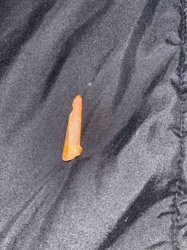
Submitted item photo
Submitted photo · June 3, 2026

User's notes

No additional notes provided.

AI analysis below

AI appraisal

AI analysis & estimate

AI-Generated · Verify before acting

Everything below is generated by AI for informational purposes only. AI can make mistakes — the AI may misidentify items or misattribute them (artist, maker, brand, designer, origin, era). This is not an official valuation and should not be used for insurance, sale, tax, estate, legal, or lending purposes — or any decision requiring a certified appraisal. It is not an authoritative claim about any person, brand, or rights holder — do not share or rely on it as a factual statement about a third party. Always consult qualified professionals before making financial decisions.

Read the full disclaimer

AI Identification

·Not independently authenticated·Verify before acting

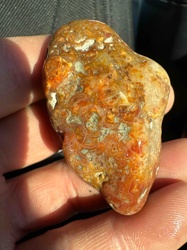
Raw Chalcedony or Agate Nodular Specimen

Rocks, Fossils & Minerals

AI Estimated Value

·Not an official valuation·Verify before acting

$45 - $65

As of June 3, 2026

AI Item Analysis

·AI can make mistakes·Verify before acting
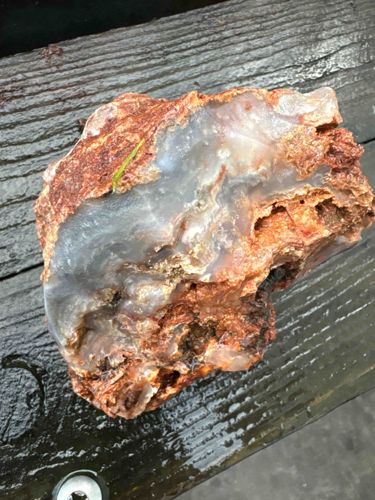
This is a raw mineral specimen featuring a prominent core of translucent, bluish-gray chalcedony encased in an iron-rich, reddish-brown host rock or matrix. The specimen exhibits a rough, irregular exterior with a highly textured, vuggy surface typical of volcanic or sedimentary origin. The central silica deposit displays a waxy luster and subtle undulating patterns characteristic of cryptocrystalline quartz. The surrounding matrix is heavily oxidized, showing varied shades of terracotta, ochre, and deep sienna, likely due to hematite or limonite staining. Structurally, the specimen appears solid but features numerous natural cavities and fractures consistent with raw field-collected material. No unnatural polishing or lapidary work is evident, preserving its primary geological state. Small organic debris, such as a localized pine needle, suggests recent environmental exposure. This piece represents a natural geological formation rather than a manufactured object, with its value determined by the clarity of the chalcedony, the color contrast with the matrix, and its overall size which appears to be palm-sized based on the wood grain background. It is a classic representation of mineral filling within a host rock cavity, potentially dating back millions of years depending on the specific geological region of harvest.
AI Appraisal Report

·AI can make mistakes·Verify before acting
Based on my visual examination of this raw chalcedony/agate nodular specimen, I have assessed it as a genuine geological formation, likely an amygdule originating from a volcanic basalt matrix. The specimen exhibits a high-contrast aesthetic, with the translucent, bluish-gray silica core providing a pleasing juxtaposition against the oxidized, iron-rich host rock. The waxy luster and cryptocrystalline structure are consistent with natural chalcedony. In the current market for raw mineral specimens, valuation is driven by aesthetics, size, and the balance of matrix-to-mineral. This piece is 'palm-sized,' a popular scale for casual collectors and lapidary hobbyists who might see potential for cabochon cutting. However, the presence of visible fractures and the raw, unpolished state categorize it more as a 'field-collected' specimen rather than a high-end display piece. Comparables for uncurated agate/chalcedony nodules in matrix typically fall in the double-digit range unless a specific, high-demand locality (such as Lake Superior or Mexican Laguna) can be proven. While this specimen is visually authentic, I must note the limitations of image-based appraisal. A physical inspection is required to test for specific gravity and hardness (6.5–7 on the Mohs scale) to confirm this is not a glass slag or synthetic substitute, though the matrix adhesion suggests natural origin. For a definitive valuation, provenance documentation—specifically the exact GPS location or mining claim of origin—would be necessary, as certain localities can increase value by 200-300%. Furthermore, internal imaging or wetting the specimen would reveal if any hidden 'fortification' patterns exist within the chalcedony, which could further influence its desirability for lapidary use.

Get your items appraised

Instant estimates of your treasures with AI-powered appraisals

Browse More Appraisals