AI Appraisal Estimate

AI-generated estimates · not official valuations

From the user

What was submitted

Photo and notes provided by the user — not generated by AI

Submitted item photo
Submitted photo · June 12, 2026

User's notes

No additional notes provided.

AI analysis below

AI appraisal

AI analysis & estimate

AI-Generated · Verify before acting

Everything below is generated by AI for informational purposes only. AI can make mistakes — the AI may misidentify items or misattribute them (artist, maker, brand, designer, origin, era). This is not an official valuation and should not be used for insurance, sale, tax, estate, legal, or lending purposes — or any decision requiring a certified appraisal. It is not an authoritative claim about any person, brand, or rights holder — do not share or rely on it as a factual statement about a third party. Always consult qualified professionals before making financial decisions.

Read the full disclaimer

AI Identification

·Not independently authenticated·Verify before acting

Translucent Orange Mineral Fragment

Rocks, Fossils & Minerals

AI Estimated Value

·Not an official valuation·Verify before acting

$15.00 - $25.00

As of June 12, 2026

AI Item Analysis

·AI can make mistakes·Verify before acting
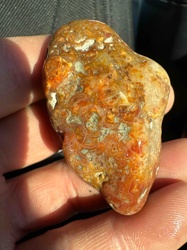
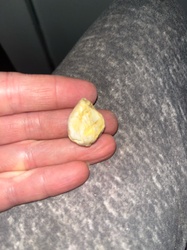
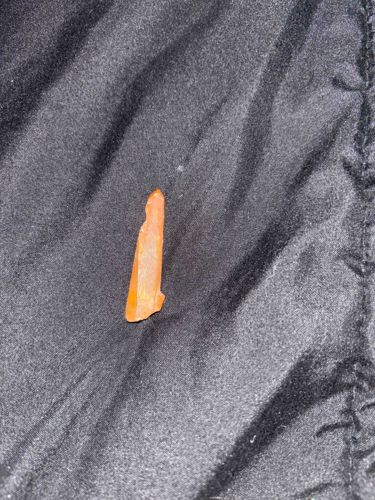
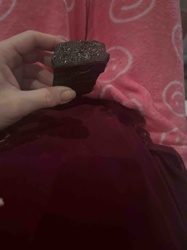
This item is a small, elongated mineral specimen or mineral fragment, exhibiting a vibrant orange to amber hue with notable translucency. The object possesses an irregular, angular shape with a roughly pointed termination at the top, suggesting it may be a naturally occurring crystal shard or a broken fragment of a larger geode formation. In terms of physical characteristics, the surface appears largely smooth with some sub-conchoidal fracturing visible along the edges, which is characteristic of silica-based minerals like quartz or chalcedony. The color saturation is relatively uniform but shows slight variations that hint at internal inclusions or structural irregularities. There are no visible maker's marks, signatures, or stamps, indicating this is likely a natural geological specimen rather than a manufactured object. The condition appears weathered; the edges are not perfectly sharp, which could indicate minor abrasion or natural wear over time. The item does not appear to have been polished or faceted by human hands, retaining a raw, natural texture. While its exact species requires gemological testing, it resembles Tangerine Quartz or carnelian. Its age is geological, likely millions of years old, and it lacks any secondary mountings or decorative settings. The item is currently resting on a dark, textured fabric surface which provides high contrast to its warm tones.
AI Appraisal Report

·AI can make mistakes·Verify before acting
I have virtually examined this translucent orange mineral fragment. Based on its sub-conchoidal fracturing, color saturation, and habit, the specimen appears to be a natural fragment of Tangerine Quartz (hematite-coated quartz) or a high-quality Carnelian carnelian/agate. The surface shows light natural abrasion consistent with a 'raw' or 'found' state, rather than a commercially polished finish. Authenticity as a silicate mineral is supported by its vitreous luster and fracture patterns. The market for common mineral shards of this size (likely under 2 inches) is highly saturated. Similar specimens are readily available at mineral shows, metaphysical shops, and online retailers. While the color is vibrant, the lack of defined crystal terminations or a unique matrix reduces its value compared to 'collector-grade' specimens. There is consistent demand for these minerals for lapidary use or display, but rarity is low. Significant factors impacting value include the small size and the lack of a complete crystal structure. As this appraisal is based on photographic evidence, I must note that definitive identification between glass/synthetic material and natural silica requires in-person testing. A physical examination would involve a Mohs hardness test (expecting a 7 for quartz) and a refractive index test. Furthermore, without provenance documenting the specific mine or locality (e.g., Minas Gerais, Brazil), the specimen lacks the secondary value associated with 'locality pieces.' This valuation assumes the piece is natural and untreated beyond standard cleaning.

Get your items appraised

Instant estimates of your treasures with AI-powered appraisals

Browse More Appraisals