Glistening Mineral or Ore Specimen
Rocks, Fossils & Minerals

Glistening Mineral or Ore Specimen

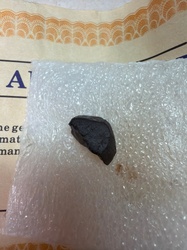
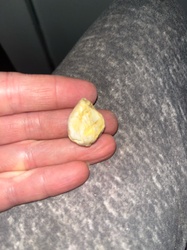
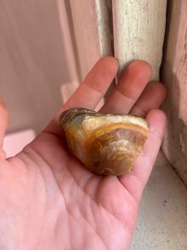
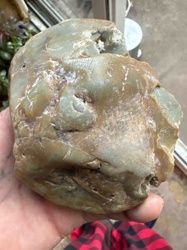
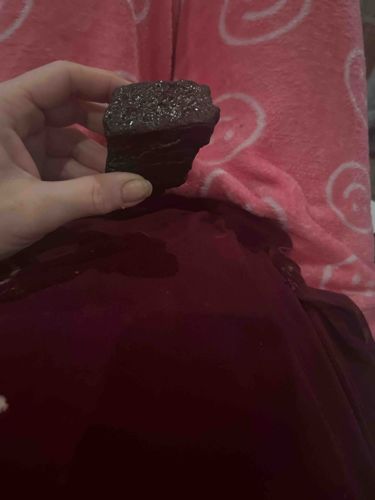
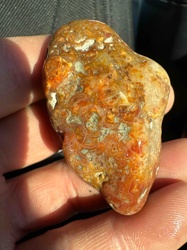
This item is a compact, angular mineral specimen held by a human hand for scale, approximately 2 to 3 inches in width. The specimen exhibits a dark, almost black or charcoal-gray coloration throughout its body. A primary distinguishing feature is the top surface, which appears to be a natural fracture or druzy face covered in numerous tiny, reflective crystalline points that glisten intensely under light, suggesting a metallic or vitreous luster. This crystalline structure could indicate the presence of minerals such as galena, magnetite, or a druzy quartz coating over a dark matrix. The sides of the piece show a layered or blocky cleavage, characteristic of many igneous or metamorphic rock types. The overall condition appears to be a raw, unpolished geological sample with jagged edges and a rough, granular texture on its vertical faces. There are no discernible maker's marks or synthetic stamps, indicating it is likely a natural find or a field-collected specimen rather than a manufactured decorative piece. The age of the mineral deposit itself would likely be millions of years, though as a collected object, it represents a standard natural history display piece from the modern era.
Estimated Value

$10 - $25

Basic Information

Category

Rocks, Fossils & Minerals

Appraised On

March 4, 2026

Estimated Value

$10 - $25

Item Description

This item is a compact, angular mineral specimen held by a human hand for scale, approximately 2 to 3 inches in width. The specimen exhibits a dark, almost black or charcoal-gray coloration throughout its body. A primary distinguishing feature is the top surface, which appears to be a natural fracture or druzy face covered in numerous tiny, reflective crystalline points that glisten intensely under light, suggesting a metallic or vitreous luster. This crystalline structure could indicate the presence of minerals such as galena, magnetite, or a druzy quartz coating over a dark matrix. The sides of the piece show a layered or blocky cleavage, characteristic of many igneous or metamorphic rock types. The overall condition appears to be a raw, unpolished geological sample with jagged edges and a rough, granular texture on its vertical faces. There are no discernible maker's marks or synthetic stamps, indicating it is likely a natural find or a field-collected specimen rather than a manufactured decorative piece. The age of the mineral deposit itself would likely be millions of years, though as a collected object, it represents a standard natural history display piece from the modern era.
Get Your Items Appraised

Instant estimates of your treasures with AI-powered instant appraisals

Browse More Appraisals