Tektite Fragment (Indochinite)
Rocks, Fossils & Minerals

Tektite Fragment (Indochinite)

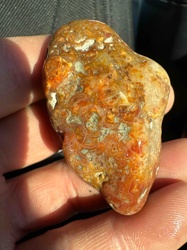
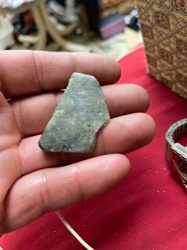
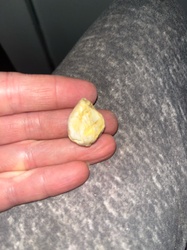
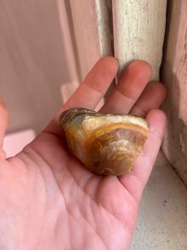
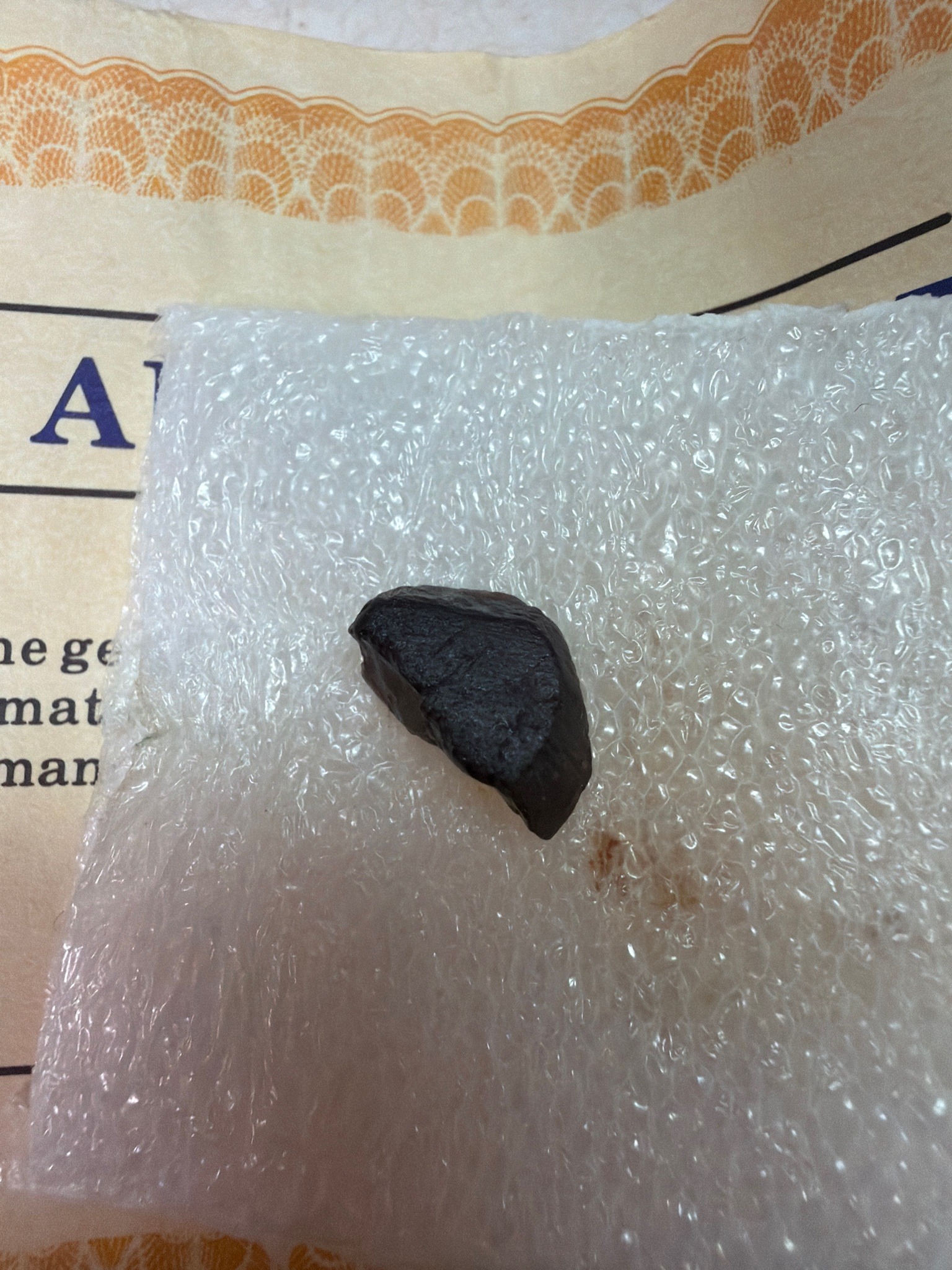
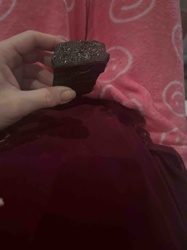
This item is a small, irregular fragment of tektite, specifically consistent with an Indochinite from the Australasian strewn field. The specimen measures approximately 15-20mm in length and exhibits a deep, sub-metallic black color with a dull to semi-glossy luster. Its physical construction is characterized by a glassy, amorphous structure typical of terrestrial impact glass formed from melted crustal rock. The surface shows notable 'pitting' and 'sculpting,' which are aerodynamic features or chemical etchings caused by its high-velocity atmospheric flight or subsequent burial over geologic time. The fragment has an irregular, somewhat kidney-like shape with rounded edges, suggesting it may be a broken piece of a larger 'splash' form. There are no visible maker's marks, as this is a natural occurrence, though it appears to be presented on protective foam packaging adjacent to a certificate of authenticity (COA), which commonly dates such finds to approximately 780,000 years ago. The condition appears stable with consistent patina and no fresh fractures, indicating a well-preserved surface. The lack of bubbles or large crystalline inclusions indicates high-quality silica melt during formation.
Estimated Value

$10.00-$20.00

Basic Information

Category

Rocks, Fossils & Minerals

Appraised On

April 26, 2026

Estimated Value

$10.00-$20.00

Item Description

This item is a small, irregular fragment of tektite, specifically consistent with an Indochinite from the Australasian strewn field. The specimen measures approximately 15-20mm in length and exhibits a deep, sub-metallic black color with a dull to semi-glossy luster. Its physical construction is characterized by a glassy, amorphous structure typical of terrestrial impact glass formed from melted crustal rock. The surface shows notable 'pitting' and 'sculpting,' which are aerodynamic features or chemical etchings caused by its high-velocity atmospheric flight or subsequent burial over geologic time. The fragment has an irregular, somewhat kidney-like shape with rounded edges, suggesting it may be a broken piece of a larger 'splash' form. There are no visible maker's marks, as this is a natural occurrence, though it appears to be presented on protective foam packaging adjacent to a certificate of authenticity (COA), which commonly dates such finds to approximately 780,000 years ago. The condition appears stable with consistent patina and no fresh fractures, indicating a well-preserved surface. The lack of bubbles or large crystalline inclusions indicates high-quality silica melt during formation.
Get Your Items Appraised

Instant estimates of your treasures with AI-powered instant appraisals

Browse More Appraisals