AI estimate as of October 14, 2025 · verify with a professional before acting
AI-Generated · Verify before acting
Everything on this page is generated by AI for informational purposes only. AI can make mistakes — the AI may misidentify items or misattribute them (artist, maker, brand, designer, origin, era). This is not an official valuation and should not be used for insurance, sale, tax, estate, legal, or lending purposes — or any decision requiring a certified appraisal. It is not an authoritative claim about any person, brand, or rights holder — do not share or rely on it as a factual statement about a third party. Always consult qualified professionals before making financial decisions.
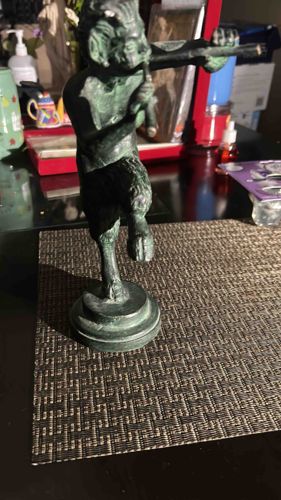
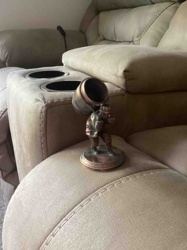
This is a patinated bronze figurine depicting a mythological creature, likely a satyr or faunus, playing a double-barreled flute, known as an aulos. The figure stands approximately 8-10 inches tall based on visual estimation against the background objects. It features a humanoid upper body with distinct goat-like horns, pointed ears, shaggy hair, and a beard or goatee, all rendered with expressive detailing. The lower body transitions into the hairy, cloven-hoofed legs characteristic of a satyr or faunus, with one leg slightly bent at the knee, giving a sense of dynamic movement as if dancing or about to step. The creature is posed holding an aulos to its mouth, with both hands supporting the instrument. The material appears to be bronze, evidenced by the rich, dark greenish-blue patina that has developed over its surface, suggesting age and exposure. This patina is consistent across the entire sculpture, indicating either natural aging or an intentionally applied finish to mimic antique bronze. The base is an integrated, circular, stepped pedestal, providing stability. There are no overt signs of damage such as breaks or significant chips visible, though the surface shows some minor wear consistent with handling and display. The craftsmanship appears to be of good quality, with attention to anatomical detail and thematic expression. This piece likely dates from the 20th century, possibly mid-century or later, produced in a classical or neoclassical revival style, as such mythological figures were popular ornamental motifs.
AI Appraisal Report
Based on my visual examination of the provided image, this patinated bronze figurine of a satyr or faunus playing an aulos appears to be in good overall condition. The rich, dark greenish-blue patina seems consistent across the surface, suggesting either natural aging over time or an intentional antique finish. I observe no overt damage like breaks or substantial chips, only minor wear consistent with display. While the craftsmanship is good, with attention to anatomical detail, the integrated stepped base and general stylistic execution point towards a decorative art piece from the 20th century, likely mid-century or later, rather than an ancient artifact.
Market conditions for such classical revival bronzes indicate a steady but not exceptionally high demand. Similar decorative bronze figurines of mythological subjects, particularly those without a documented significant artist or foundry, typically range in the hundreds of dollars. The piece's size (estimated 8-10 inches) contributes positively to its display appeal. It is not rare; many such ornamental bronzes were produced. Factors impacting value include its good condition and pleasing aesthetic.
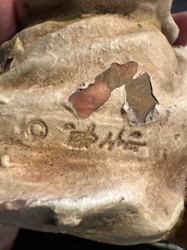
It is crucial to note the limitations of appraising solely from photographs. Authentication of material composition (e.g., confirming it is solid bronze vs. a bronze-clad material) and the true age of the patina would require in-person inspection. A physical examination would allow for tactile assessment, detailed inspection for foundry marks or artist signatures, and potentially a more accurate dating through microscopic analysis of the patina. Provenance documentation, detailing the item's history of ownership and origin, would significantly enhance authenticity and value. Without these, my assessment of a 20th-century decorative item remains a visual estimation.