AI estimate as of August 19, 2025 · verify with a professional before acting
AI-Generated · Verify before acting
Everything on this page is generated by AI for informational purposes only. AI can make mistakes — the AI may misidentify items or misattribute them (artist, maker, brand, designer, origin, era). This is not an official valuation and should not be used for insurance, sale, tax, estate, legal, or lending purposes — or any decision requiring a certified appraisal. It is not an authoritative claim about any person, brand, or rights holder — do not share or rely on it as a factual statement about a third party. Always consult qualified professionals before making financial decisions.
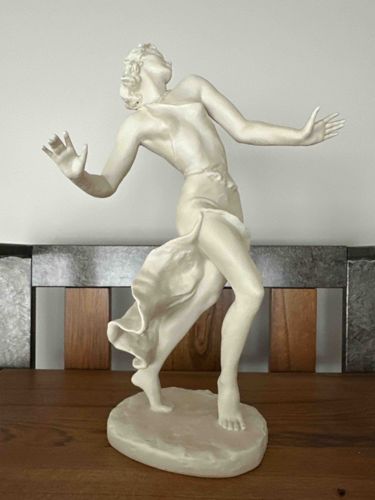
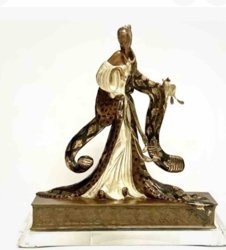
This item is a graceful and dynamic figurine, crafted from what appears to be bisque porcelain or a similar ceramic material, characterized by its matte, unglazed finish. The color is an off-white, perhaps ivory or cream, enhancing its classic and timeless aesthetic. The sculpture depicts a stylized female figure in an exaggerated, dramatic posture, seemingly mid-dance or in a moment of emotional expression, leaning backward with outstretched arms. The flowing drapery around her lower body suggests movement and airiness, contributing to the sense of momentum and grace. Details such as the definition of muscles and the folds in her attire are well-rendered, indicating a good level of craftsmanship. The figure stands barefoot on an irregular, naturalistic base, suggesting terrain or abstract ground. There are no immediately visible signs of significant damage like chips or cracks, and the surface appears largely clean, suggesting good preservation. Its pristine finish and delicate details point to a decorative art piece, likely from the late 20th century, possibly inspired by art nouveau or art deco forms, although it also evokes classical Greek or Roman sculpting traditions in its subject matter and elegance. The lack of distinct maker's marks or signatures in the visible areas prevents precise attribution, but the overall quality suggests it could be a production piece from a reputable studio specializing in ceramic sculptures.
AI Appraisal Report
I have carefully examined the provided image of the Dynamic Bisque Porcelain Female Figurine. Visually, the condition appears excellent, with no immediately discernible chips, cracks, or significant surface abrasions. The matte finish of the bisque porcelain seems well-preserved, suggesting good care. The craftsmanship is evident in the detailed musculature, flowing drapery, and graceful pose, indicative of a quality decorative art piece.
However, a definitive assessment of authenticity and origin without physical examination is limited. While the style evokes classical, Art Nouveau, or Art Deco influences, without maker's marks or provenance, attributing it to a specific artist or studio is impossible. The lack of visible damage suggests careful handling, which is a positive factor for value.
Market conditions for decorative bisque porcelain figurines vary widely depending on the artist, rarity, and historical significance. Without identification, this piece falls into the broader category of collectible decorative arts. Comparable items of unknown origin but good aesthetic quality typically sell in the higher end of the decorative figurine market.
Demand for such unsigned, yet aesthetically pleasing, pieces is moderate. Rarity is difficult to ascertain without knowing the production run. Factors positively impacting value include the excellent apparent condition, artistic merit, and the timeless appeal of the subject. A negative factor is the lack of verifiable provenance or artist attribution.
For full authentication and a more precise valuation, I would require an in-person examination to inspect for hidden marks, assess the true surface condition, and look for any repairs or restorations. Provenance documentation (e.g., original sales receipts, exhibition records) would also be crucial. Scientific testing, while not typically applied to modern ceramics unless forgery is suspected, could involve material analysis if there were questions regarding the bisque composition. Without these, the appraisal remains based solely on visual aesthetics and assumed excellent condition.