AI estimate as of July 16, 2025 · verify with a professional before acting
AI-Generated · Verify before acting
Everything on this page is generated by AI for informational purposes only. AI can make mistakes — the AI may misidentify items or misattribute them (artist, maker, brand, designer, origin, era). This is not an official valuation and should not be used for insurance, sale, tax, estate, legal, or lending purposes — or any decision requiring a certified appraisal. It is not an authoritative claim about any person, brand, or rights holder — do not share or rely on it as a factual statement about a third party. Always consult qualified professionals before making financial decisions.
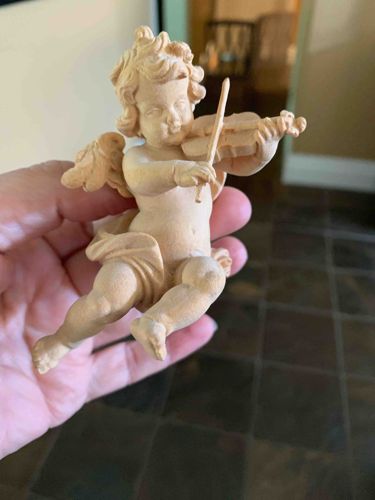
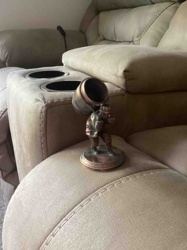
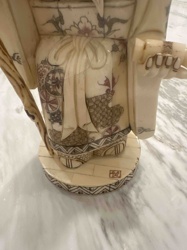
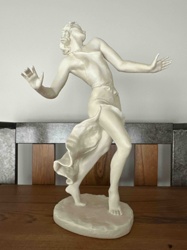
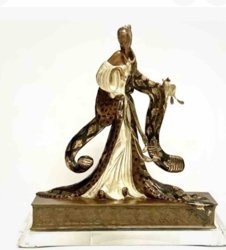
This item is a meticulously carved wooden figurine depicting a cherub or putto playing a violin, a common motif in religious and classical art. It appears to be hand-carved from a light-colored wood, possibly linden or maple, given its smooth, light beige tone and the fine detail achievable. The carving is unpainted, showcasing the natural grain and texture of the wood, which has a matte finish. The cherub is rendered with plump, youthful features, curly hair, and small, detailed wings emanating from its back. It is depicted in a dynamic pose, as if suspended in air, with legs bent and arms raised to hold a miniature violin and bow. The details on the violin are remarkably precise for its small scale, including what appear to be f-holes and a bridge. The overall size is small enough to fit comfortably in a human hand, suggesting it might be approximately 4-6 inches in length or height. There are no immediately visible signs of significant damage such as cracks, chips, or repairs, indicating good preservation. The carving exhibits a high level of craftsmanship, particularly in the delicate rendering of the facial features, individual strands of hair, and the intricate musical instrument. While no maker's marks or signatures are visible in the provided image, the style suggests a traditional European, possibly Alpine or Baroque-inspired, origin, conceivably from the mid-20th century or later, though without further information, earlier periods cannot be entirely ruled out.
AI Appraisal Report
Upon examining the provided images of this Carved Wooden Cherub with Violin Figurine, I am impressed by the high level of craftsmanship. The piece is hand-carved from what appears to be a light-colored wood, likely linden or a similar fine-grained wood favored by European carvers. The detail in the cherub's features, hair, and the miniature violin is notable. Based on the visual evidence, the item appears to be in excellent condition, with no visible cracks, chips, or repairs. The style is reminiscent of traditional Alpine or German carving, possibly dating from the mid to late 20th century.
The market for such decorative carvings is steady but subject to collector taste. Similar unsigned, high-quality wooden figurines from this period typically sell at auction or in specialty shops. The lack of a signature or maker's mark is the primary factor limiting its value; a piece by a known artist like those from the Oberammergau or Val Gardena regions would command a significantly higher price. Demand for religious or classical-inspired decorative arts remains consistent.
It is crucial to note the limitations of an appraisal based solely on images. A definitive assessment of age and origin would require physical inspection to examine the tool marks, wood type, and any hidden signatures. Without provenance or documentation, authenticity as an antique or a piece by a master carver cannot be verified. Therefore, this valuation is based on its merits as a finely executed, anonymous decorative work of art.