AI Appraisal Estimate

AI-generated estimates · not official valuations

From the user

What was submitted

Photo and notes provided by the user — not generated by AI

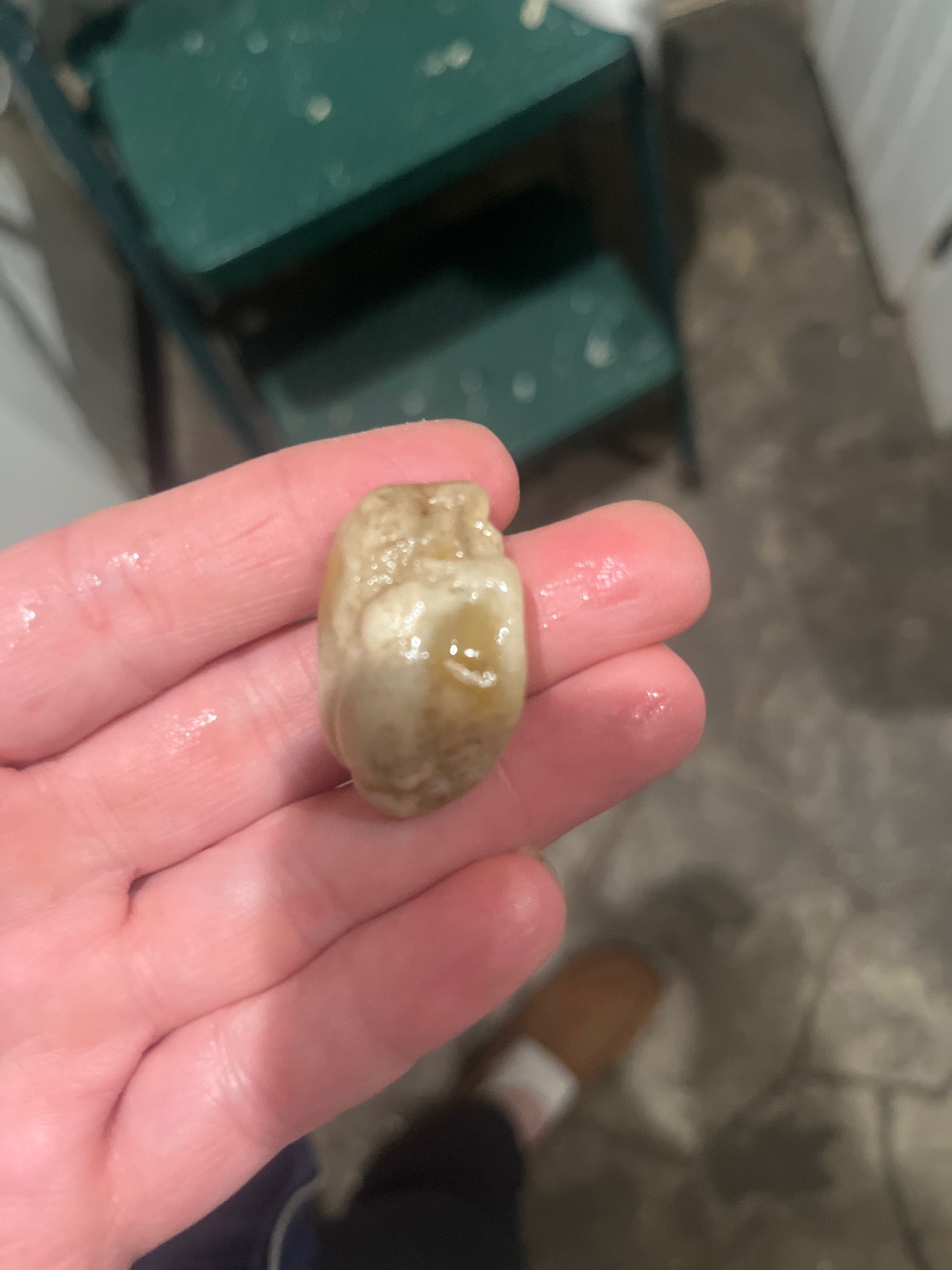
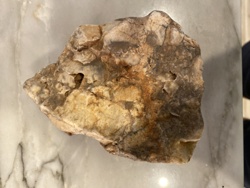
Submitted item photo
Submitted photo · June 17, 2026

User's notes

No additional notes provided.

AI analysis below

AI appraisal

AI analysis & estimate

AI-Generated · Verify before acting

Everything below is generated by AI for informational purposes only. AI can make mistakes — the AI may misidentify items or misattribute them (artist, maker, brand, designer, origin, era). This is not an official valuation and should not be used for insurance, sale, tax, estate, legal, or lending purposes — or any decision requiring a certified appraisal. It is not an authoritative claim about any person, brand, or rights holder — do not share or rely on it as a factual statement about a third party. Always consult qualified professionals before making financial decisions.

Read the full disclaimer

AI Identification

·Not independently authenticated·Verify before acting

Small irregular organic specimen consistent with a concretion or shell fragment

Natural Specimens and Geofacts

AI Estimated Value

·Not an official valuation·Verify before acting

$1 - $15

As of June 17, 2026

AI Item Analysis

·AI can make mistakes·Verify before acting
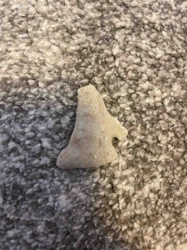
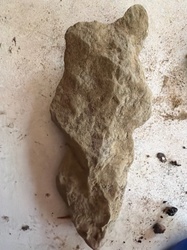
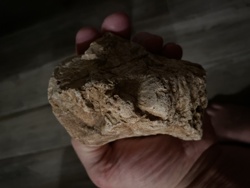
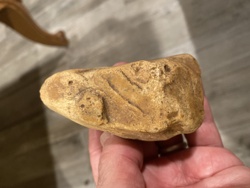
This item appears to be a small, irregular organic or mineral specimen held between human fingers for scale, suggesting a size of approximately 1.5 to 2 centimeters in length. The object exhibits an oblong, somewhat bulbous shape with a surface that appears wet, translucent, and glossy. Its coloration is a variegated mix of creamy whites, pale yellows, and brownish-tan hues, which is stylistically consistent with natural marine materials like polished shell fragments, sea glass, or calcium carbonate concretions. There are no visible maker's marks, inscriptions, or synthetic identifiers present on the surface. The texture appears uneven with slight indentations and ridges, suggesting natural wear rather than intentional carving. Condition-wise, the object shows no obvious signs of recent breakage, though its smooth, rounded edges are typical of water-worn objects found in coastal or fluvial environments. Because there are no diagnostic features like a hinge or growth rings to confirm a specific biological origin, it is categorized broadly as a natural specimen. The identification is hedged due to the lack of internal structural visibility and the absence of any laboratory testing or provenance.
AI Appraisal Report

·AI can make mistakes·Verify before acting
Based on the image provided, I am examining a small, irregular specimen approximately 1.5 to 2 centimeters in length. From what I can see, the object displays characteristics consistent with a water-worn shell fragment, a small chalcedony pebble, or a calcium carbonate concretion. I cannot determine the exact mineralogical or biological composition from a photo, as this would require physical testing such as a hardness test or acid reaction test to differentiate between silica-based sea glass and carbonate-based marine remains. The value estimate is based on the item being a common natural find. In the current market for 'beach finds' or unpolished geofacts, such items typically possess more sentimental or educational value than significant monetary worth. Objects of this size and type are often sold in bulk or as part of low-cost 'curiosity' collections. If this specimen were found to have a specific rare provenance or a unique internal fossil structure, its value might increase slightly, but as a generic specimen, the market remains very limited. Because the identification is a hypothesis based on visual cues alone, a physical inspection by a gemologist or malacologist would be necessary to rule out synthetic materials or provide a more precise classification. Currently, the estimate reflects its status as an unattributed natural object; should it be identified as a more common piece of modern debris or glass, the value would essentially be negligible. The lack of diagnostic features like growth rings or specific hinge structures reinforces the need for caution in its classification.

Get your items appraised

Instant estimates of your treasures with AI-powered appraisals

Browse More Appraisals