Weathered Chert Nodule / Naturally Occurring Rock
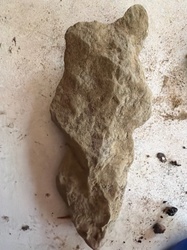
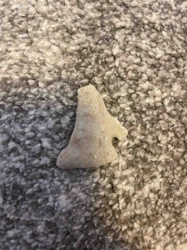
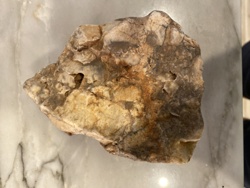
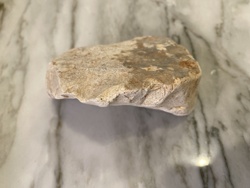
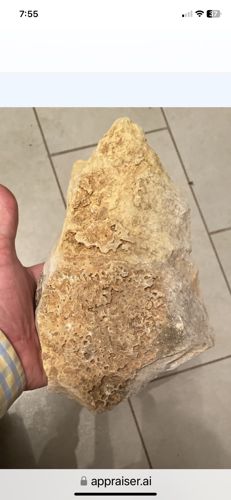
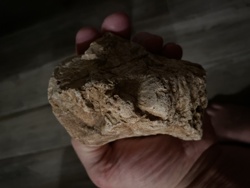
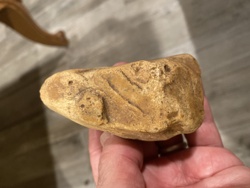
This item is a large, triangular-shaped piece of stone found in Guthrie, Oklahoma, measuring approximately 9 inches by 5.5 inches. The material is likely a native chert, limestone, or sandstone, characterized by a highly weathered, porous, and pitted surface texture. The coloration is an earthy buff, tan, and light brown, consistent with ground mineralization and heavy patination over time. While the overall silhouette vaguely mimics a large biface or hand axe, it lacks the definitive diagnostic features of an intentional man-made artifact. Specifically, there is no evidence of controlled conchoidal fracturing, percussion flaking, or pressure flaking along the margins to create a sharp cutting edge. The edges appear rounded and eroded by natural weathering rather than sharpened by human knapping. The crusty, vesicular surface suggests it is a naturally occurring geofact or a weathered nodule shaped by environmental factors such as water or wind erosion rather than an Paleolithic tool. There are no visible maker's marks or cultural engravings; its value lies primarily in its status as a geological specimen rather than an archeological relic.
AI-Generated Appraisal Disclaimer
Estimated Value
$10.00 - $25.00
Basic Information
Category
Geological Specimen / Geofact
Appraised On
February 18, 2026
Estimated Value
$10.00 - $25.00
Additional Details Provided By Owner
User Provided Information
Appears to be a very large stone spear, knife, or hand axe found in Guthrie OK measuring 9" x 5.5"
Item Description
This item is a large, triangular-shaped piece of stone found in Guthrie, Oklahoma, measuring approximately 9 inches by 5.5 inches. The material is likely a native chert, limestone, or sandstone, characterized by a highly weathered, porous, and pitted surface texture. The coloration is an earthy buff, tan, and light brown, consistent with ground mineralization and heavy patination over time. While the overall silhouette vaguely mimics a large biface or hand axe, it lacks the definitive diagnostic features of an intentional man-made artifact. Specifically, there is no evidence of controlled conchoidal fracturing, percussion flaking, or pressure flaking along the margins to create a sharp cutting edge. The edges appear rounded and eroded by natural weathering rather than sharpened by human knapping. The crusty, vesicular surface suggests it is a naturally occurring geofact or a weathered nodule shaped by environmental factors such as water or wind erosion rather than an Paleolithic tool. There are no visible maker's marks or cultural engravings; its value lies primarily in its status as a geological specimen rather than an archeological relic.
Get Your Items Appraised
Instant estimates of your treasures with AI-powered instant appraisals