Naturally Formed Stone (Geofact)
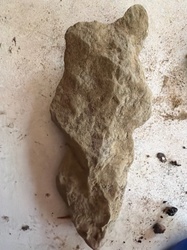
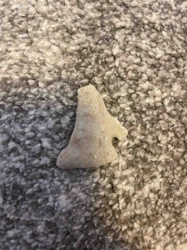
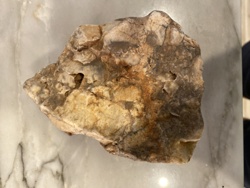
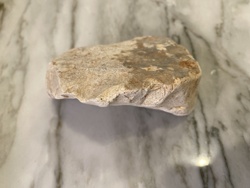
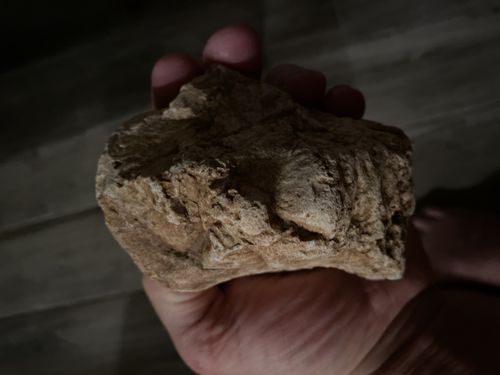
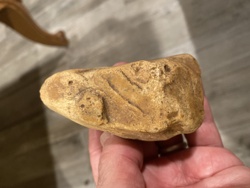
This specimen is a roughly rectangular stone measuring approximately 4 inches in length and 2.5 inches in width. It displays a coarse, porous texture with a light brown or tan coloration consistent with local sedimentary rock found in the Oklahoma region. While the item is described as a possible 'hand axe' or 'effigy,' a close inspection of the surface does not reveal definitive evidence of intentional human modification. Anthropological artifacts such as hand axes typically display specific markers of 'knapping,' including bulb of percussion, radial strike lines, or systematic thinning of edges (flaking) to create a sharp cutting surface. Instead, this stone's irregular topography appears to be the result of natural weathering processes, erosion, and seismic fractures. The pitted surface and jagged edges lack the purposeful symmetry or refined bifacial work seen in authentic Paleolithic or Neolithic tools. The shape, while vaguely resembling a tool to the eye (a phenomenon known as pareidolia), shows no visible polish from use-wear or clear indications of hafting. The condition is raw and uncleaned, with significant natural debris and oxidation typical of field-found lithic material. Without identifiable percussion scars or cultural context from a documented archaeological site, this object is geologically classified as a geofact rather than an artifact.

AI-Generated Appraisal Disclaimer
Estimated Value
$5.00 - $15.00
Basic Information
Category
Geological Specimen / Geofact
Appraised On
February 17, 2026
Estimated Value
$5.00 - $15.00
Additional Details Provided By Owner
User Provided Information
This appears to be a stone age hand axe/ effigy found in Guthrie,OKLAHOMA. The axe is 4" long and 2.5 wide at center.
Item Description
This specimen is a roughly rectangular stone measuring approximately 4 inches in length and 2.5 inches in width. It displays a coarse, porous texture with a light brown or tan coloration consistent with local sedimentary rock found in the Oklahoma region. While the item is described as a possible 'hand axe' or 'effigy,' a close inspection of the surface does not reveal definitive evidence of intentional human modification. Anthropological artifacts such as hand axes typically display specific markers of 'knapping,' including bulb of percussion, radial strike lines, or systematic thinning of edges (flaking) to create a sharp cutting surface. Instead, this stone's irregular topography appears to be the result of natural weathering processes, erosion, and seismic fractures. The pitted surface and jagged edges lack the purposeful symmetry or refined bifacial work seen in authentic Paleolithic or Neolithic tools. The shape, while vaguely resembling a tool to the eye (a phenomenon known as pareidolia), shows no visible polish from use-wear or clear indications of hafting. The condition is raw and uncleaned, with significant natural debris and oxidation typical of field-found lithic material. Without identifiable percussion scars or cultural context from a documented archaeological site, this object is geologically classified as a geofact rather than an artifact.
Related Tags
Get Your Items Appraised
Instant estimates of your treasures with AI-powered instant appraisals