AI estimate as of November 2, 2025 · verify with a professional before acting
AI-Generated · Verify before acting
Everything on this page is generated by AI for informational purposes only. AI can make mistakes — the AI may misidentify items or misattribute them (artist, maker, brand, designer, origin, era). This is not an official valuation and should not be used for insurance, sale, tax, estate, legal, or lending purposes — or any decision requiring a certified appraisal. It is not an authoritative claim about any person, brand, or rights holder — do not share or rely on it as a factual statement about a third party. Always consult qualified professionals before making financial decisions.
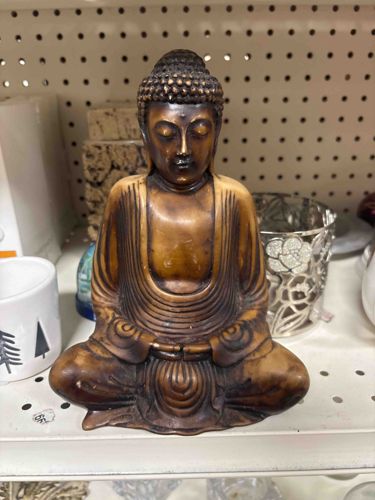
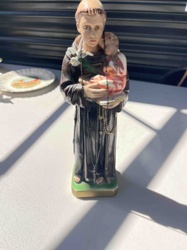
This item is a small, seated Buddha statue, likely crafted from resin or a similar composite material, designed to mimic the appearance of aged bronze or wood. It depicts Buddha in the Dhyana Mudra, with both hands resting in his lap, palms upward, signifying meditation and enlightenment. The color scheme is a rich, variegated brown, transitioning from lighter caramel tones on the raised surfaces to deeper, almost black hues in the recessed areas, creating a sense of depth and antiquity through a deliberate antiquing or patina effect. The statue is relatively small, suitable for a tabletop or shelf display, and appears to be made in a single piece without visible seams or joints, suggesting a molded manufacturing process. Notable features include the ushnisha (cranial bump) covered in tightly curled hair, the elongated earlobes, and the serene, downcast eyes, characteristic of Buddhist iconography. The robes are depicted with flowing, stylized folds, particularly visible across the chest and forearms. There are no obvious signs of significant damage like chips or cracks, but there is some minor surface wear, particularly on the more prominent edges, which could be part of the intended aged look or a result of handling. No discernible maker's marks, signatures, or stamps are visible from the provided image. The style suggests a modern decorative piece, likely manufactured in the late 20th or early 21st century, rather than an antique, aiming to evoke a sense of spiritual tranquility and aesthetic appeal. The craftsmanship is decent for a mass-produced item, with clear detail in the facial features and drapery.
AI Appraisal Report
I have examined the provided image of the seated Buddha statue. Based on my visual assessment, the condition of this piece appears good, with no obvious chips or cracks. The minor surface wear observed is consistent with either an intentional aged aesthetic or light handling, and does not significantly detract from its decorative appeal. In terms of authenticity, I assess this item as a modern decorative piece, likely manufactured from resin or a similar composite material. The uniform molding, the deliberate antiquing effect, and the absence of any visible maker's marks or signatures strongly suggest it is a mass-produced item from the late 20th or early 21st century, rather than an antique or a historically significant artifact. The craftsmanship is decent for its type, with recognizable iconography such as the ushnisha and elongated earlobes.
Market conditions for such contemporary decorative Buddha statues are generally robust, driven by widespread interest in spiritual and Asian-inspired home decor. However, despite consistent demand, the market is saturated with similar items, leading to low individual values. This item is not rare; indeed, countless similar pieces are available through various retail channels. Its value is driven primarily by its aesthetic appeal as a home decor object, not by historical significance, material rarity, or artistic uniqueness. Factors significantly impacting its value are its composite material, modern origin, and decorative purpose. If this were authenticated as an older bronze or wooden statue, its value would be significantly higher. Without an in-person examination, I cannot definitively confirm the material composition; a physical inspection would allow for tactile assessment and scratch testing (if appropriate) to confirm resin. Similarly, only a detailed provenance document, or potentially scientific material analysis, could conclusively rule out an older origin, though the visual cues are quite strong for a modern piece.