AI Appraisal Estimate

AI-generated estimates · not official valuations

From the user

What was submitted

Photo and notes provided by the user — not generated by AI

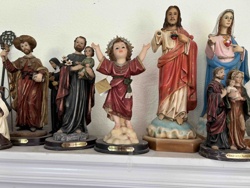
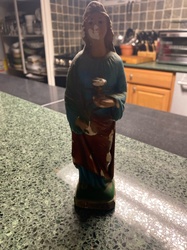
Submitted item photo
Submitted photo · June 16, 2026

User's notes

No additional notes provided.

AI analysis below

AI appraisal

AI analysis & estimate

AI-Generated · Verify before acting

Everything below is generated by AI for informational purposes only. AI can make mistakes — the AI may misidentify items or misattribute them (artist, maker, brand, designer, origin, era). This is not an official valuation and should not be used for insurance, sale, tax, estate, legal, or lending purposes — or any decision requiring a certified appraisal. It is not an authoritative claim about any person, brand, or rights holder — do not share or rely on it as a factual statement about a third party. Always consult qualified professionals before making financial decisions.

Read the full disclaimer

AI Identification

·Not independently authenticated·Verify before acting

St. Anthony of Padua Holding Christ Child and Lilies Statue

Religious Figurine

AI Estimated Value

·Not an official valuation·Verify before acting

$30-60

As of June 16, 2026

AI Item Analysis

·AI can make mistakes·Verify before acting
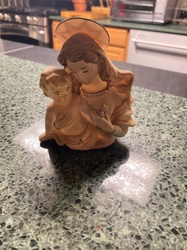
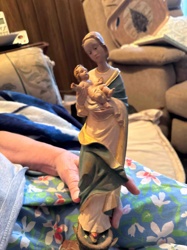
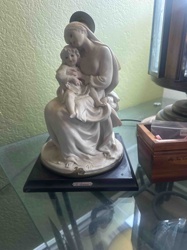
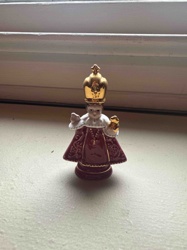
This is a religious figurine depicting Saint Anthony of Padua holding the Christ Child. The statue appears to be made of resin or a similar composite material, evidenced by its molded details and painted finish. The primary colors include a brown habit for St. Anthony, light blue clothing for the Christ Child, and flesh tones for both figures' skin. St. Anthony's head is tonsured, a traditional monastic hairstyle. The Christ Child is positioned on St. Anthony's left arm, looking upwards towards the saint, while St. Anthony gazes down affectionately at the child. In his right hand, St. Anthony holds a cluster of white lilies, a symbol often associated with his purity and patronage against evil. A rosary is visible hanging from St. Anthony's waist, with beads that appear to be painted in a metallic silver or off-white color. The intricate folds of the habit and the facial features of both figures show reasonable craftsmanship, indicating a commercially produced devotional item rather than a unique artisan piece. The base of the statue is round and textured, resembling a tree stump or natural rock formation, painted in muted greens and browns to mimic earth. The overall condition appears good with no obvious chips, cracks, or significant paint loss, though some minor scuffs or dust may be present. The style suggests it is a modern devotional item, likely produced in the late 20th century or early 21st century. The figures possess a somewhat idealized, serene expression.
AI Appraisal Report

·AI can make mistakes·Verify before acting
I have examined the provided image of the St. Anthony of Padua Holding Christ Child and Lilies Statue. Based on visual assessment, the item appears to be a commercially produced devotional figurine, likely made from resin or a similar composite material, consistent with modern manufacturing techniques. The craftsmanship, while reasonable for its type, suggests mass production rather than unique artisanal work. The condition appears to be good; I observe no obvious chips, cracks, or significant paint loss from the image. The coloring and detail work indicate a contemporary style, pinpointing its likely production in the late 20th or early 21st century. From a market perspective, identical or very similar devotional items are readily available through religious goods stores, online retailers, and secondary markets. There is a consistent demand for such items among devout individuals, but the supply is also high. This piece does not exhibit characteristics of rarity, such as provenance from a significant location, artistic uniqueness, or antique age. Factors impacting value negatively include its mass-produced nature and the synthetic material. Its value is driven primarily by its devotional purpose rather than as a fine art object or antique collectible. My valuation is based on similar contemporary religious figurines sold new or on the secondary market. For full authentication of material composition (e.g., specific type of resin), and to rule out any subtle restoration or damage not visible in images, a physical in-person examination would be necessary. Provenance documentation could enhance value if it linked the item to a notable religious site or individual, but such documentation is typically absent for items of this type and value range. Without physical inspection, I cannot account for hidden flaws or proprietary material details.

Get your items appraised

Instant estimates of your treasures with AI-powered appraisals

Browse More Appraisals