AI identification & appraisal estimate

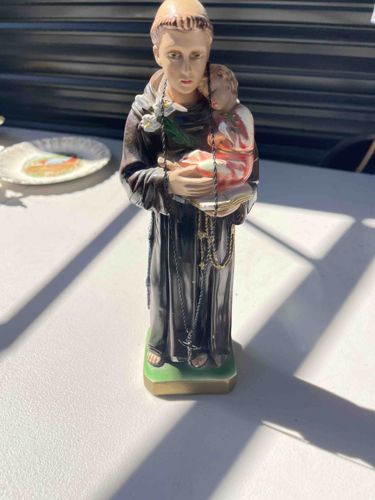
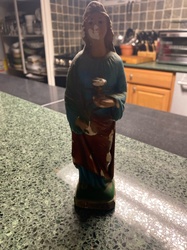
Saint Anthony of Padua with Child Jesus Figurine

This name is the AI's identification of the item — it may be incorrect.

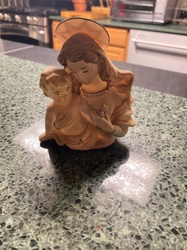
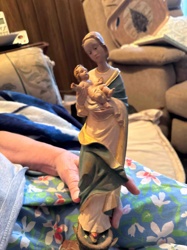
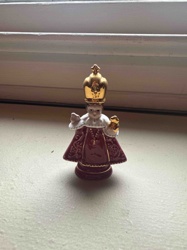
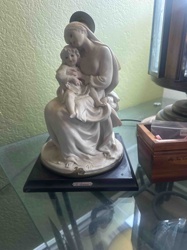
Submitted photo of Saint Anthony of Padua with Child Jesus Figurine
Photo submitted by the user — not generated by AI

User's notes

Made in Italy

These notes were written by the person who submitted this item. Appraiser.AI has not verified them, and the AI's identification and estimate may rely on them.

AI Estimated Value

Not an official valuation

$30-50

AI estimate as of July 19, 2025 · verify with a professional before acting

AI-Generated · Verify before acting

Everything on this page is generated by AI for informational purposes only. AI can make mistakes — the AI may misidentify items or misattribute them (artist, maker, brand, designer, origin, era). This is not an official valuation and should not be used for insurance, sale, tax, estate, legal, or lending purposes — or any decision requiring a certified appraisal. It is not an authoritative claim about any person, brand, or rights holder — do not share or rely on it as a factual statement about a third party. Always consult qualified professionals before making financial decisions.

This analysis also relies on unverified notes provided by the user, which may be incomplete or inaccurate and could affect the result.

Read the full disclaimer

AI Item Analysis

This is a tabletop religious figurine depicting Saint Anthony of Padua, holding the Infant Jesus in his left arm and a book in his right hand. He is also adorned with white lilies near his left shoulder, a common attribute for Saint Anthony, symbolizing purity. The figure is crafted from what appears to be painted resin or ceramic, exhibiting a smooth, glossy finish typical of mass-produced devotional items. Saint Anthony is dressed in a dark brown or black Franciscan habit, with a visible corded belt. A rosary with a crucifix dangles from his waist. The Infant Jesus is clad in a reddish-orange garment, and is resting in St. Anthony's arm while holding onto his garment. The facial features of both figures are rendered with moderate detail, showing a solemn expression on St. Anthony and a peaceful one on the Child. The figurine stands on a rectangular base, painted in tones of green and brown, simulating grass or ground. The overall construction appears solid, with no immediately visible cracks, chips, or significant paint loss, indicating good condition for a used item. The craftsmanship suggests it is a relatively modern piece, likely from the late 20th or early 21st century, given its clean lines and standard production quality. The 'Made in Italy' context further suggests it is a product from a region known for its Catholic religious art and statuary. The size appears to be standard for a small to medium-sized devotional statue, suitable for a home altar or display shelf.
AI Appraisal Report

I have examined the Saint Anthony of Padua with Child Jesus Figurine based on the provided image and description. The figurine appears to be in good condition, showing no visible cracks, chips, or significant paint loss, which is commendable for a used devotional item. Its clean lines and standard production quality, combined with the 'Made in Italy' detail, suggest this is a relatively modern piece, likely produced in the late 20th or early 21st century from painted resin or ceramic. Authenticity based solely on visual evidence from images is limited. While the style aligns with common Italian religious statuary, in-person examination would be required to confirm material composition, assess weight, and perhaps find any manufacturer's marks or mold numbers not visible in the image. Provenance documentation could also support its history. The market for mass-produced religious figurines like this is generally stable but not highly lucrative. Demand exists primarily within religious communities or for personal devotion. Such items are not rare; contemporary examples are widely available from various manufacturers. Factors impacting value include condition, craftsmanship, and the subject matter's popularity. This piece, while well-preserved, is not an antique and does not exhibit unique artistic merit that would command a high price. Comparable items, new or used, typically retail for modest sums in religious goods stores or online marketplaces. Without further unique attributes, its value remains in line with common devotional items.

Keep exploring

More religious figurine appraisals

Get your items appraised

Instant AI-powered appraisal estimates from a photo

Browse More Appraisals