AI estimate as of October 7, 2025 · verify with a professional before acting
AI-Generated · Verify before acting
Everything on this page is generated by AI for informational purposes only. AI can make mistakes — the AI may misidentify items or misattribute them (artist, maker, brand, designer, origin, era). This is not an official valuation and should not be used for insurance, sale, tax, estate, legal, or lending purposes — or any decision requiring a certified appraisal. It is not an authoritative claim about any person, brand, or rights holder — do not share or rely on it as a factual statement about a third party. Always consult qualified professionals before making financial decisions.
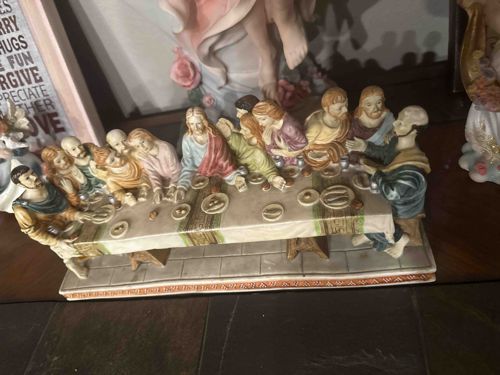
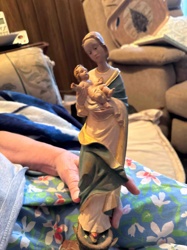
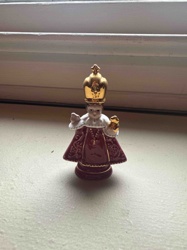
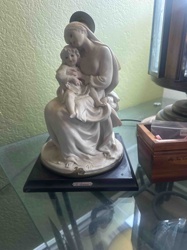
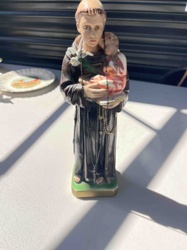
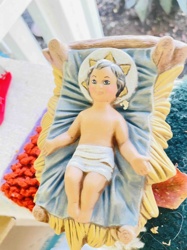
This item is a detailed figurine depicting 'The Last Supper' scene from Christian theology. It is crafted from what appears to be a cold-cast resin or painted ceramic material, given its matte finish and the visible textures. The overall color palette is muted and earthy, employing various shades of brown, beige, green, blue, and terracotta for the robes and skin tones of the figures. Jesus, centrally located, is identifiable by his slightly more prominent position and distinct robe colors, possibly a blue and maroon or reddish-brown combination. The twelve apostles are seated around a rectangular table, which is draped with a tablecloth featuring subtle white, green, and brown patterns. On the table, small, round dishes, possibly plates or bowls, and some elongated bread-like forms are visible. Each figure is individually sculpted with noticeable facial features and drapery in their clothing, indicating a moderate level of detail and craftsmanship. The base of the sculpture is a rectangular platform, suggesting stability and allowing the piece to stand freely. There's a decorative border around the edge of the base, possibly in a terracotta or reddish-brown hue with a repeating geometric pattern. The figures themselves show no obvious signs of significant damage such as chips, cracks, or repairs, maintaining good overall condition from what is visible. The paint application appears consistent, without major flaking or fading. The style suggests a commemorative or decorative item, likely produced in the 20th or 21st century. It is a mass-produced piece, but with sufficient detail to render the scene recognizable and emotionally evocative.
AI Appraisal Report
Based on my visual examination of the provided image, this 'The Last Supper' figurine appears to be crafted from cold-cast resin or painted ceramic, consistent with mass-produced decorative religious items. The condition seems good, with no visible chips, cracks, or significant paint loss. The painting is applied consistently, and the sculpting offers a moderate level of detail, particularly in the facial features and drapery. Authenticity, in terms of its depiction, is clear; it accurately portrays the iconic scene. However, verification of the material (resin vs. ceramic) and precise manufacturing origin would require physical examination.
Market conditions for such items are generally modest. Similar mass-produced 'Last Supper' figurines, often found in religious gift shops or online, typically retail for modest prices. Comparables frequently available online show a wide range, but well-detailed resin or ceramic pieces of this size and styling usually fall within the $30-$100 range, depending on precise size, manufacturer, and perceived quality. Demand is steady among collectors of religious iconography and those seeking decorative spiritual items, but it is not high-end or highly competitive. Rarity is low; these are widely manufactured. Factors impacting value positively are its apparent good condition and detailed sculpting; negatively, its mass-produced nature and lack of an identifiable, renowned maker or unique artistic properties. Without in-person inspection to assess material composition, scale, weight, and any maker's marks or signatures, a precise valuation remains an estimate. Provenance documentation could occasionally elevate value if associated with a notable collection or event, but for this type of item, it is rarely a factor. Scientific testing would be excessive for an item in this category.